Serbia is moving decisively to harden its airspace as unmanned systems, cruise missiles, and electronic warfare redefine modern conflict. In early 2026, the Serbian Army confirmed that its elite 250th Air Defense Missile Brigade is conducting an intensive operational training cycle with the Chinese-made FK-3 surface-to-air missile system, the export variant of China’s HQ-22. Far from being a ceremonial exercise, this training underscores Belgrade’s intent to turn the FK-3 into a fully operational, combat-ready backbone of its medium-range air defense network, capable of engaging aircraft, drones, and precision-guided weapons under contested conditions.
The drills are structured around realistic operational scenarios, emphasizing not just missile launches but the entire kill chain: detection, tracking, command decisions, engagement, and rapid displacement. This reflects a sober understanding inside the Serbian military that air defense success today depends less on owning advanced hardware and more on sustained crew proficiency, disciplined procedures, and the ability to survive after firing in an environment saturated with sensors and countermeasures.
FK-3 Training as a Core Mission of National Airspace Defense
At the center of the current training cycle is the permanent mission of the 250th Brigade: the protection of the Republic of Serbia’s airspace. Battalion commander Major Vladan Škrkić has emphasized that FK-3 drills are focused on preparing and executing air defense operations against a wide spectrum of aerial threats, including manned aircraft, unmanned platforms, and precision strike systems. This is not abstract planning. The exercises are designed to mirror the pressures of modern air warfare, where reaction times are compressed and the first radar emission can invite immediate retaliation.
The emphasis on repetition and operational realism signals a broader doctrinal shift. Serbia is treating the FK-3 not as a prestige acquisition but as a working system that must function reliably in peacetime vigilance and wartime stress alike. In an era where drones are routinely used to probe air defenses and loitering munitions hunt radar emitters, the brigade’s focus on survivability procedures is as critical as missile performance itself.
From Contract to Capability: Serbia’s Strategic Acquisition Path
Serbia signed the contract for the FK-3 system in 2020, pairing it with the Chinese-made CH-92 armed drone in a broader defense cooperation package. The delivery became internationally visible in April 2022, when Chinese Y-20 heavy-lift transport aircraft conducted a high-profile air bridge to Serbia. The operation drew attention not only for its scale but for its geopolitical implications. Chinese officials publicly confirmed the delivery, framing it as part of routine bilateral cooperation and stressing that it targeted no third party.
This moment marked a turning point. It was the first export of a Chinese medium- to long-range surface-to-air missile system to a European country, surprising observers who had long expected Belgrade to favor Russian systems such as the S-300 family. Instead, Serbia demonstrated a deliberate strategy of supplier diversification, strengthening its air defense while reducing reliance on any single external partner. The FK-3 thus became both a military asset and a signal of strategic autonomy.
The FK-3 and HQ-22 Lineage Explained
The FK-3 is the export variant of China’s HQ-22, a medium- to long-range surface-to-air missile developed as a second-generation successor to the HQ-12. The system is produced by Jiangnan Space Industry, also known as Base 061, under the China Aerospace Science & Industry Corporation (CASIC). While the FK-3 was revealed in export form as early as 2014, the HQ-22 gained public prominence later, notably at the Zhuhai Airshow in 2016, before entering service with the People’s Liberation Army in 2017.
In Chinese service, the HQ-22 rapidly became a principal air defense asset, with reported deployments near sensitive regions such as eastern Ladakh in 2021. Serbia’s FK-3 is a downgraded export configuration, but it retains key performance characteristics that make it highly relevant for medium-range air defense missions in Europe.
Performance Envelope and Operational Reach
In Serbian service, the FK-3 occupies the crucial middle layer between short-range point defense systems and hypothetical long-range strategic interceptors. The missile reportedly reaches a top speed of Mach 6, while its maximum engagement range in export form is cited at up to 150 kilometers, compared to around 170 kilometers for the domestic HQ-22. For a country the size of Serbia, this range is operationally significant, allowing a limited number of batteries to cover key infrastructure, command centers, and transit corridors from standoff distances.
This reach provides depth without sacrificing mobility. The FK-3 is designed to move, deploy, engage, and relocate, complicating enemy targeting cycles. In practical terms, this means Serbia can defend high-value sites while also using maneuver to deny adversaries predictable engagement zones.
Guidance Architecture and Electronic Warfare Resilience
One of the FK-3’s most important attributes lies in its guidance architecture. The system employs semi-active radar homing combined with radio-command guidance, allowing flexibility across different engagement phases. The missile can begin an intercept using semi-active radar homing and automatically switch to radio-command guidance if it encounters heavy electronic interference.
This design reflects an assumption that future air battles will be fought under intense jamming. Rather than disengaging when radar conditions degrade, the FK-3 is intended to fight through electronic attack. For Serbian air defenders, this capability aligns directly with training priorities focused on operating in electronically contested environments, where resilience matters as much as raw range or speed.
Countering Drones, Cruise Missiles, and Mixed Threats
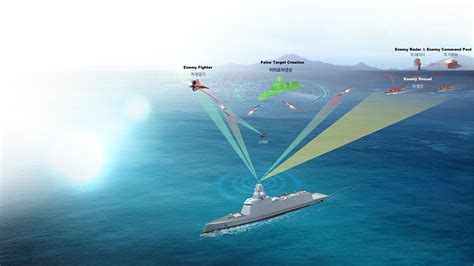
The FK-3 is marketed as a multi-target, multi-threat system capable of engaging aircraft, helicopters, cruise missiles, ballistic targets, and unmanned aerial vehicles. While such claims are naturally viewed with caution, the underlying concept matches Serbia’s operational needs. Modern air attacks are rarely composed of a single threat type. Instead, they combine drones used for reconnaissance or decoying, low-flying cruise missiles exploiting terrain masking, and manned aircraft delivering standoff weapons from outside defended airspace.
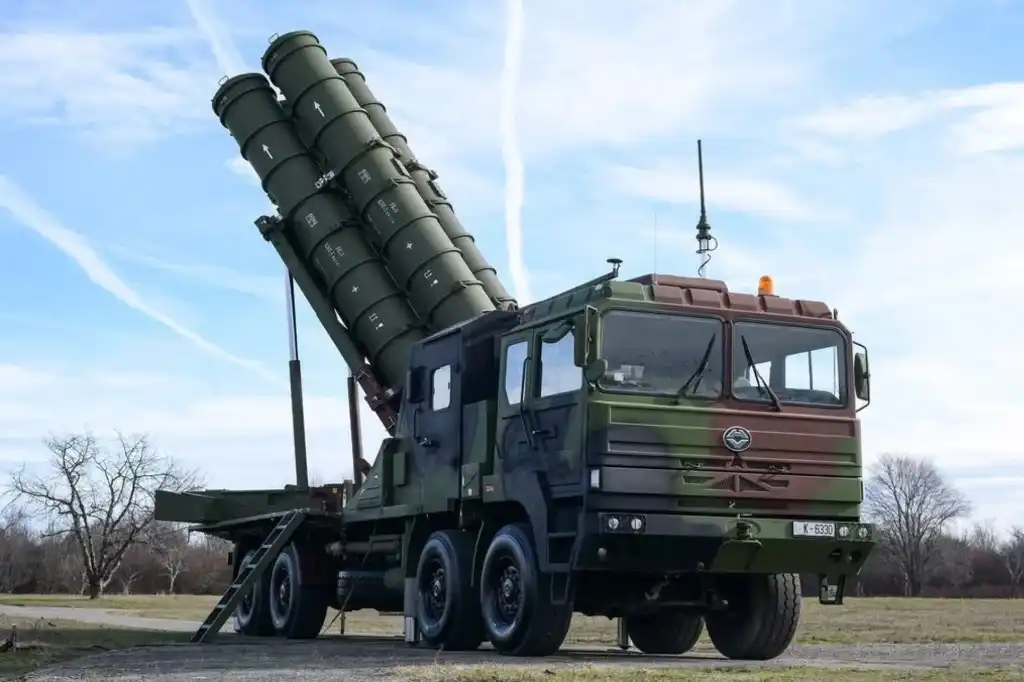
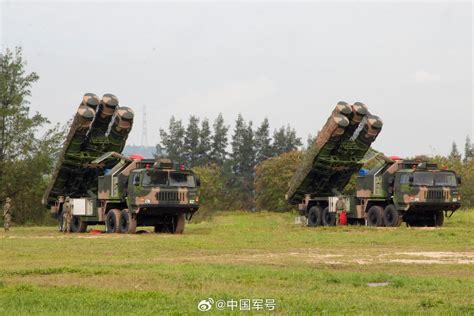
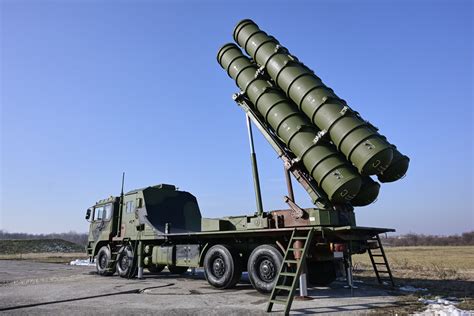
Against this backdrop, the FK-3’s reported ability to engage multiple targets simultaneously is particularly relevant. A typical battery is described as consisting of one radar vehicle and three launcher vehicles, each carrying four missiles, for a total of twelve ready-to-fire rounds. Each battery is reportedly capable of engaging up to six targets at once, supporting defense against saturation-style attacks rather than isolated intrusions.
Mobility, Launchers, and Tactical Survivability
Mobility is central to the FK-3’s survivability. The launcher vehicles are mounted on an 8×8 chassis produced by the Hanyang Special Purpose Vehicle Institute, giving the system strong road mobility and cross-country performance. This allows Serbian units to reposition frequently, minimizing exposure to counter-battery fire, loitering munitions, and pre-planned strikes.
In modern air defense doctrine, a missile battery’s survival often depends on how quickly it can shut down, move, and reappear elsewhere after emitting radar energy or firing missiles. Serbia’s intensive training cycle reflects this reality, placing as much emphasis on displacement drills and emission control as on engagement accuracy.
Strategic Meaning for Serbia’s Air Defense Posture
The continued training of the FK-3 highlights its role as a practical cornerstone of Serbia’s ground-based air defense. It restores medium-range coverage that had eroded over time, providing a credible deterrent against airspace violations and precision strike threats. At the same time, it integrates into a layered defense concept where shorter-range systems protect individual sites and longer-range sensors contribute to a broader air picture.
Yet the FK-3 is not a silver bullet. Like all ground-based air defense systems, it remains vulnerable to coordinated suppression campaigns, advanced electronic warfare, and saturation by low-cost unmanned systems. Serbia’s emphasis on crew proficiency, doctrine, and integration is therefore not optional; it is the decisive factor that determines whether the system delivers real-world effectiveness.
Training as the Decisive Multiplier
Ultimately, Serbia’s FK-3 program demonstrates a clear understanding of modern air defense realities. Missiles and radars provide potential, but training turns potential into capability. By investing in intensive operational cycles, the 250th Air Defense Missile Brigade is preparing to operate under pressure, adapt to electronic attack, and maintain continuity of defense in complex threat environments.
With its Mach 6 interceptor speed, medium-range reach, and adaptable guidance architecture, the FK-3 gives Serbia a powerful tool. The ongoing drills show that Belgrade intends to wield that tool with discipline and realism, positioning the FK-3 not as a symbolic acquisition but as a living, breathing element of national defense in an increasingly contested sky.