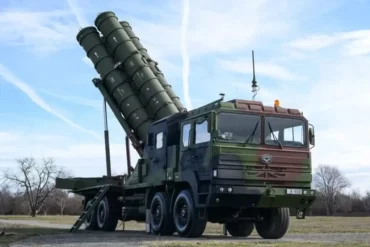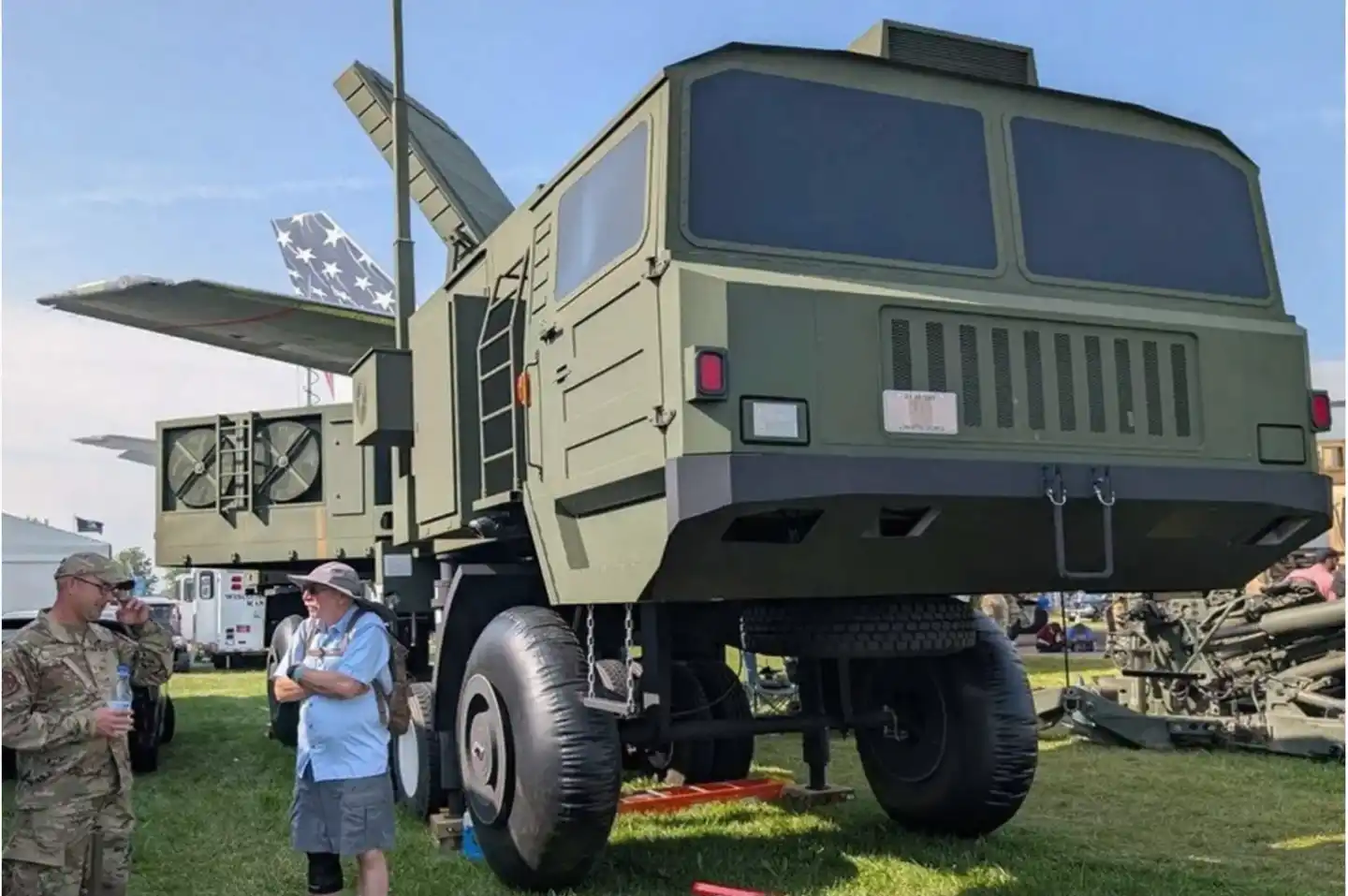
In a significant escalation of realism in combat training, the U.S. Air Force publicly unveiled a high-fidelity surrogate of China’s HQ-16 surface-to-air missile system during the 2025 EAA AirVenture airshow in Oshkosh, Wisconsin. The display marks a watershed moment in how American forces prepare for peer-level threats, particularly those emerging from China’s increasingly integrated air defense networks. The unveiling, conducted by the Wisconsin National Guard, represents more than a symbolic gesture—it is an unmistakable move toward warfighting preparedness tailored specifically to Chinese systems.
Strategic Significance of the HQ-16 SAM in Chinese Doctrine
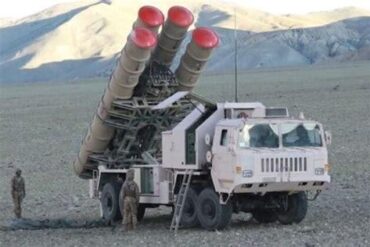
The HQ-16 system, originally co-developed by China’s Academy of Defense Technology and Russia’s Almaz-Antey, is a medium-range SAM platform capable of intercepting a wide array of aerial threats, including fighter jets, cruise missiles, and UAVs. With a maximum range of approximately 40 kilometers, the HQ-16 has been deployed in both PLA Ground Force and PLA Navy variants, forming a multi-layered shield over sensitive regions, coastlines, and critical infrastructure. Its navalized derivative, the HHQ-16, also serves as the primary air defense umbrella for several Chinese warships, including Type 052D destroyers.
More critically, the HQ-16 is networked into broader Chinese IADS (Integrated Air Defense Systems), operating in concert with long-range systems like the HQ-9, short-range platforms like the HQ-7, and a robust web of tracking radars, early warning stations, and command nodes. This tightly woven matrix has long been viewed as one of the most sophisticated and difficult to penetrate air defense constructs outside NATO and Russia.
Training to Penetrate: The Role of High-Fidelity Surrogates
The HQ-16 surrogate showcased in Wisconsin is not merely a visual replica—it replicates the thermal, radar, and visual signatures of the real Chinese system with precision. This is achieved through the use of embedded heaters, radar-reflective coatings, and modular components that mimic the TEL (transporter erector launcher) configuration of the original.
Unlike previous training tools that used decommissioned Cold War systems like the SA-6 “Gainful” or generic mock-ups, this new surrogate is explicitly modeled on a currently operational, adversarial platform. The implications are significant: U.S. pilots are now training against accurate representations of real Chinese hardware, practicing detection, threat classification, and targeting protocols under near-combat conditions.
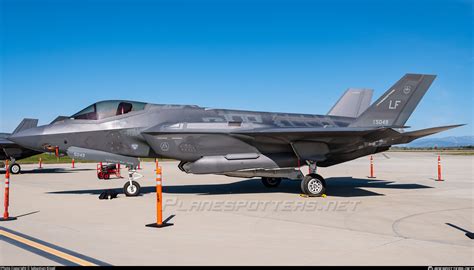
Such realism is not just for fast-jet pilots. The surrogate is intended to test and calibrate the effectiveness of advanced onboard sensors, electronic warfare suites, and precision strike weaponry across the U.S. arsenal. It allows F-35A, F-22, and B-2 crews to hone their threat engagement sequences, while also offering vital training opportunities for suppression of enemy air defenses (SEAD) and destruction of enemy air defenses (DEAD) missions.
Echoes of the Cold War: But More Focused and Specific
During the Cold War, the U.S. developed surrogates based on Soviet SAM systems such as the SA-2, SA-3, and later the SA-6 and SA-11. These mockups were rudimentary compared to today’s standards, often relying on static or retired hardware and lacking accurate electromagnetic profiles. Today’s HQ-16 surrogate stands in stark contrast. It is not only visually indistinguishable from its Chinese counterpart at standoff distances but also emits the same radar signature patterns, challenging pilots to discern real from fake in the most demanding operational environments.
The Air Force’s decision to field such a specific surrogate—one that closely replicates a key Chinese air defense system—signals a paradigm shift in military readiness. It moves U.S. training beyond the abstract and into regionally and technologically tailored preparation, geared toward actual battlefield realities that could emerge in the Indo-Pacific theater.
Geopolitical Implications: Preparing for Pacific Conflict
The presence of the HQ-16 surrogate isn’t just about training mechanics. It sends a clear and deliberate message: the U.S. military is preparing for contested operations in and around China’s sphere of influence. With the PLA deploying HQ-16 batteries to Taiwan Strait-facing garrisons, South China Sea outposts, and aboard PLAN warships, this system represents a frontline deterrent and a formidable obstacle to any U.S.-led air campaign.

Training U.S. pilots to locate, classify, and destroy these systems is not only tactical but deeply strategic. It reflects a recognition that future conflicts may require the U.S. to enter highly contested airspace, potentially for offensive strikes against Chinese territory or fleets. Moreover, the development of this surrogate comes amid rising tensions over Taiwan, expanding U.S. basing access in the Philippines, and intensifying U.S.-Japan joint training scenarios aimed at Chinese maritime choke points.
A Technological Leap for Joint Force Training
The surrogate’s rollout aligns with broader Pentagon priorities to revamp its live-fire and synthetic training environments. Programs like Red Flag, Northern Edge, and Pacific Iron are now expected to incorporate HQ-16 emulators as part of their threat libraries. This development also allows joint force integration, enabling Navy and Marine Corps units—particularly those operating F-35B and F/A-18 aircraft—to train with the same threat profiles.
Moreover, Air Force researchers have hinted at further upgrades, including autonomous mobility, programmable radar profiles, and modular destructibility for live-fire testing. The goal is to not only simulate the HQ-16 in a passive training context but eventually allow for full kinetic rehearsals, including real-time SEAD/DEAD raids conducted under realistic threat conditions.
A Broader Campaign of Threat Emulation
This HQ-16 surrogate is just the latest in a growing family of adversary-mimicking training systems being adopted by the U.S. military. Already in service are HQ-9 emulators, Russian S-300 and S-400 mockups, and even Iranian-style missile batteries used in Middle East-focused exercises. What sets the HQ-16 model apart is its direct correlation with current PLA deployments, making it a critical tool in the Indo-Pacific fight scenario.
There is also a push to integrate these systems into augmented reality overlays for pilot helmet displays, creating a fused environment where real-world hardware and synthetic threats merge into one seamless training experience. The result is a force more lethal, situationally aware, and regionally specialized than ever before.
Conclusion: Signals of a New Era in U.S. Combat Preparation
The HQ-16 surrogate’s unveiling at AirVenture 2025 is a symbolic and substantive development that underscores the U.S. military’s deepening focus on China as a pacing challenge. It represents a marriage of intelligence insight, technological innovation, and training doctrine that has shifted from generalized preparedness to threat-specific mastery.
By enabling pilots to engage with true-to-life enemy systems, the Pentagon is not only strengthening tactical acumen but laying the foundations for credible deterrence. In the age of great power competition, the ability to train like you fight—and fight like you train—may prove to be the decisive edge.