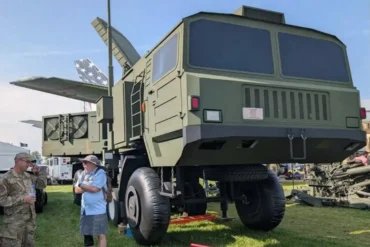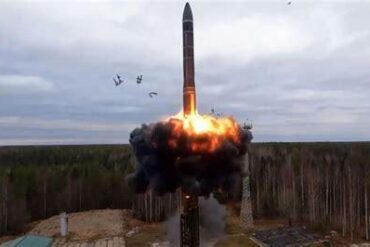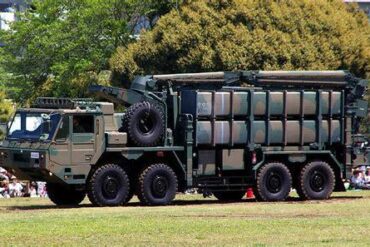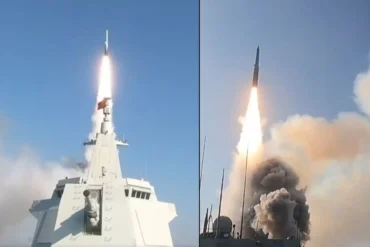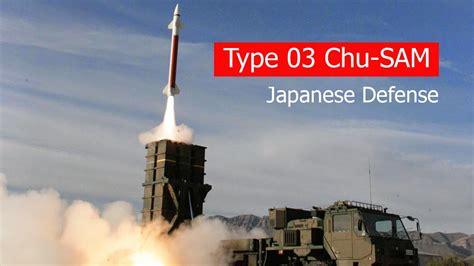
Japan has formally entered the hypersonic missile defense era with the launch of mass production for its Improved Type 03 Chu-SAM Kai, marking a transformative leap in the country’s air defense capabilities. This milestone, announced by the Japanese Ministry of Defense on December 26, 2025, reflects Tokyo’s urgent strategic response to a rapidly evolving missile threat landscape dominated by ballistic and hypersonic technologies.
Rising Threats and Strategic Necessity
In the face of mounting regional tensions and accelerating missile developments by adversaries such as North Korea and China, Japan has prioritized bolstering its integrated air and missile defense systems. The hypersonic weapons threat—defined by their extreme speed, unpredictable flight paths, and maneuverability—has rendered many legacy defense platforms inadequate. The Type 03 Chu-SAM Kai upgrade directly addresses these vulnerabilities.
Mass production, now underway, comes on the heels of a sustained R&D initiative launched in 2023. Spearheaded under the Ministry of Defense’s accelerated capability improvement program, the upgraded Chu-SAM Kai was confirmed to meet advanced operational benchmarks in mobility, firepower, and precision engagement, particularly during the terminal phase of missile flight.
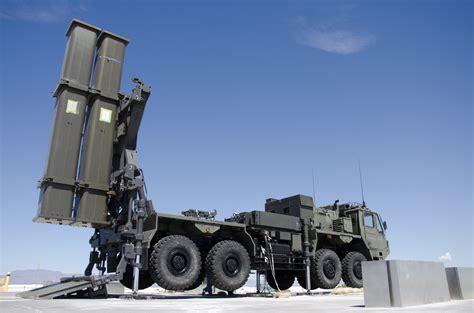
This evolved version breaks decisively from the original Type 03 and its earlier Kai variant, which, although formidable, were primarily designed for aerodynamic targets like aircraft and cruise missiles. The new system, however, is purpose-built to neutralize hypersonic glide vehicles (HGVs) and short-range ballistic missiles (SRBMs)—a mission profile that only a handful of nations currently possess the capability to execute.
Technical Leap: The New-Generation Chu-SAM Kai
At the heart of the upgrade lies a vastly improved sensor suite, fire control system, and guidance algorithm framework. These advancements allow the Type 03 Chu-SAM Kai to detect, track, and intercept high-speed, maneuverable threats at medium ranges—traditionally a weak spot in layered missile defense architecture.
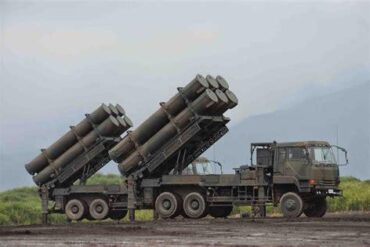
Developed by Mitsubishi Electric, the Chu-SAM family has long served as the backbone of Japan’s medium-range air defense. The system is mounted on mobile truck platforms and features active radar-homing missiles, enabling autonomous target engagement. The addition of a phased-array radar, enhanced jam-resistant electronics, and improved target discrimination software ensures the upgraded Kai can operate effectively even in contested electromagnetic environments.
These capabilities have been rigorously validated in both simulation environments and live-fire exercises, often conducted jointly with allied forces. According to defense insiders, the system demonstrated exceptional reliability in scenarios involving multi-target tracking, adaptive threat prioritization, and interoperability with early warning networks.
Historical Evolution: From the Tan-SAM to the Hypersonic Era
Japan’s journey to hypersonic defense began with the Type 81 Tan-SAM, a short-range platform deployed in the early 1980s. By 2003, it was succeeded by the Type 03 Chu-SAM, reflecting Tokyo’s need to address increasingly complex aerial threats. The Type 03 offered a leap in mobility and networking, but it wasn’t until the Chu-SAM Kai emerged that the system began to show promise against ballistic threats.
Yet, even the improved Kai remained vulnerable to newer weapons like hypersonic glide vehicles and high-speed quasi-ballistic missiles. The introduction of a hypersonic-capable interceptor fills this critical defense gap. It ensures that Japanese forces, particularly the Japan Ground Self-Defense Force (JGSDF), can respond more dynamically to inbound threats in the terminal attack phase—where interception opportunities are narrowest and speed is paramount.
Strategic Context: Joining the Hypersonic Elite
With this leap, Japan becomes only the fourth country—after the United States, China, and potentially Russia—to field a domestically-developed missile defense system with demonstrated hypersonic intercept capabilities. This development not only represents a technological triumph but also reflects a subtle but meaningful recalibration of Japan’s postwar pacifist stance.
While the Japanese constitution still restricts offensive military capabilities, recent defense white papers and procurement strategies indicate a strategic pivot toward active deterrence and defensive depth. Tokyo’s approach now prioritizes resilience, speed-to-field, and indigenous innovation in areas critical to national survival.
The December 2025 announcement coincides with record-setting defense budgets approved by the Cabinet, which include 5.1 billion yen (~USD 32.6 million) earmarked for the initial production batch of the new missiles. This early buy reflects a deliberate decision to fast-track deployment, ahead of full R&D completion scheduled for FY2028.
Budget Priorities and Industrial Mobilization
This proactive production effort is a direct response to intelligence assessments suggesting that regional missile threats may evolve faster than initially projected. Internal Ministry documents emphasize the importance of “capability acceleration”, where fielding systems quickly—even before perfect optimization—is viewed as essential to strategic parity.
Moreover, Japan’s robust defense-industrial ecosystem, including defense primes like Mitsubishi Heavy Industries and NEC, has been mobilized to support the production surge. These firms are tasked not only with manufacturing but also with digital integration, lifecycle sustainment, and logistics chain development in tandem with the Joint Air Defense Command.
Cost assessments for full-rate production units are underway and will consider:
- Manufacturing scalability
- Long-term sustainment costs
- Interoperability with allied command structures
- Prospective export opportunities to regional partners
This last point is critical. Japan’s advanced hypersonic intercept capability may eventually serve as a regional security export, providing allied nations with credible defensive options in the face of shared threats.
Hypersonic Defense in a Shifting Indo-Pacific
The unveiling of the upgraded Chu-SAM Kai fits into a broader mosaic of missile defense modernization across the Indo-Pacific. As China tests next-generation hypersonic vehicles and North Korea continues to field diverse short- and medium-range ballistic systems, Japan’s defense transformation sends a clear signal of intent.
Regional deterrence is no longer static. Rather, it is multi-domain, networked, and resilience-driven. The Chu-SAM Kai stands as a mobile, interoperable, and forward-deployable platform capable of protecting urban centers, key infrastructure nodes, and military assets across the first island chain.
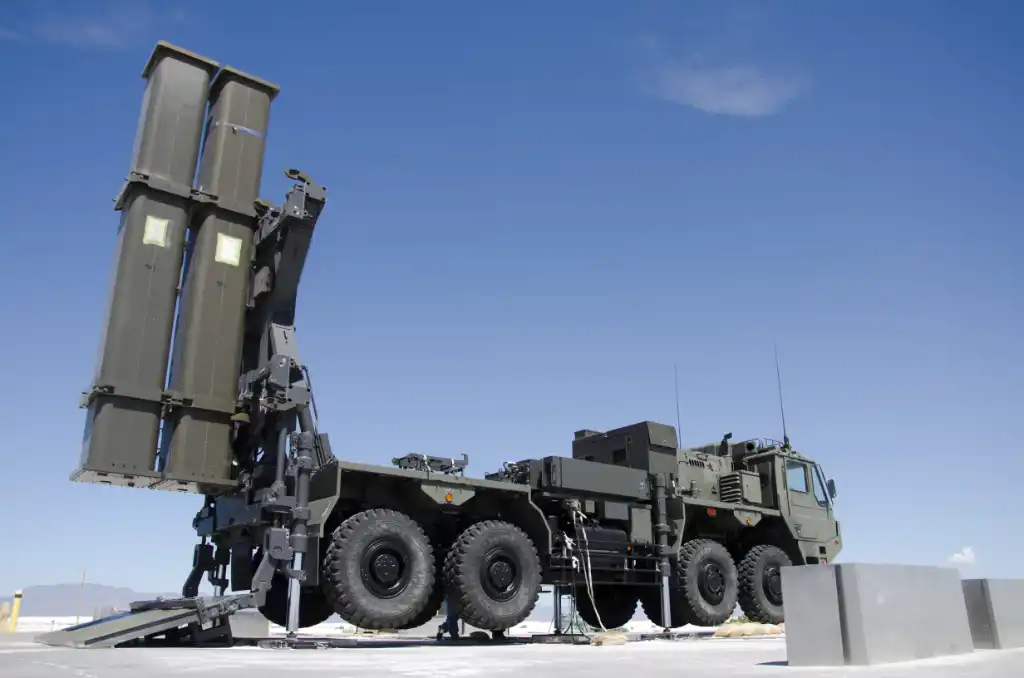
The system’s agility means it can be repositioned quickly in response to shifting threats. Its integration with sensor fusion networks, Aegis radar nodes, and Japanese early warning satellites makes it a cornerstone of a layered defense grid that includes both indigenous and U.S.-made systems.
Looking Forward: The Edge of Defense Innovation
As Japan advances through 2026 and beyond, continued enhancements to the Type 03 Chu-SAM Kai will shape the architecture of its air and missile defense doctrine. These include further AI-assisted target discrimination, extended range-envelope tests, and expanded data-linking capabilities with airborne and maritime platforms.
By seizing this early lead in fielding an effective hypersonic defense platform, Japan reasserts its position as a frontline innovator in military technology. It sends a strategic message—not just to adversaries, but to partners across Asia and the West—that it is committed to defending its sovereignty with cutting-edge tools calibrated for the threats of tomorrow.
In an age where seconds determine survival, the Type 03 Chu-SAM Kai offers Japan a critical shield—and a new sword—in the enduring contest for air and missile dominance in the Indo-Pacific.