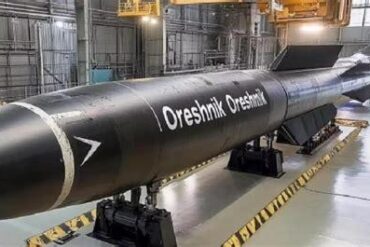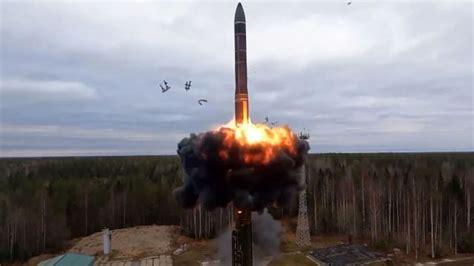
Since its first battlefield use in November 2024, Russia’s hypersonic missile Oreshnik has emerged as a pivotal asset in Moscow’s expanding arsenal of next-generation weapons. Now, following months of speculation and growing geopolitical tension, Russian President Vladimir Putin has confirmed the missile’s entry into mass production, marking a turning point in modern missile warfare and global deterrence strategy.
Oreshnik: Putin’s ‘Indestructible’ Weapon Begins Serial Production
Speaking at a formal gathering of Russian military graduates, President Putin declared that the Oreshnik system had “proved itself very well in combat conditions,” and that full-scale serial production had commenced. The announcement came via TASS, Russia’s state-run news agency, reinforcing the Kremlin’s pride in what it dubs a weapon with no global analogue.
The missile’s operational debut in Ukraine last November signaled its transition from developmental secrecy to strategic deployment. The Russian Armed Forces launched the Oreshnik on November 21, 2024, targeting a defense enterprise in Dnipro, a critical city in eastern Ukraine. That strike, reportedly carried out from the Astrakhan region—over 1,000 kilometers away—served as both a battlefield test and a clear political message to NATO and Kyiv.
A New Breed of Hypersonic Threat
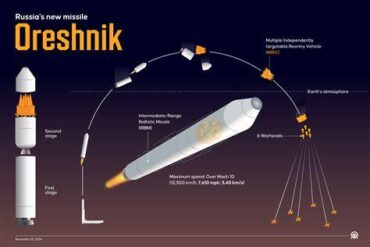
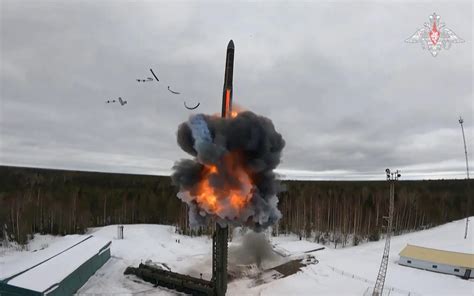
Oreshnik joins three other publicly acknowledged Russian hypersonic systems—the Kinzhal, Tsirkon, and Avangard. However, unlike its siblings, Oreshnik is designated as an Intermediate-Range Ballistic Missile (IRBM). These missiles travel at speeds exceeding Mach 5, with Oreshnik reportedly reaching Mach 10, making interception by current missile defense systems virtually impossible.
According to Putin, “The speed of these missiles guarantees that no air defense system, including the advanced ones developed by the Americans, can intercept them.” These statements, while consistent with Russia’s strategic narrative, have drawn skepticism from Western analysts, especially after Ukraine successfully intercepted several allegedly invincible Kinzhal missiles using U.S.-supplied Patriot systems.
Deployment Beyond Russia’s Borders
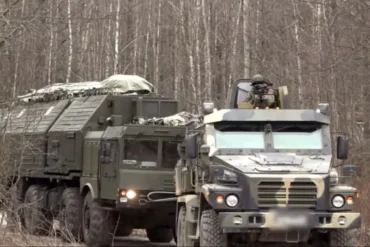
Notably, Putin revealed future plans to deploy the Oreshnik missile system on Belarusian soil, echoing the earlier placement of Iskander ballistic missiles in the region. Belarusian President Alexander Lukashenko confirmed in March 2025 that launcher production was underway and that the country was preparing to receive Oreshnik units.
This move effectively places NATO’s eastern front under direct threat from high-speed, long-range missiles with unpredictable flight paths and devastating kinetic impact. For Ukraine and European allies, this deployment heightens the already tense security atmosphere across the continent.
Ukrainian Fears and Western Hesitations
Ukrainian President Volodymyr Zelensky responded swiftly. In a June 20 press briefing, Zelensky urged Western allies to expand sanctions against Russian defense manufacturers. According to Ukrainian intelligence, 39 companies are involved in the production of Oreshnik, 21 of which remain unsanctioned, allowing them access to critical components.
Zelensky warned, “Without these parts, there will be no Oreshnik.” He emphasized that halting the flow of materials could cripple Russian efforts to mass-produce the missile. Yet, global response remains divided. Former U.S. President Donald Trump, speaking at the G7 summit, openly questioned the utility of further sanctions, asserting that “it costs a lot of money,” and instead advocated closer U.S.-Russia cooperation.
Technical Origins and Combat Use
Western military analysts—including sources at the Pentagon and British Defense Intelligence—believe Oreshnik may be derived from the RS-26 Rubezh, a discontinued Russian ICBM project. However, Putin insists that Oreshnik is a distinct, new medium-range weapon system, suggesting significant internal modifications and strategic realignment.
During its first use, the missile carried six independent warheads and caused explosions lasting several hours. Eyewitness accounts in Dnipro described an unprecedented blast radius, reinforcing the idea that the strike was experimental and demonstrative. The Ukrainian battlefield, in this context, has become a proving ground for new-generation Russian weaponry.
Precision and Power Without the Fallout
Putin took pains to distance Oreshnik from weapons of mass destruction, clarifying that while the missile’s destructive potential rivals that of nuclear warheads, it does not carry a nuclear payload. Instead, the Oreshnik relies on extreme kinetic energy and heat, with impact temperatures reaching 7,000°C, enough to vaporize structures and obliterate fortified positions.
According to Russian defense sources, the missile’s advanced guidance systems enable it to target specific strategic assets with pinpoint accuracy, bypassing traditional defense installations and delivering decisive tactical advantages.
Strategic Motivation: The Ghost of the INF Treaty
Putin has repeatedly linked the development of Oreshnik to the U.S. withdrawal from the INF Treaty in 2019, calling it a “mistake” that forced Russia to resume development of ground-launched ballistic systems. Originally signed in 1987, the Intermediate-Range Nuclear Forces Treaty banned missiles with ranges between 500 and 5,500 kilometers, a category into which Oreshnik squarely falls.
With the treaty defunct, Moscow moved to exploit the vacuum, fast-tracking hypersonic platforms such as Oreshnik that now threaten to shift the balance of power in Europe and beyond.

What the Oreshnik Means for the Future of Warfare
The introduction of the Oreshnik missile to the Russian arsenal represents more than a technological upgrade; it embodies a new era in missile deterrence and hybrid warfare. With its combination of hypersonic speed, evasive trajectory, and destructive payload, the missile redefines the nature of conflict by compressing reaction times and overwhelming traditional defense frameworks.
For NATO and Ukraine, the proliferation of such weapons means that defense systems must evolve rapidly or risk becoming obsolete. For non-aligned nations, Oreshnik’s capabilities may further stimulate an arms race as countries seek to develop their own interceptors or competing hypersonic technologies.
While the United States currently lacks a deployed hypersonic missile, it continues to pursue several programs, such as the Air-Launched Rapid Response Weapon (ARRW) and the Long-Range Hypersonic Weapon (LRHW). Yet, none have reached operational status, leaving a strategic gap that Russia appears eager to exploit.
Conclusion: The Unfolding Balance of Terror
With Oreshnik entering mass production, Russia sends a clear signal: it is not only ready to wage 21st-century warfare, but to dictate its terms. The missile’s battlefield debut, technical complexity, and now production scalability make it a uniquely dangerous asset—one that challenges Western superiority and expands Russia’s military footprint from the Baltic states to the Black Sea.
If left unchecked, Oreshnik may not only shape the next phase of the war in Ukraine, but also redraw the lines of global deterrence, ushering in a period defined by speed, precision, and overwhelming force.