China has quietly become an indispensable industrial backstop for one of Russia’s most sensitive missile programs, supplying an estimated $10.3 billion in manufacturing machinery, microelectronics, and precision components since 2022. These flows, traced by investigative reporting to production lines at Russia’s sanctioned Votkinsk Machine Building Plant, have enabled continued output of the Oreshnik intermediate-range ballistic missile, even as Western export controls attempted to choke off Moscow’s access to advanced manufacturing inputs.
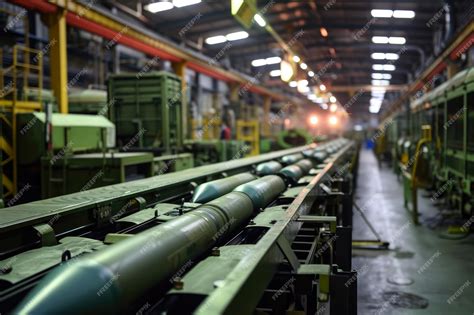
The scale and composition of the supplies matter more than the headline number. They are not finished weapons or obvious battlefield systems. Instead, they are the hidden bones and nerves of modern missile production: CNC machine tools, microchips, memory boards, precision bearings, optical equipment, and electronic testing instruments. Without these, the most sophisticated missile designs remain paper concepts or sporadic prototypes. With them, serial production becomes possible, predictable, and repeatable.
The Votkinsk facility, long associated with Russia’s strategic missile arsenal, sits at the heart of this supply chain. It is where solid-fuel ballistic missiles such as Topol-M, Yars, Iskander-M, and now Oreshnik are assembled. Identifying Chinese-origin equipment inside this plant provides rare, concrete insight into how Russia has adapted its defense-industrial base under sanctions pressure rather than allowing it to atrophy.
The Chinese government has rejected accusations of military assistance, emphasizing that its exports are classified as civilian or commercial. From a regulatory standpoint, that distinction is carefully maintained. From an industrial standpoint, it is largely academic. Dual-use equipment, by definition, performs the same physical tasks regardless of the final product. A CNC lathe does not know whether it is shaping an aircraft part, a wind turbine shaft, or a missile motor casing.
Mapping the Industrial Flow Behind Oreshnik Production
By value, the largest tranche of Chinese supplies falls into two categories that Russia cannot easily replace domestically. Roughly $3.1 billion is associated with machine tools, including advanced CNC systems capable of high-tolerance metal cutting. Another $4.9 billion involves microelectronics, memory modules, and related components essential for guidance, control, and onboard computing. The remainder includes testing instruments, optical systems, piezoelectric crystals, and mechanical components such as ball bearings.
At Votkinsk, a Chinese-made CNC carousel lathe has been identified performing operations central to missile fabrication. These machines allow rotationally symmetric components—motor casings, structural rings, and interface sections—to be produced with micrometer-level precision. That precision translates directly into propulsion efficiency, structural integrity, and predictable flight behavior, all of which are non-negotiable for ballistic missiles operating at hypersonic velocities.
Microelectronics fill a similarly irreplaceable role. Guidance packages, inertial navigation units, flight computers, and telemetry systems rely on stable supplies of chips and memory boards. Even when Russia can design its own electronics, mass production often depends on foreign fabrication capacity. Testing equipment such as oscilloscopes and multimeters then validates each subsystem before final integration, ensuring that faults are caught on the factory floor rather than during a live launch.
Why Sanctions Failed to Cripple Missile Output
Western sanctions were designed to create bottlenecks, especially in areas where Russia’s domestic industry lagged behind global leaders. Precision manufacturing and microelectronics were chief among them. What the Chinese supply stream demonstrates is that sanctions effectiveness depends not only on restrictions, but on enforcement symmetry. As long as major industrial economies remain outside coordinated controls, alternative pathways emerge.
These imports have allowed Russia to maintain production tempo, avoid costly redesigns, and expand output where demand has increased. They also reduce pressure to cannibalize older systems for parts, preserving stockpiles of legacy missiles. In practical terms, this means that the Oreshnik program could progress from testing to operational deployment in a compressed timeline, despite the geopolitical environment.
The pattern extends beyond ballistic missiles. Similar categories of equipment have been linked to Russian drone production, including facilities associated with the Alabuga special economic zone. This convergence suggests a deliberate strategy: invest in manufacturing enablers that support multiple weapons programs simultaneously, maximizing return on each imported machine or shipment of electronics.
Strategic Calculations Behind Beijing’s Position
China’s tolerance for this industrial linkage reflects a calculated balance rather than ideological alignment. A severely weakened Russia would alter the global strategic landscape, potentially freeing Western military and political resources for greater focus elsewhere. By contrast, a Russia that can sustain prolonged conflict absorbs attention, materiel, and diplomatic bandwidth.
At the same time, Beijing has avoided overt transfers of complete weapons systems. The emphasis on dual-use goods creates plausible deniability while still delivering tangible strategic effects. Financial frictions, including the risk of secondary sanctions, shape how transactions are routed and disclosed, keeping them below thresholds likely to provoke unified retaliation.
This posture preserves flexibility. If geopolitical conditions shift, the same commercial channels can be slowed or redirected without the diplomatic fallout that would accompany acknowledged arms transfers. In that sense, machine tools and microchips function not only as industrial inputs, but as instruments of strategic ambiguity.
The Oreshnik Missile as an Industrial Case Study
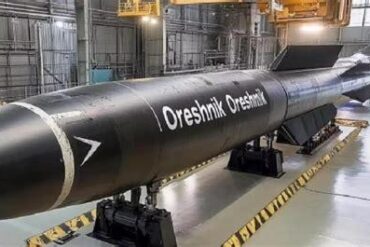
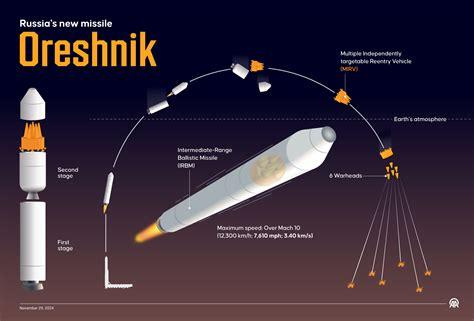
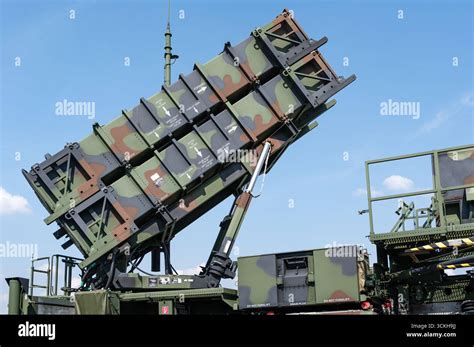
The Oreshnik, also known by the designations SS-X-31B or SS-X-34, illustrates how industrial resilience translates into military signaling. Developed by the Moscow Institute of Thermal Technology, it occupies the intermediate-range ballistic missile category, with estimated ranges from 800 km to 5,000 km depending on payload mass and trajectory.
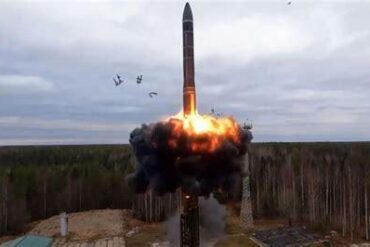
Operational use has been limited but symbolically potent. The first confirmed launch occurred on November 21, 2024, toward the Dnipro area, reportedly using inert or dummy warheads. A second launch in January 2026, near Lviv and close to Poland’s border, elevated the system’s political significance by bringing strategic messaging closer to NATO territory. Deployments in Belarus by late 2025 further underscored this role.
These selective uses suggest a weapon not yet fielded at scale, but mature enough to serve as a deterrent signal. That maturity depends heavily on consistent manufacturing quality. Any disruption in the supply of precision components would quickly erode confidence in reliability, particularly for a system expected to perform under intense scrutiny.
Architecture, Payloads, and Performance
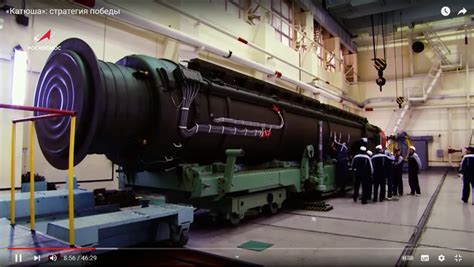
Technically, Oreshnik is assessed as a two-stage, solid-fuel ballistic missile with a separating warhead section and a post-boost vehicle. Estimated length falls between 14 and 15 meters, with launch mass around 40 to 45 tonnes. Throw-weight estimates range from 1,200 kg to 3,000 kg, reflecting flexibility in payload configuration.
Available evidence points to a conventional multiple reentry vehicle arrangement rather than maneuvering hypersonic glide bodies. Debris analysis suggests a centralized post-boost “bus” using gas-reactive orientation systems to deploy submunitions or penetration aids. Reported peak velocities reach Mach 10 to Mach 11, placing extreme demands on structural integrity and guidance stability—demands directly tied to manufacturing precision.
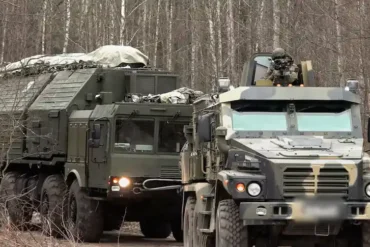
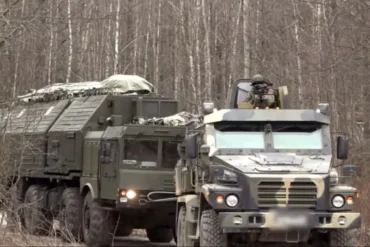
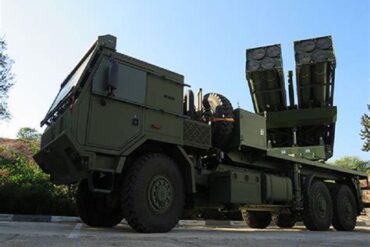
The missile’s mobility is enabled by heavy wheeled transporter-erector-launchers, likely based on the MZKT-79291 chassis produced in Belarus. This platform supports loads exceeding 80 tonnes and allows road-mobile basing consistent with Russia’s established ballistic missile doctrine. Supporting vehicles include mobile command posts, communications units, and technical support platforms, forming a self-contained missile formation.
Industrial Vulnerabilities Beneath the Surface
Despite the robustness suggested by continued production, Oreshnik is not immune to industrial strain. Analysis of components recovered after the January 2026 launch indicated possible degradation or absence in parts of the guidance and orientation system, raising the possibility that the missile operated in a partially blind terminal phase. Such issues point to the fragility of supply chains dependent on imported electronics and specialized materials.
Piezoelectric crystals, for example, are critical for sensors used in navigation and electronic warfare. Optical components enable star tracking or horizon sensing. Ball bearings ensure smooth operation of moving assemblies under extreme acceleration. None of these can be substituted at scale without redesign, and each represents a potential choke point if supply is interrupted.
This layered dependency means that while China’s contributions have sustained production, they have also created single points of failure. Any future tightening of export controls, enforcement actions against intermediary firms, or shifts in Chinese policy could have outsized effects on output quality and volume.
Implications for Global Missile Proliferation Controls
The Oreshnik case highlights a broader challenge facing nonproliferation regimes. Controls focused on finished weapons miss the reality of modern defense manufacturing, where industrial ecosystems matter more than individual items. Machine tools, electronics, and testing equipment are the quiet enablers that determine whether advanced weapons remain theoretical or become operational.
For policymakers, the lesson is uncomfortable but clear. Effective restraint requires cooperation among major manufacturing economies, transparency in dual-use trade, and enforcement mechanisms that track not only what is exported, but where it ends up on the factory floor. Without that, sanctions risk becoming symbolic gestures rather than material constraints.
For Russia, the current arrangement has bought time and capability. For China, it has delivered strategic leverage without overt escalation. For the rest of the world, it underscores how deeply intertwined civilian industry and military power have become, and how difficult it is to disentangle them once supply chains are established.
In the end, the $10.3 billion figure is less a tally of transactions than a measure of industrial continuity. It represents the difference between a missile program slowed by isolation and one sustained by globalized manufacturing, quietly reshaping the balance between intent, capability, and consequence.