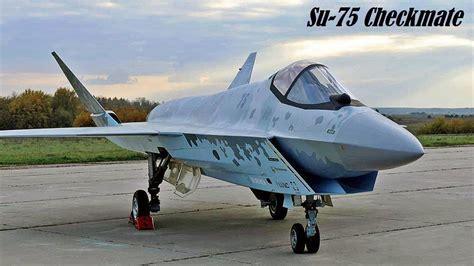
Russia is preparing for what could become one of its most closely watched aerospace milestones of the decade, as officials signal that the Su-75 Checkmate light stealth fighter is planned to achieve its first flight in 2026. The announcement marks the most concrete progress yet for a program that has existed largely as a concept and full-scale mock-up since its dramatic unveiling in 2021. If realized, the flight would represent Russia’s first new lightweight tactical fighter in decades and a rare attempt to field an export-oriented stealth aircraft under unprecedented sanctions and industrial strain.
The Su-75 occupies a unique position in Russian military aviation planning. Conceived as a single-engine, multirole stealth fighter, it is intended to complement the heavier Su-57 Felon while gradually replacing aging MiG-29 variants still in service. Unlike past Sukhoi programs focused primarily on domestic needs, the Checkmate was framed from the outset as a cost-sensitive platform aimed at international customers, echoing the Cold War-era success of MiG fighters that once dominated export markets across Asia, Africa, and the Middle East.
Since its public debut, however, progress has been incremental and largely invisible. The aircraft has not yet flown, and its development has unfolded against a backdrop of funding constraints, shifting priorities, and geopolitical pressure. The proposed 2026 flight window therefore carries significance well beyond a single test event: it will determine whether Russia can still transition from concept to operational hardware in the modern aerospace environment.
From MAKS 2021 Mock-Up to Delayed Reality
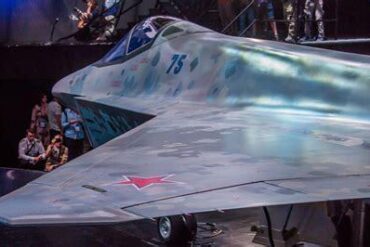
Officially revealed at the MAKS Air Show in August 2021, the Su-75 Checkmate was presented as a finished design rather than an early conceptual study. The full-scale mock-up showcased stealth-oriented shaping, internal weapons bays, and a sleek single-engine layout that contrasted sharply with Russia’s traditional preference for twin-engine fighters. At the time, industry representatives projected an ambitious timeline, with a first flight initially expected in 2023.
That schedule soon began to slip. As development continued, the first flight target moved successively to 2024, then 2025, before settling—at least for now—on early 2026. These delays reflect not only technical challenges but also broader industrial realities. Russia’s aviation sector has been heavily tasked with sustaining production of existing aircraft such as the Su-34, Su-35S, and the slowly expanding Su-57 fleet, limiting available capacity for an all-new program.
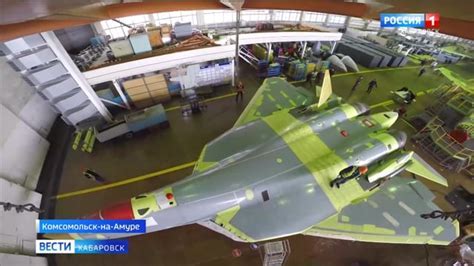
According to Russian sources, prototype manufacturing activities have been underway at the Komsomolsk-on-Amur Aircraft Plant, the same facility responsible for producing the Su-57. Even so, as of January 2026, the Checkmate remains in a pre-flight development phase, with no publicly confirmed domestic procurement orders and no disclosed export launch customers.
Strategic Context: Why the Su-75 Matters Now
The Su-75 program emerges at a time when Russia faces a narrowing set of options in tactical aviation. The MiG design bureau, once synonymous with lightweight fighters, has struggled to field a modern successor to the MiG-29, leaving Sukhoi to fill the gap. The Checkmate thus represents a strategic attempt to re-enter the light fighter segment, offering a platform that balances stealth features with lower projected acquisition and operating costs.
From a military planning perspective, the aircraft is intended to expand force structure flexibility. Heavier fighters like the Su-57 provide advanced capabilities but come with higher costs and maintenance demands. A lighter stealth aircraft could assume roles such as air defense, strike, and escort missions while freeing more capable assets for high-end operations.
At the same time, the program’s export emphasis reflects economic necessity. Russian officials have repeatedly linked the Checkmate’s future to foreign interest, suggesting that serial production rates and long-term viability depend heavily on international orders. This export-driven model explains the aircraft’s emphasis on component commonality, simplified manufacturing, and modular avionics.
Design Philosophy Focused on Stealth and Simplicity
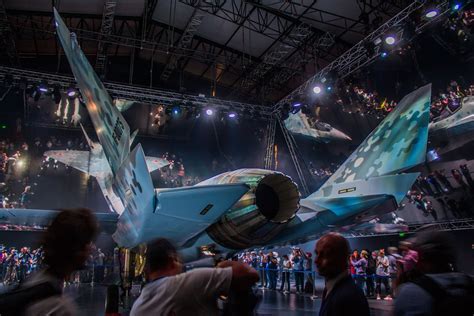
From a design standpoint, the Su-75 reflects a deliberate effort to reduce radar signature without excessive complexity. The airframe incorporates a diverterless supersonic inlet positioned beneath the forward fuselage, a solution that minimizes weight and maintenance requirements by eliminating traditional boundary-layer diverters. This choice aligns the aircraft more closely with contemporary stealth design trends seen in Western fighters.
The most visually distinctive feature is its V-tail configuration, which replaces conventional vertical and horizontal stabilizers with angled surfaces combining pitch and yaw control. Managed by advanced digital flight control systems, this layout reduces radar reflections while maintaining aerodynamic authority. Internal weapons bays further support low-observable operations by allowing missiles and guided munitions to be carried without external pylons during stealth-critical missions.
Subsequent design refinements, revealed through patents and official imagery since 2021, suggest ongoing optimization of wing roots, strakes, and lifting surfaces. These changes indicate that the aircraft’s configuration has not been static, but rather refined to balance stealth performance with aerodynamic efficiency and structural practicality.
Powerplant, Performance, and Projected Capabilities
The Su-75 is expected to be powered by a derivative of the Saturn AL-51F-1 turbofan, the same engine family associated with later Su-57 variants. This engine is projected to offer improved thrust-to-weight efficiency and fuel economy compared to older Russian powerplants, a critical factor for a single-engine design.
Published specifications remain provisional, but available data point to a maximum takeoff weight of approximately 26,000 kilograms and a payload capacity of up to 7,400 kilograms distributed across internal and external hardpoints. In stealth configuration, the aircraft would rely primarily on internal bays for air-to-air missiles, while external pylons could be used when low observability is less critical.
Performance targets include a maximum speed in the Mach 1.8 to Mach 2.0 range, a service ceiling of around 16,500 meters, and a ferry range approaching 3,000 kilometers. Combat radius figures are expected to vary significantly depending on mission profile, payload, and fuel reserves, underscoring the need for flight testing to validate theoretical estimates.
Avionics and Pilot-Centered Cockpit Design
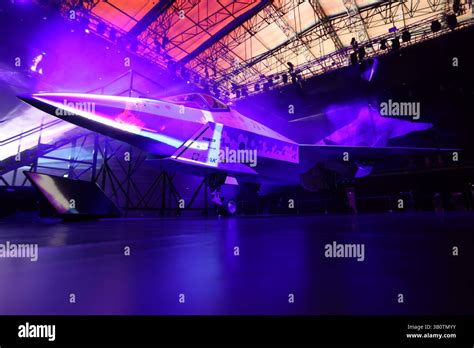
Avionics architecture is another area where the Su-75 aims to balance capability and affordability. Plans call for an open-architecture electronic suite, allowing operators to integrate sensors and mission systems tailored to specific requirements. A cost-optimized AESA radar is expected, with reported efforts to maintain sensor commonality with the Su-57 in order to simplify logistics and training.
The cockpit is projected to feature large-area multifunction displays and a wide-angle head-up display, consistent with modern Sukhoi design philosophy. This digital layout is intended to reduce pilot workload and support advanced data fusion, particularly in air-to-air engagements and precision strike missions. As with performance data, these features remain subject to confirmation once prototype testing begins.
Industrial Constraints and Sanctions Reality
Any assessment of the Su-75 must account for the industrial environment in which it is being developed. Since 2020, Russia’s aerospace sector has faced restricted access to imported electronics, machine tools, and financial mechanisms due to international sanctions. These limitations have forced manufacturers to prioritize domestic substitution, simplified supply chains, and incremental development.
At the same time, ongoing operational demands have required sustained output of proven aircraft for the Russian Aerospace Forces. This reality has constrained the resources available for experimental programs like the Checkmate, reinforcing its reliance on export-driven funding and long-term timelines rather than rapid domestic induction.
Positioning Against Global Fighter конкурents
In conceptual terms, the Su-75 is often positioned between upgraded fourth-generation fighters and full-scale fifth-generation platforms. Within Russia’s inventory, it is designed to sit below the Su-57 in size, cost, and mission scope while offering capabilities far beyond legacy MiG-29 variants. Internationally, it is frequently compared to aircraft such as the F-16 and F-35, though such comparisons remain largely theoretical.
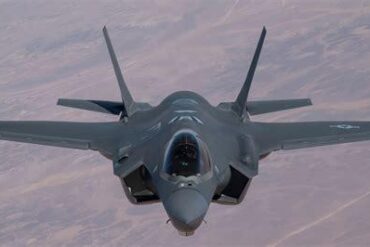
Unlike the F-35, which benefits from extensive operational experience, multinational sustainment networks, and large production volumes, the Su-75 remains unproven. Its success will depend on whether promised performance, cost targets, and delivery schedules can be realized in practice. If achieved, the aircraft could serve as a complementary asset rather than a direct competitor to heavier stealth fighters, filling a niche for air forces seeking modern capabilities without the full cost of top-tier platforms.
A Critical Test for Russia’s Aerospace Ambitions
The planned 2026 first flight of the Su-75 Checkmate represents more than a technical milestone. It is a test of Russia’s ability to innovate under constraint, to deliver a new combat aircraft despite sanctions, industrial pressure, and shifting strategic priorities. A successful flight would signal that the program has moved beyond concept and marketing into tangible reality.
Failure to meet this milestone, by contrast, would reinforce skepticism surrounding the aircraft’s future and its viability as an export product. As the countdown to 2026 continues, the Su-75 stands as a bellwether for the broader health of Russia’s combat aviation sector and its capacity to adapt in an increasingly competitive global defense market.