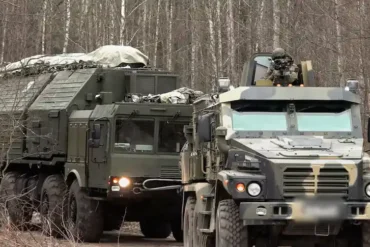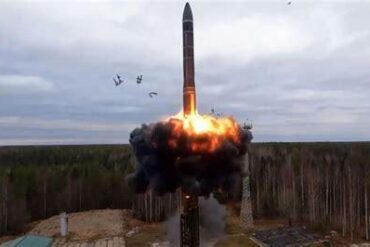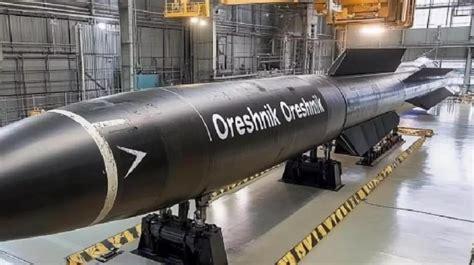
The emergence of Russia’s Oreshnik intermediate-range ballistic missile marks a sharp turn in the strategic weather over Europe and the transatlantic world. Its combat debut is less about immediate battlefield destruction and more about psychology, signaling, and compressed decision-making. Weapons like this are not built to win skirmishes; they are built to shape behavior, to haunt planning rooms in Brussels and Washington, and to remind adversaries that geography is no longer a comfort blanket.
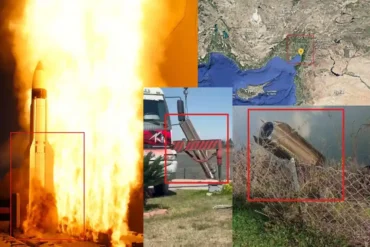
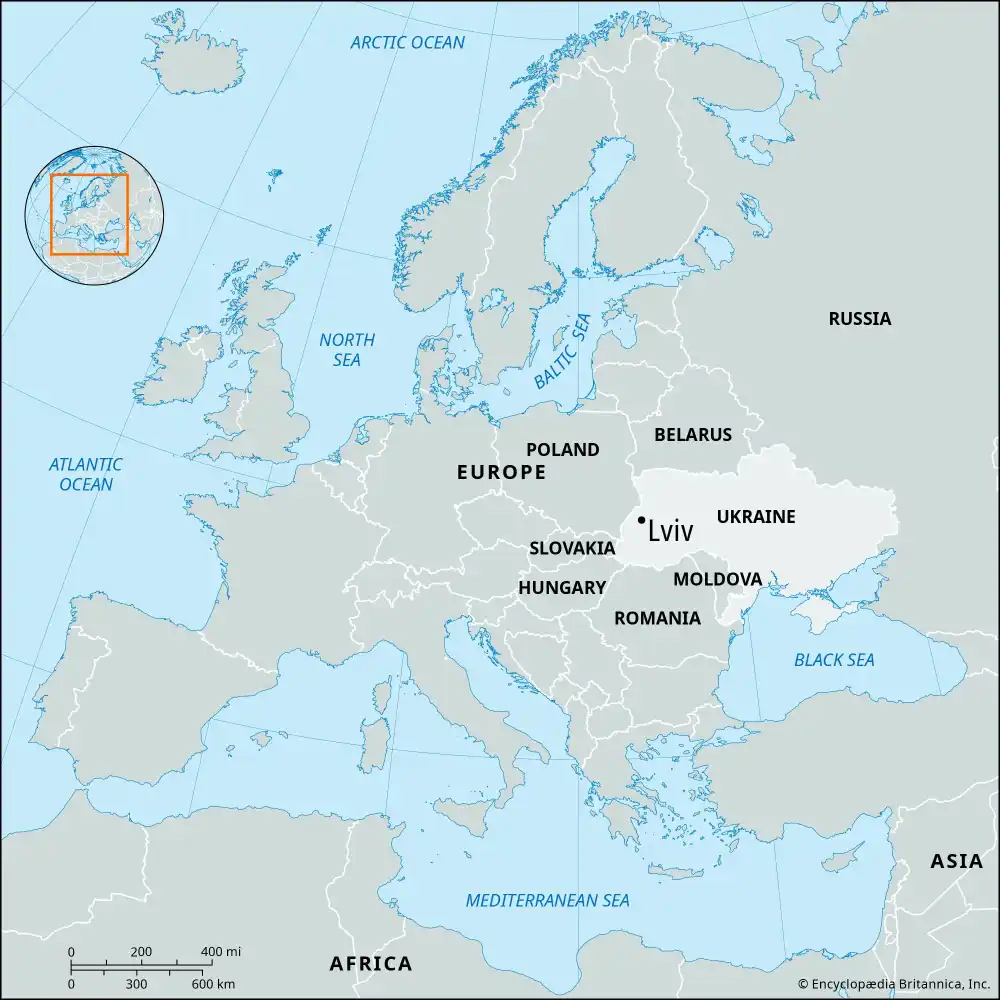
The January 2026 strike on Lviv, confirmed by the Russian Ministry of Defense, was deliberately restrained in tactical effect yet loud in strategic messaging. Moscow chose a target near NATO’s eastern edge, not to maximize damage, but to underline reach, speed, and confidence. The subtext was unmistakable: this missile was never meant just for Ukraine.
The Oreshnik enters service at a moment when arms control guardrails are frayed and warning times are shrinking. It embodies a doctrine that trades predictability for ambiguity, and stability for leverage. Understanding why this system matters requires looking beyond raw specifications and into the strategic logic that produced it.
A Missile Designed to Be Noticed
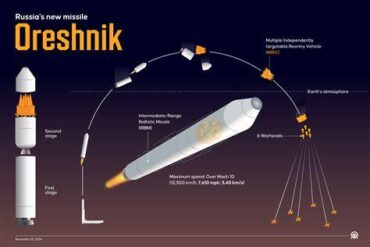
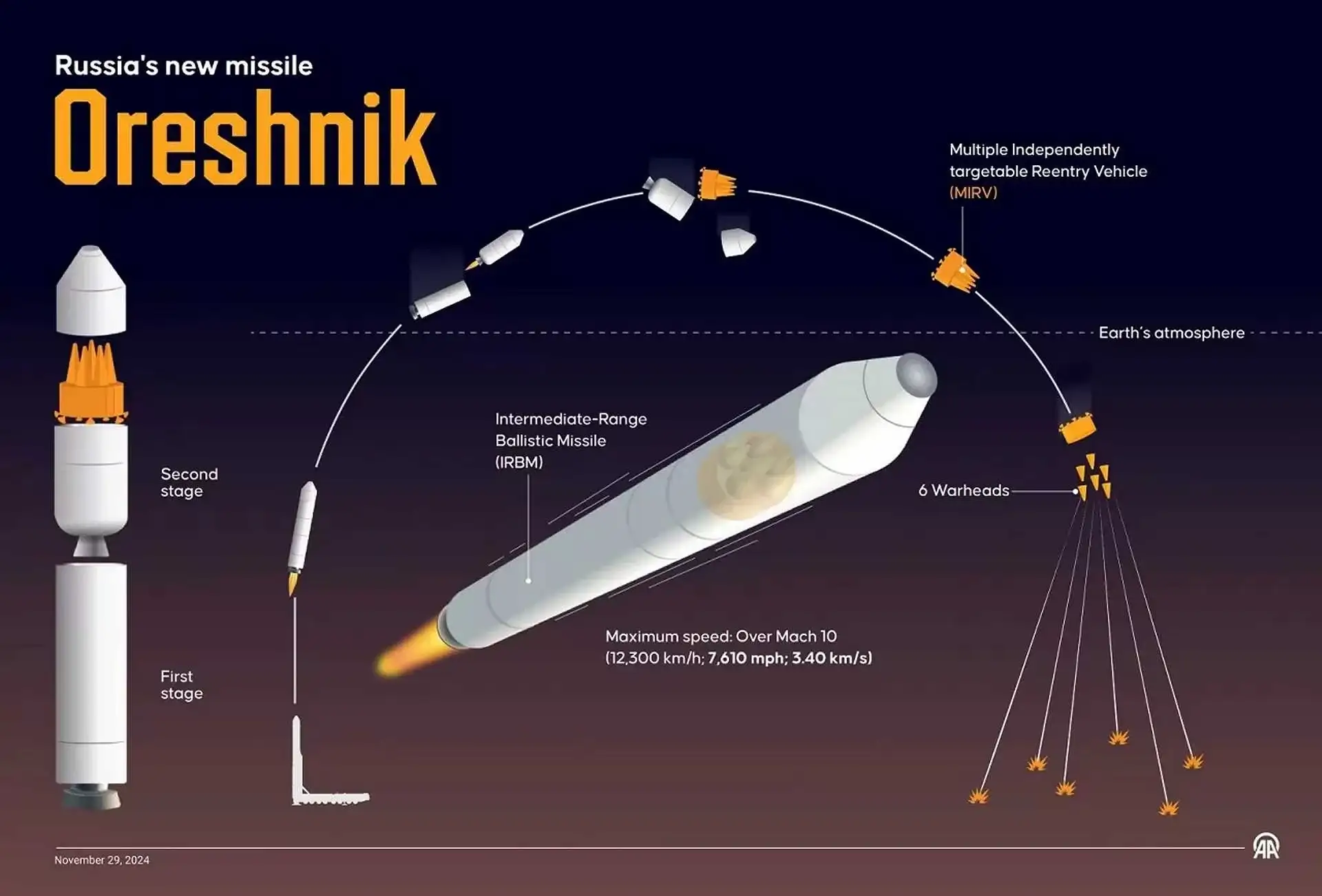
The Oreshnik ballistic missile is often described as hypersonic, but that word alone undersells its purpose. With a range exceeding 5,500 kilometers and sustained velocities beyond Mach 10, the missile collapses the traditional buffer of time that once separated launch detection from political response. From western Russia, it can threaten Paris, Berlin, or Warsaw in under twenty minutes, a timeline that leaves little room for deliberation and even less for error.
This speed is not accidental bravado. It is engineered to stress NATO’s command-and-control architecture, where verification, consultation, and authorization are foundational principles. When warning time shrinks to minutes, those principles are tested under extreme pressure. The missile’s value lies as much in this psychological compression as in its explosive yield.
Technically, Oreshnik traces its lineage to the RS-26 Rubezh, a shelved program reborn with modern guidance, materials, and reentry technologies. The redesign reflects Russia’s shift away from treaty-bound systems toward flexible platforms that exist in a legal gray zone. By operating outside the constraints of the defunct INF framework, Oreshnik fills a gap Moscow believes the West left open.
Speed, Range, and the Tyranny of Minutes
What distinguishes Oreshnik from earlier Russian missiles is the way it blends ballistic altitude with hypersonic reentry behavior. After boost phase, the missile exits the atmosphere before releasing multiple maneuverable reentry vehicles that descend at steep, variable angles. These trajectories are deliberately hostile to traditional radar tracking and interceptor geometry.
At peak performance, the missile travels at 12,000 to 14,000 kilometers per hour, reducing early-warning windows across Central and Western Europe to a handful of minutes. Even advanced sensor networks struggle when detection, tracking, discrimination, and engagement must all occur at breakneck speed. Missile defense is not simply about interceptors; it is about time, and Oreshnik is designed to steal it.
For NATO planners, this means that deterrence by denial becomes harder to guarantee. Even if interception is theoretically possible, the uncertainty introduced by such short timelines complicates confidence in defensive outcomes. That uncertainty is precisely where strategic leverage lives.
Payload Flexibility and MIRV Saturation
The Oreshnik’s lethality is magnified by its payload architecture. Western intelligence assessments suggest the missile can carry up to six maneuverable reentry vehicles, each potentially capable of deploying multiple submunitions. In conventional form, this allows a single missile to strike a dispersed target set: airfields, radar nodes, logistics hubs, and command facilities within the same operational envelope.
This configuration is not about brute force alone. It is about saturation. Missile defenses rely on intercepting a manageable number of predictable objects. By presenting multiple high-speed targets with independent trajectories, Oreshnik strains interceptor inventories and fire-control systems simultaneously. Even a partial penetration can have outsized operational effects.
The design also preserves nuclear compatibility. Each reentry vehicle is assessed to be capable of carrying a nuclear warhead, with estimated yields ranging from 100 to 300 kilotons. That dual-capable nature introduces ambiguity at launch. A radar operator cannot immediately know whether a detected Oreshnik is armed conventionally or strategically, a feature that deliberately complicates escalation control.
Ukraine as a Strategic Testbed
The strike on Lviv was not chosen at random. Western Ukraine sits close enough to NATO borders to resonate politically, yet far enough from the front lines to signal intent rather than necessity. By using Oreshnik in a conventional configuration, Russia demonstrated restraint while still advertising capability.
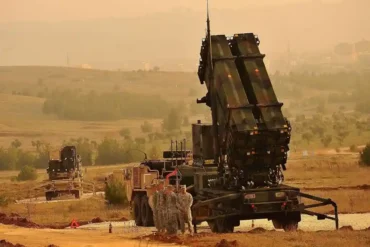
For Ukraine, the implications are stark. Existing air defense systems, including Patriot, have proven effective against missiles like the Kh-47M2 Kinzhal, but Oreshnik operates in a different regime of altitude, speed, and payload mass. Its flight profile places it largely beyond Ukraine’s current defensive reach, exposing a vulnerability that cannot be easily closed with incremental upgrades.
For NATO, the message was sharper still. The launch showed that Russia is willing to operate high-end strategic systems near alliance territory without triggering immediate consequences. That confidence suggests Moscow believes it has found a tool that can be used demonstratively without crossing the threshold into direct confrontation.
Challenging the Myth of Invulnerability
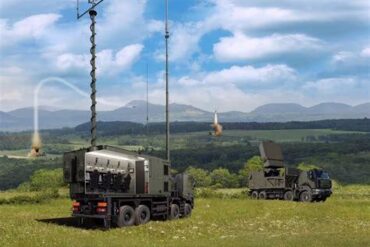
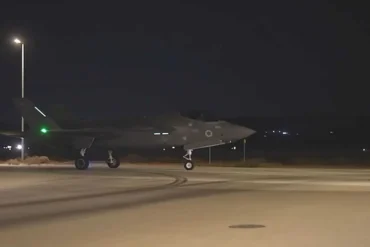
Russian officials have claimed that Oreshnik is impossible to intercept, a statement best understood as strategic theater rather than technical fact. Systems such as Aegis SM-3, THAAD, and Arrow 3 have demonstrated potential against high-speed, high-altitude threats under controlled conditions. Physics still applies, even to hypersonic objects.
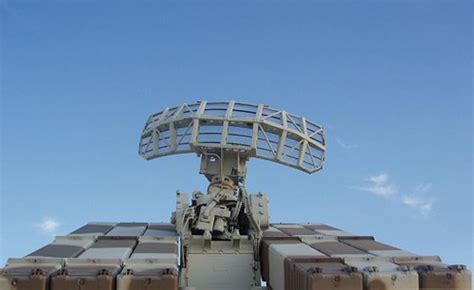
Yet interception is not binary. Success depends on early detection, sensor fusion across domains, interceptor availability, and accurate discrimination of real warheads from decoys. Against a MIRV-capable ballistic missile with maneuvering reentry vehicles, each of those steps becomes more difficult. Even capable defenses can be overwhelmed if engagement opportunities are limited or poorly synchronized.
Europe’s defensive posture remains uneven. Germany’s activation of its first Arrow 3 battery is a meaningful step, but coverage remains localized. No European state currently fields hypersonic-specific defenses in sufficient depth to counter a broad spectrum of Oreshnik trajectories. The result is a patchwork shield against a system designed to exploit gaps.
Industrial Resilience Under Sanctions
One of the more uncomfortable truths for Western policymakers is that sanctions have not stopped Russian missile innovation. Despite restrictions on high-tech imports, Moscow has maintained development momentum through domestic substitution, stockpiling, and illicit procurement networks. Microelectronics, guidance components, and advanced materials continue to reach Russian industry via third-party channels.
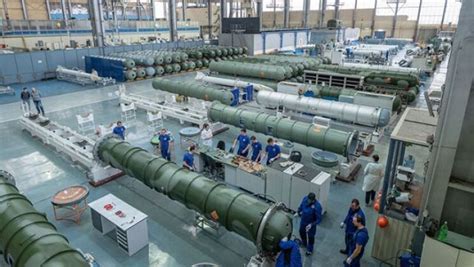
Institutions such as the Moscow Institute of Thermal Technology and the Makeyev Rocket Design Bureau have decades of accumulated expertise. By modernizing legacy platforms like Topol and Yars, Russia has been able to produce new missile families without starting from scratch. Oreshnik is a product of this evolutionary approach, blending proven propulsion with contemporary guidance and reentry technology.
Since 2022, state funding for strategic missile programs has increased steadily, reflecting a prioritization of asymmetric capabilities over economic integration. Hypersonic and long-range strike systems offer Russia a way to counter NATO’s conventional advantages without matching them platform for platform.
A Weapon Shaped by Arms Control Collapse
Oreshnik exists because the arms control ecosystem that once constrained such systems has eroded. The demise of the INF Treaty removed legal barriers to intermediate-range missiles, while the weakening of New START has reduced transparency and predictability between nuclear powers. In that vacuum, weapons optimized for ambiguity flourish.
This missile was not designed merely to threaten cities; it was designed to reshape strategic calculations. By combining speed, range, and payload flexibility, Oreshnik forces NATO to consider scenarios where warning time is measured in minutes and intent is unclear until impact. That uncertainty strains crisis management mechanisms built for slower eras.
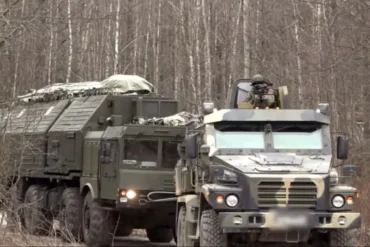
The absence of binding limits means there is little to prevent further deployment or evolution of this class of weapon. Mobile launchers, forward basing, or Arctic deployments could further expand its threat envelope, pushing North American targets into more plausible reach.
Deterrence in the High-Velocity Era
Deterrence has always been about perception as much as capability. Oreshnik strengthens Russia’s hand by convincing adversaries that escalation risks are higher and timelines shorter than before. It is a missile designed to deter intervention, to raise the perceived cost of involvement in conflicts on Russia’s periphery.
At the same time, it introduces instability. Compressed decision windows increase the risk of misinterpretation, false alarms, and precipitous responses. When leaders have minutes rather than hours to assess a launch, the margin for human judgment narrows dangerously.
For NATO and the United States, the challenge is not simply technical. It is conceptual. Existing doctrines must adapt to a world where hypersonic, dual-capable missiles blur the line between conventional and nuclear conflict. Investments in sensors, interceptors, and resilience are necessary, but so is a renewed focus on communication, transparency, and risk reduction.
A Signal, Not an Endpoint
The Oreshnik ballistic missile should be understood as a signal of direction, not a final destination. It represents a philosophy of warfare that prizes speed, ambiguity, and psychological pressure. Its use over Ukraine was a message written in plasma and velocity, aimed as much at NATO capitals as at any battlefield target.
Whether it becomes a stabilizing deterrent or a catalyst for escalation depends on how the West responds. Ignoring it invites miscalculation; overreacting risks validating its purpose. The uncomfortable reality is that weapons like Oreshnik thrive in the spaces where dialogue has collapsed and assumptions go untested.
In this high-velocity strategic era, minutes matter, ambiguity reigns, and missiles like Oreshnik are not merely tools of war. They are instruments of influence, reshaping the mental maps by which nations judge risk, resolve, and restraint.