Elbit Systems’ decision to anchor Europe’s EuroPULS rocket artillery production in Germany marks a strategic inflection point for the continent’s long-range fires ecosystem. Revealed in early February 2026 after company briefings with defense journalists, the plan positions Germany not just as a customer for advanced rocket artillery, but as the manufacturing and integration center for a growing European user community. The move arrives at a moment when European armies are reassessing ammunition security, industrial resilience, and the speed at which they can field credible deep-strike capabilities.
At its core, the decision reflects a recalibration of supply chains under pressure. Europe’s land forces have watched stockpiles thin and delivery timelines stretch, particularly for precision munitions. By localizing production in Germany, Elbit is proposing a solution that reduces dependence on distant factories while aligning with Berlin’s push to rebuild domestic defense manufacturing capacity. The message is clear: long-range fires are no longer an imported convenience but a sovereign industrial priority.
Germany’s role is pivotal because it already sits at the center of Europe’s defense-industrial gravity. Its skilled workforce, established propulsion expertise, and dense network of prime contractors and subsystem specialists make it a natural hub for complex munitions. Elbit’s plan explicitly ties German production not only to Bundeswehr needs, but also to exports for other European operators of the EuroPULS launcher family, effectively making Germany the logistical backbone of a shared capability.
Germany’s Commitment Anchors the EuroPULS Program
The timing of the announcement is tightly linked to Berlin’s own procurement decisions. Germany has already cleared funding for an initial batch of PULS multiple rocket launchers to replace MARS II systems transferred to Ukraine. This purchase represents the opening move in the Bundeswehr’s Future System Indirect Fire Long Range effort, a program intended to restore and expand Germany’s deep-fires capacity after years of relative stagnation.
The launchers themselves are being acquired through a collaborative framework involving Dutch and Israeli partners, with KNDS Deutschland acting as a key industrial integrator. Crucially, Germany’s approach separates launcher acquisition from munition procurement, leaving room for a diversified ammunition strategy. That separation makes domestic rocket production particularly attractive, as it allows Berlin to scale output, adjust mixes, and respond to operational demand without renegotiating entire system contracts.
EuroPULS is built around Elbit’s Precise and Universal Launching System, but its European incarnation is deliberately tailored. German command-and-control interfaces, NATO-compatible communications, and local integration work are designed to ensure the system fits seamlessly into Bundeswehr doctrine and alliance operations. This “Europeanized” architecture also makes it easier for other nations to plug into the same ecosystem without sacrificing national requirements.
A Modular Launcher Designed for Range and Flexibility
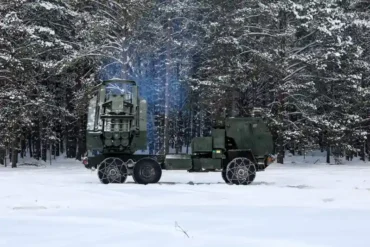
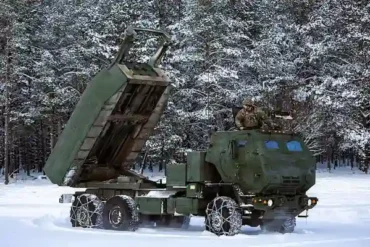
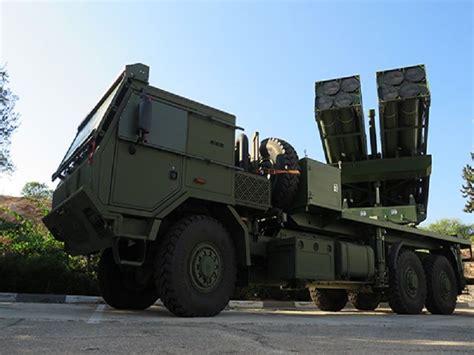
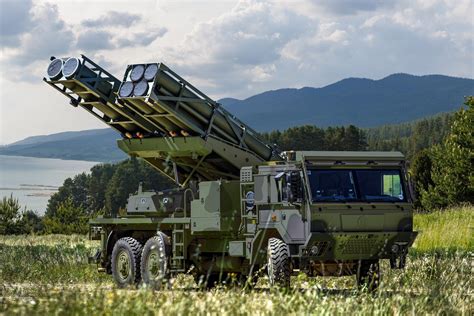
One of EuroPULS’ defining features is its modularity. Each launcher carries two pods and can mix different rocket calibers on the same vehicle, allowing commanders to tailor loads for specific missions without swapping platforms. The open launcher frame accommodates containers and launch pods up to roughly 6.5 meters in length, creating headroom for future effectors beyond today’s standard rockets.
That flexibility translates directly into operational value. A single battery can shift from short-range training fires to counter-battery suppression and then to deep precision strikes, all within the same deployment cycle. The system is optimized for rapid shoot-and-scoot tactics, emphasizing survivability against counter-fire in high-threat environments. Elbit highlights the ability to execute a complete fire mission in under a minute, a tempo designed to keep launchers alive on a crowded battlefield.
Ammunition Spectrum Shapes Combat Doctrine
The real combat weight of EuroPULS lies in its ammunition family. At the tactical end, Accular 122 mm guided rockets reach approximately 35 kilometers, while Accular 160 mm extends that envelope to around 40 kilometers. These munitions provide brigade-level commanders with responsive precision fires against artillery positions, logistics nodes, and high-value targets, without expending scarce long-range assets.
Operational-level strikes are handled by heavier effectors. The EXTRA rocket reaches roughly 150 kilometers, while Predator Hawk extends out to about 300 kilometers. Both are marketed with accuracy figures on the order of ten meters circular error probable for the guided family, a level of precision that enables strikes against headquarters, bridges, air defense nodes, and ammunition depots. German planners are widely expected to prioritize EXTRA in the first munition tranche, including interest in variants carrying the AT2 anti-tank mine payload to recreate a rapid area-denial capability once provided by MARS II.
This layered ammunition approach reshapes how a German rocket artillery battalion fights. Tactical rockets handle immediate threats and shaping fires, while longer-range munitions are reserved for deep operations that disrupt an adversary’s system rather than simply attriting forces at the front. The result is a more elastic, effects-driven doctrine that aligns with NATO’s renewed emphasis on multi-domain operations.
From Rockets to an Expanding Effector Basket
Elbit’s broader vision for EuroPULS extends beyond rockets alone. The launcher is increasingly marketed as an effector basket, a platform capable of hosting a range of guided weapons as technology and policy evolve. Discussions have included the potential integration of loitering munitions such as SkyStriker, as well as longer-range European missiles like MBDA’s Joint Fire Support Missile, a concept pitched at roughly 499 kilometers.
This is where Germany’s role as a production hub becomes strategically revealing. Elbit Systems Deutschland has indicated that a significant share of manufacturing would be localized, in cooperation with firms such as MBDA Deutschland and propulsion specialist Bayern Chemie. These partnerships are precisely the industrial building blocks required if EuroPULS transitions from a rocket artillery system into a modular launcher capable of delivering cruise-missile-class effects.
A Pan-European Market Play Takes Shape
The decision to centralize production in Germany also signals an assertive market strategy. Beyond the Bundeswehr, the Netherlands and Denmark have already selected PULS-based solutions, and Greece is frequently cited as a likely next customer, with reported interest in several dozen systems paired with expectations of domestic industrial participation. Each new customer strengthens the logic of a centralized European production hub, driving economies of scale and standardization.
For Elbit, the pattern is familiar. Win the launcher, embed local industry, and create a politically resilient program that is difficult to unwind. For Europe, the implications are more nuanced. A German-based EuroPULS hub could accelerate the emergence of a genuinely European deep-fires ecosystem, shortening supply lines and insulating production from external bottlenecks. At the same time, it sharpens competition with US-linked alternatives and underscores a growing divergence in ammunition families.
Interoperability, Sovereignty, and Strategic Trade-Offs
One of the thorniest issues remains interoperability. The United States has not approved the integration of GMLRS-family rockets with EuroPULS, and US industry has rejected such integration. As a result, Europe’s common launcher vision increasingly hinges on Europe-owned effectors rather than NATO’s most widely fielded rocket family. That reality forces difficult choices between standardization and sovereignty.
Germany’s embrace of a domestic production hub suggests a willingness to prioritize industrial autonomy, even at the cost of tighter alignment with US munitions. For European defense planners, the calculus is shifting. The ability to produce, sustain, and evolve long-range fires within Europe is becoming as important as raw performance metrics.
Elbit’s selection of Germany as the EuroPULS production center crystallizes that shift. It is a bet that Europe’s future battlefield effectiveness will depend not only on what systems armies buy, but on where and how the ammunition that feeds them is made.