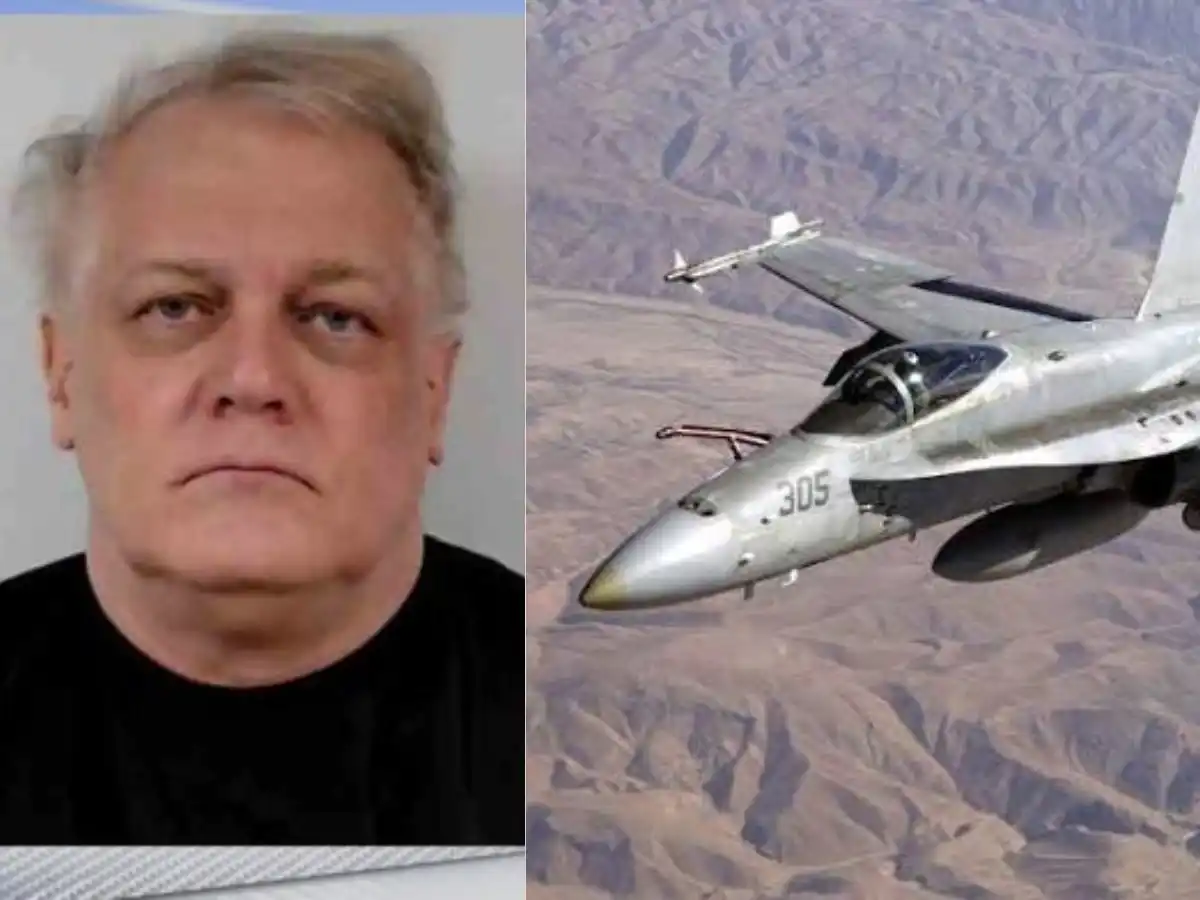
The arrest of a former F-35 Lightning II instructor pilot has intensified scrutiny over how China recruits Western military expertise to accelerate its air combat capabilities. The U.S. Department of Justice confirmed that Gerald Eddie Brown Jr., 65, a retired U.S. Air Force officer known by the call sign “Runner,” was taken into custody after returning from China, where he had reportedly been working since late 2023. Federal authorities allege that Brown conspired with foreign nationals to provide combat aircraft training to Chinese military aviators without securing the mandatory authorization from the U.S. State Department.
Brown’s case underscores a pattern that U.S. officials describe as an expanding effort by Beijing to tap into the experience of former Western fighter pilots. Prosecutors argue that the alleged conduct violated the Arms Export Control Act (AECA), a cornerstone U.S. law regulating the transfer of defense services and military knowledge abroad. The statute requires American citizens to obtain a license before providing defense-related training to foreign militaries. According to the Justice Department, no such license was obtained.
The allegations strike at the heart of a sensitive issue: whether highly specialized tactical knowledge developed within elite American fighter squadrons can be monetized after retirement—and whether doing so endangers national security when the recipient is considered a strategic competitor.
Veteran Fighter Pilot Accused of Conspiring to Train Chinese Aviators
Federal authorities state that Brown was arrested in Jeffersonville, Indiana, shortly after re-entering the United States from China. Investigators allege he had traveled there in December 2023 to begin training assignments connected to Chinese military aviation. The Justice Department asserts that Brown negotiated the arrangement months earlier, in August 2023.
Brown’s military résumé is not ordinary. During a 24-year career in the U.S. Air Force, he reportedly commanded units associated with nuclear delivery systems, led combat missions, and served as both a flight and simulator instructor on various fighter and attack aircraft. He later worked as a defense contractor, providing instruction on platforms such as the A-10 Thunderbolt II and the F-35 stealth fighter, one of the most technologically advanced combat aircraft in the world.
The F-35’s value lies not only in its radar-evading shape but in its sensor fusion capabilities—its ability to collect, process, and distribute battlefield data across networks. An instructor pilot on such a platform absorbs doctrine, tactics, and operational thinking that go far beyond stick-and-rudder flying. That intellectual capital is precisely what U.S. counterintelligence officials say adversaries seek.
Assistant Attorney General for National Security John A. Eisenberg emphasized that U.S. citizens, whether active-duty or retired, must comply with export control laws before providing defense services abroad. The National Security Division, he stated, intends to deploy every legal tool available to preserve American military advantages.
The Legal Framework: Arms Export Control Act and Defense Services
The Arms Export Control Act does more than regulate weapons sales; it governs the export of “defense services,” a category broad enough to include tactical instruction and operational training. The logic is straightforward. In modern warfare, knowledge is often as decisive as hardware.
Training in air combat maneuvers, aircraft carrier operations, or electronic warfare techniques can shift the balance of capability. When former U.S. pilots instruct foreign militaries in advanced tactics, that training may transfer insights into how American forces operate, how they communicate, and how they think under pressure.
Federal investigators allege that Brown conspired with foreign nationals, including Stephen Su Bin, a Chinese national previously imprisoned in the United States in connection with an espionage scheme. Prosecutors contend that the arrangement involved structured instruction for Chinese Air Force personnel, though the specific content of the training has not been publicly detailed.
The case demonstrates how export control law intersects with counterintelligence. While espionage conjures images of stolen blueprints or hacked databases, modern national security investigations often revolve around intangible transfers of expertise. Tactical doctrine, simulator methodologies, and threat assessment frameworks can be as strategically significant as classified documents.
A Broader Pattern: The Daniel Duggan Precedent
Brown’s arrest follows charges filed against Daniel Edmund Duggan, a former U.S. Marine Corps pilot accused of providing defense services to Chinese military aviators without authorization. Duggan’s trajectory illustrates the complex global networks through which former Western pilots have been recruited.

Duggan served in the Marines for more than a decade, reportedly flying the AV-8B Harrier II “jump jet” and participating in an exchange program with the Spanish Navy. After leaving the U.S. military, he established aviation ventures in Australia, including Top Gun Australia, before relocating to Beijing in 2014. Authorities allege that his activities in China involved aviation consultancy and potentially training roles linked to military personnel.
Australian Federal Police detained Duggan in 2022 following a U.S. extradition request. He has denied the allegations and characterized them as politically motivated. His legal battle continues, and he has warned that extradition could expose him to decades in prison.
U.S. officials point to the Duggan case as evidence of a systematic effort by Beijing to recruit former Western military aviators. Intelligence agencies have reported that Chinese entities, sometimes operating through private companies based in China or South Africa, offer lucrative contracts to retired fighter pilots. These arrangements allegedly focus on improving the People’s Liberation Army Air Force (PLAAF) and naval aviation proficiency in areas such as carrier landings, advanced air combat tactics, and operational planning.
Strategic Stakes: Why Pilot Expertise Matters
Training elite fighter pilots is neither quick nor inexpensive. It demands years of instruction, exposure to high-end simulators, and access to classified operational environments. When a pilot becomes an instructor on aircraft like the F-35, that individual embodies decades of institutional learning.
Air combat is not simply about flying fast jets. It is about tactics, techniques, and procedures—the choreography of multi-aircraft formations, data-link coordination, and decision-making under contested conditions. Teaching these elements can offer a foreign military insight into how U.S. and allied pilots might maneuver in future conflicts.
From Washington’s perspective, the transfer of such knowledge to a strategic competitor risks eroding qualitative advantages carefully cultivated over generations. FBI counterintelligence officials have described China’s recruitment efforts as part of a broader modernization strategy aimed at closing gaps with Western air forces.
The tension here reflects a paradox of globalization. Retired military professionals operate in a global labor market. Yet their experience is rooted in state-funded training programs designed to maintain national defense superiority. When that experience is exported without authorization, the line between private employment and national security breach becomes sharply contested.
Counterintelligence Response and National Security Implications
Federal authorities have framed Brown’s arrest as both a legal action and a deterrent message. The FBI’s Counterintelligence and Espionage Division has warned that collaboration with adversarial militaries will trigger aggressive investigation and prosecution. The Air Force Office of Special Investigations similarly emphasized that providing U.S. military training to strategic rivals constitutes a significant threat.
These cases unfold against a backdrop of escalating U.S.–China competition in the Indo-Pacific. Both nations are investing heavily in advanced fighter platforms, unmanned systems, and network-centric warfare. Within that environment, expertise is currency.
Whether Brown’s alleged actions materially altered Chinese operational capabilities remains unclear. What is clear is that U.S. authorities view such training as strategically consequential enough to warrant federal prosecution under export control statutes.
As the legal process advances, the case will likely illuminate the boundaries of lawful post-service employment for former military personnel. It also reinforces a broader reality: in an era defined by technological rivalry, the most sensitive export may not be a jet engine or radar array, but the lived experience of the pilot who knows how to use it.