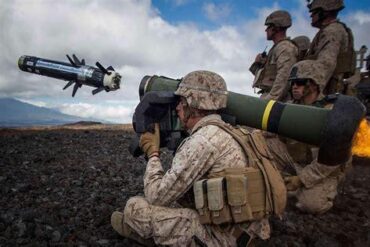
The FGM-148 Javelin missile has become one of the most recognizable and effective anti-tank weapons of modern warfare, redefining battlefield dynamics with precision, portability, and devastating impact. Its reputation surged globally during the early stages of the Russo-Ukrainian conflict, where it proved instrumental in halting armored advances and reshaping tactical engagements. Behind this compact yet formidable weapon lies a sophisticated industrial collaboration that merges decades of innovation, competition, and strategic partnership.
At its core, the Javelin is not just a missile—it is a symbol of modern asymmetric warfare, empowering smaller units with the ability to neutralize heavily armored threats. Its fire-and-forget technology, top-attack capability, and lightweight design have made it indispensable in urban combat and guerrilla-style operations, where agility and precision outweigh brute force.
The Javelin Joint Venture: A Strategic Defense Alliance
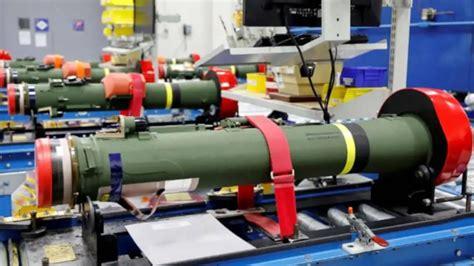
The FGM-148 Javelin is manufactured by the Javelin Joint Venture, a collaboration between two of the most influential defense contractors in the world: Lockheed Martin and RTX Corporation. This partnership is notable not only for its technical achievements but also because it unites companies that have historically been fierce competitors in the defense sector.
The joint venture structure allows both firms to combine their specialized expertise. Lockheed Martin contributes advanced missile systems integration and production capabilities, while RTX Corporation brings cutting-edge guidance systems and sensor technologies. Together, they have created a weapon system that remains unmatched in its class.
Origins of the Javelin Missile Program
The roots of the Javelin missile trace back to the Cold War era, when the U.S. military sought a replacement for the aging M47 Dragon anti-tank missile. The initiative was driven by the Defense Advanced Research Projects Agency, which aimed to develop a more reliable and technologically advanced solution capable of countering evolving armored threats.
After years of research, testing, and bureaucratic navigation, the contract was awarded to a joint effort between Texas Instruments—later integrated into RTX—and Martin Marietta, which eventually became part of Lockheed Martin. This early collaboration laid the foundation for what would become the modern Javelin system.
The first successful test firing occurred in 1993, marking a major milestone in the program’s development. By 1997, the missile had entered full-rate production, signaling its readiness for deployment across U.S. military units.
Battlefield Proven: From Iraq to Ukraine
The Javelin’s combat debut came during the Iraq War, where it demonstrated its effectiveness against armored vehicles and fortified positions. It later saw extensive use in Afghanistan, further proving its reliability in diverse combat environments.
However, it was during the Russo-Ukrainian conflict that the Javelin achieved near-legendary status. Ukrainian forces used the missile to devastating effect against advancing armored columns, often striking from concealed positions in urban and rural terrain. Early reports suggested exceptionally high hit rates, reinforcing the missile’s reputation for accuracy and lethality.
Its cultural impact was equally significant. The weapon became a symbol of resistance, earning the nickname “Saint Javelin” and appearing in artwork, media, and propaganda. This transformation from military hardware to cultural icon underscores its profound influence beyond the battlefield.
Why the Javelin Is So Effective
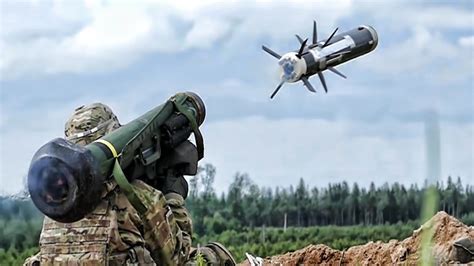
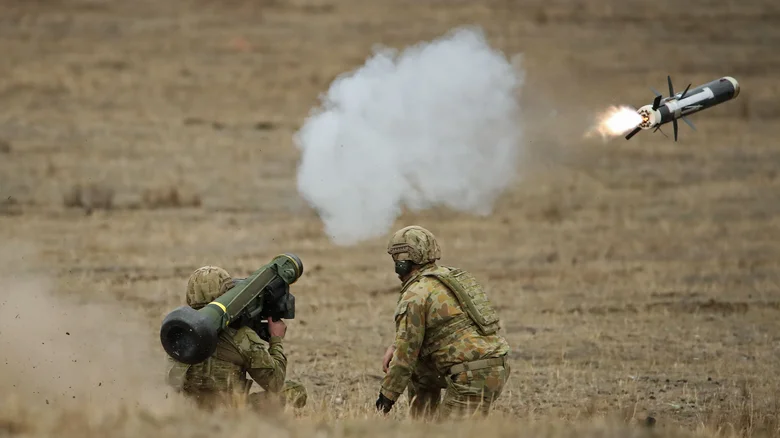
The effectiveness of the Javelin missile lies in its advanced guidance system and tactical flexibility. Unlike earlier anti-tank weapons, it allows the operator to lock onto a target before launch and then immediately relocate, minimizing exposure to enemy fire.
Key features include:
- Top-attack trajectory, targeting the weakest armor on tanks
- Fire-and-forget infrared guidance, eliminating the need for continuous tracking
- Lightweight portability, enabling rapid deployment in urban combat
These capabilities make it particularly effective against modern main battle tanks, which are heavily armored on the front and sides but vulnerable from above.
The Future of Javelin Production and Deployment
As of 2026, the Javelin Joint Venture continues to scale up production to meet increasing global demand. The system is expected to remain a cornerstone of U.S. and allied military arsenals well into the mid-21st century, with ongoing upgrades focused on extending range, improving targeting systems, and enhancing overall survivability.
The partnership between Lockheed Martin and RTX Corporation stands as a testament to what can be achieved when technological rivalry gives way to strategic collaboration. Together, they have not only built a missile but have also reshaped the modern battlefield—one precise strike at a time.