Russia launched one of its most aggressive aerial assaults on Ukraine overnight into Saturday, unleashing 597 attack drones and 26 cruise missiles in a sweeping offensive that struck regions from Kharkiv and Sumy in the east to Lviv and Bukovyna in the west. Despite Ukraine’s successful interception of 319 drones and 25 missiles, at least six civilians were killed and dozens more were injured in what Ukrainian officials describe as a desperate yet calculated escalation by Moscow.
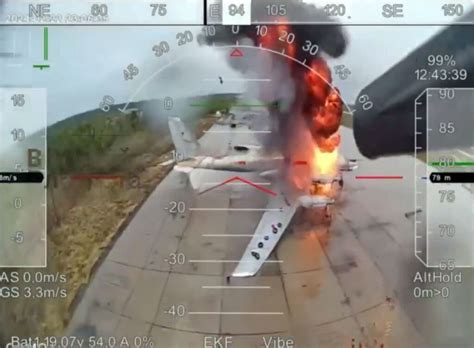
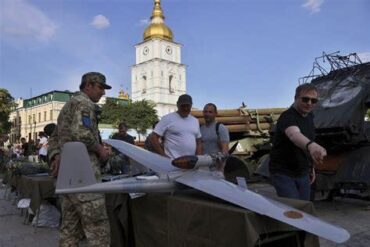
The assault was not only vast in its scale but also complex in its execution. A large portion of the drones, according to Ukrainian President Volodymyr Zelensky, were Shahed-type drones—Iranian-designed loitering munitions notorious for their precision targeting and kamikaze-style impact. Many were launched simultaneously alongside decoy drones intended to overwhelm Ukraine’s air defense systems, exposing the vulnerability of even the most fortified cities in the west.
Chernivtsi and Lviv: Civilian Zones Hit Hard
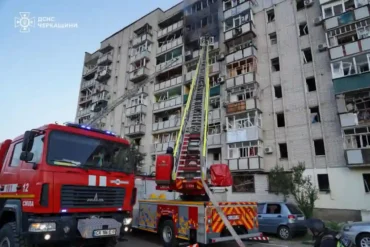
In Chernivtsi’s Bukovina region, the attack claimed two lives and injured 26 others. The casualties were caused not by direct hits, but by falling drone debris, underlining the indiscriminate danger these UAVs pose even after being intercepted. Meanwhile, Lviv, a critical logistics and supply hub for Western military aid, suffered a separate wave of drone strikes that injured at least 12 people, according to local governor Maksym Kozytskyi.
This encroachment on Ukraine’s western regions has sent ripples beyond its borders. In response to the growing threat, Poland scrambled fighter jets near its Ukrainian border, reinforcing air defense postures and signaling rising tensions in NATO’s eastern flank.
Ukraine’s Air Defense Holds—but Faces Growing Strain
While Ukraine’s air defense successfully neutralized more than half of the drones and nearly all the cruise missiles, the volume and sophistication of the attack is alarming. Zelensky stated that many of the drones were designed specifically to simulate combat signatures, misleading radar systems and allowing actual Shahed drones to sneak through undetected.
This new strategy from Russia hints at deeper coordination and evolving tactics. The use of decoy drones—possibly stripped-down models lacking explosive payloads—aims to exhaust missile stockpiles and create artificial threat patterns that make it difficult for air defense personnel to prioritize genuine targets.
High-Level Reactions and Strategic Implications
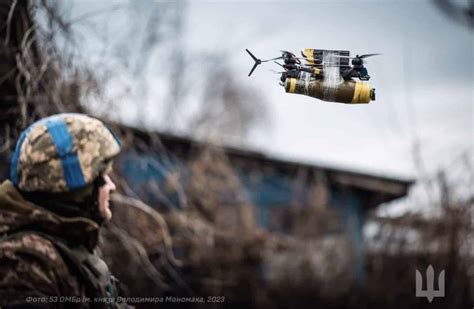
President Zelensky, in a strongly worded post on X (formerly Twitter), reiterated Ukraine’s urgent need for additional air defense systems and interceptor drones. He also called for secondary sanctions on individuals and entities aiding Russia’s drone production and oil-based war financing.
“This war can only be stopped through strength. We expect not just signals from our partners, but actions that will save lives,” Zelensky emphasized.
This plea comes as Ukraine’s allies evaluate the efficacy and sustainability of their support. The frequency of Russia’s long-range attacks is steadily increasing, suggesting a broader campaign to break Ukrainian will and exhaust its defense capabilities ahead of another winter offensive.
Ground Pressure Along the Front Line Intensifies
While skies across Ukraine burned with drone trails and missile fire, Russian ground forces also ramped up pressure along the 620-mile front line. According to the Russian Defense Ministry, 33 Ukrainian drones were intercepted overnight, suggesting a counteroffensive push by Kyiv that continues despite the air onslaught.
Russia’s dual-pronged approach—combining relentless air strikes with renewed ground assaults—is designed to disrupt Ukrainian logistics, reduce morale, and fracture front-line cohesion. Ukrainian commanders have reported increased artillery barrages and infantry pushes near hotspots like Avdiivka, Kupiansk, and Bakhmut, with civilian evacuations surging in surrounding towns.
Russia’s Claim: Strategic Military Targets Hit
In contrast to Kyiv’s civilian casualty reports, Moscow’s Defense Ministry maintained that the attacks targeted military-industrial complexes in Lviv, Kharkiv, and Lutsk, as well as a military airfield. These claims, however, remain unverifiable and contradict on-ground reports of damage to residential blocks and humanitarian infrastructure.
Analysts believe that Russia’s current approach reflects a calculated disregard for civilian safety, masked under vague military pretexts. By targeting western cities such as Lviv—previously regarded as relatively secure—Russia appears intent on shattering perceptions of safety, thereby increasing internal displacement and creating new logistical nightmares for aid agencies.
Global Response: Diplomatic Channels Remain Stalled
Amid rising death tolls and destroyed infrastructure, diplomatic efforts to mediate peace remain deadlocked. US Special Envoy Keith Kellogg is set to arrive in Kyiv on Monday for renewed talks, yet expectations are tempered.
Meanwhile, French President Emmanuel Macron disclosed that European powers have a rapid deployment peacekeeping plan ready, contingent on a ceasefire. However, the Kremlin has rejected any European force presence, labeling it a violation of Russian sovereignty.
Simultaneously, former US President Donald Trump held a rare conversation with Russian President Vladimir Putin last Thursday. Despite the diplomatic gesture, no breakthroughs were reported. Putin reportedly reiterated his demands, which include Ukraine’s renunciation of NATO ambitions, recognition of Russian claims over annexed territories, and the elimination of what Russia terms the ‘root causes’ of the conflict.
Geopolitical Consequences and Escalation Risks
With air strikes now touching the far west of Ukraine and neighboring countries reacting with military readiness, the war is entering a phase of dangerous proximity to NATO’s eastern edge. The use of drones so close to Polish and Slovakian borders raises the possibility of inadvertent spillover, which could trigger Article 5 consultations under the NATO treaty.
Moreover, Russia’s escalation through both quantity and ingenuity—not just launching hundreds of drones, but intermixing decoys and missile salvos—could set a precedent for future asymmetric warfare models. These attacks serve not only military objectives but also information warfare, broadcasting strength and undermining confidence in Western air defense donations.
Conclusion: The Price of Attrition in Ukraine’s Sky War
Saturday night’s bombardment underscores a chilling new chapter in the war: one where drones outnumber missiles, where civilian zones are no longer safe, and where psychological warfare is waged through sheer scale and surprise. The successful downing of over 300 drones is a testament to Ukrainian resilience and evolving capabilities, yet it also reveals how tenuous the balance of defense remains.
Ukraine now stands at a crossroads—its cities darkened by frequent blackouts, its air defenses fatigued by relentless threats, and its citizens bearing the brunt of a war fought in skies and streets alike. The global community watches, again, as the cost of inaction rises with every drone that slips through, every building that crumbles, and every life that is lost to war.