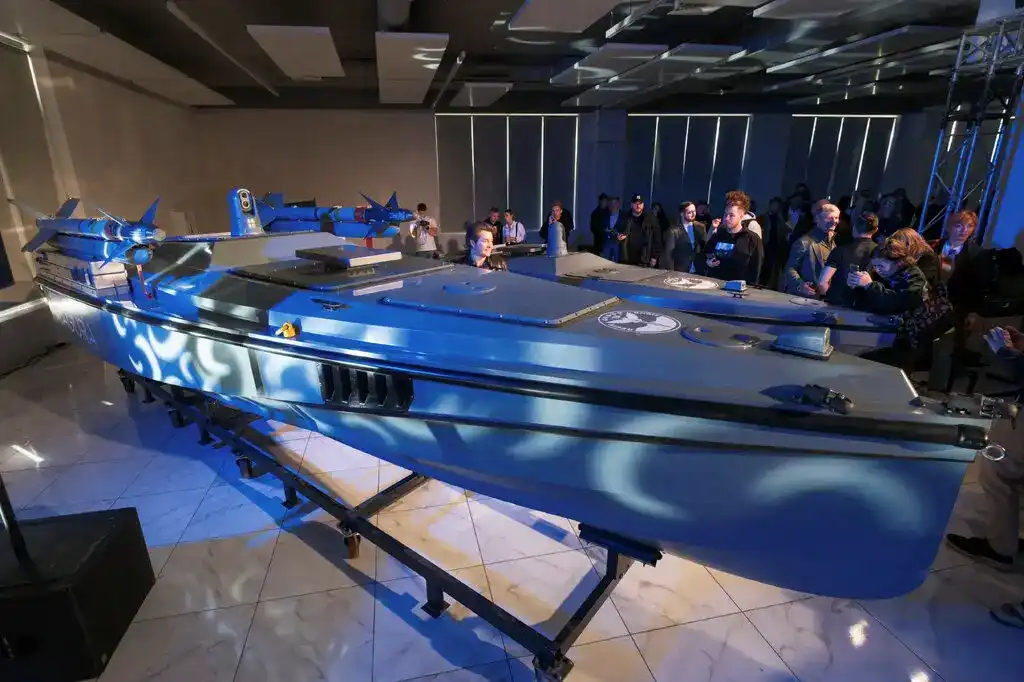
Over the past three years, Ukraine has emerged as a formidable innovator in unmanned warfare, crafting a growing arsenal of drones and robotic systems that have inflicted serious losses on Russian forces. As its war effort intensifies, Ukraine’s battlefield ingenuity has extended from the skies and land to the high seas, with the recent debut of an unprecedented weapon: the Magura V7 sea drone.
This latest advancement marks a bold evolution in Ukraine’s drone strategy, transforming a sleek, remote-controlled speedboat into a floating antiaircraft platform capable of hunting and destroying enemy jets. The Magura V7 represents not only a technological breakthrough but also a strategic maneuver in response to shifting Russian tactics at sea.
Ukraine’s Sea Drone Evolution: From Kamikaze Boats to Missile Platforms
Since the outbreak of full-scale war in 2022, Ukraine has relied heavily on drones for reconnaissance, strikes, and psychological warfare. Initially, sea drones were deployed primarily in suicide missions—slamming into Russian warships with payloads of up to half a ton of explosives. These kamikaze boats, often launched in coordinated swarms, proved effective but were vulnerable to aerial countermeasures.
Russian forces quickly adapted, deploying helicopters and naval defenses to intercept these drones before they could reach their targets. This created a tactical gap—a challenge that Ukraine’s engineers and military planners were quick to address. Enter the Magura V7, a 24-foot high-speed marine drone reengineered to target Russian aircraft instead of surface vessels.
The Magura V7: A New Maritime Predator
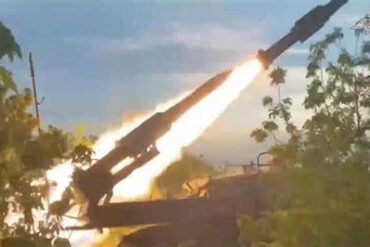
Unveiled to the media on May 14 by General Kyrylo Budanov, head of Ukraine’s military intelligence agency, the Magura V7 is a game-changing leap in unmanned naval warfare. The vessel sports mounted antiaircraft missile launchers, a central optical-electronic targeting system, and the ability to linger at sea for days, waiting patiently for enemy aircraft to stray into range.
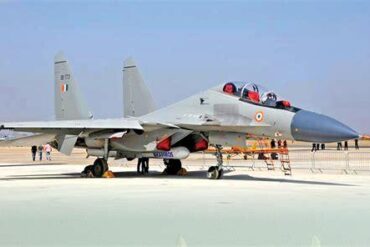
According to Ukrainian officials, the Magura V7 was used to shoot down two Russian Su-30 fighter jets in the spring of 2025. Independent military analysts have largely corroborated this account, marking the event as the first documented instance of a drone boat shooting down a manned fighter aircraft.
Unprecedented Combat Tactics and Strategic Impact
Unlike traditional surface-to-air systems, which are stationary or mounted on large platforms, the Magura V7 offers mobility, stealth, and unpredictability. Ukrainian drone operator “Xena,” a member of the elite Group 13 unit, explained that missions are meticulously planned over weeks, involving close surveillance of Russian airbases and naval assets. Each deployment originates from a different, undisclosed location to maintain operational secrecy.
Xena emphasized that the drone can operate autonomously or as part of a larger naval swarm, increasing its lethality. In the Su-30 takedown, the Magura V7 is said to have operated alongside other drones that acted as decoys and spotters, coordinating a surprise assault on the unsuspecting Russian aircraft.
Military analysts, including Dr. Sidharth Kaushal of the Royal United Services Institute and Rob Lee of the Foreign Policy Research Institute, have noted the global novelty of this application. “It’s a historic first,” said Kaushal. “We have never seen sea drones used in this way in any other conflict.”
War by Software: Ukraine’s Civilian Tech Backbone
Ukraine’s rapid ascent in drone warfare has been fueled in part by its deep pool of civilian tech talent. Prior to the war, many Ukrainian software engineers and developers worked remotely for companies in Silicon Valley and across Europe. Since the Russian invasion, this expertise has been rechanneled into the design, programming, and operation of advanced unmanned systems.
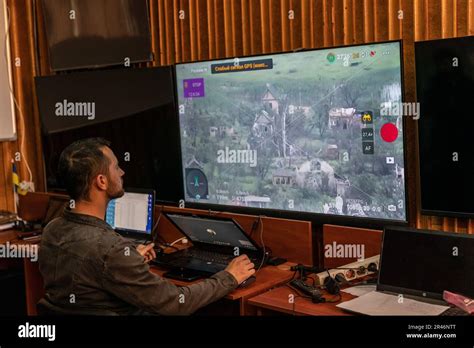
This civilian-military partnership has allowed Ukraine to stay agile in a constantly evolving battlefield, producing a stream of hardware and software upgrades faster than traditional military contractors. Each iteration is field-tested and refined based on frontline feedback, a process that has made systems like the Magura V7 possible in remarkably short timeframes.
Magura’s Tactical Flexibility: From Air Superiority to Amphibious Assault
The current generation of Magura drones is not limited to air defense roles. According to intelligence spokesperson Andriy Yusov, the boats can also serve as “mother ships”—launching smaller quadcopters that can either attack enemy targets at sea or conduct shore-based raids. These embedded UAVs are guided by remote operators and can be used for precision strikes, surveillance, or even as explosive delivery systems.
In parallel, the Ukrainian government has showcased aerial versions of such drone carriers. In March, Digital Transformation Minister Mykhailo Fedorov published footage of airborne mother drones deploying attack UAVs behind enemy lines, extending Ukraine’s reach and complicating Russian defense efforts.
Redefining Warfare: A War of Innovation and Counter-Innovation
Ukraine’s weaponization of sea drones signals a new phase in the conflict, one defined not just by firepower but by adaptive ingenuity. Each new deployment forces the adversary to respond, triggering a constant loop of innovation and countermeasure. As Rob Lee notes, “It’s a constant cycle of adaptation on both sides.”
For instance, Russia has increased aerial patrols and invested in anti-drone technology to counter the growing swarm threat. In response, Ukraine has transitioned toward more covert and longer-range systems, like drones launched from hidden trucks on Russian soil—an audacious tactic used in the recent strike on airfields across eastern Siberia and western Russia.
Global Implications: The First True Drone War
The war in Ukraine has become the world’s first large-scale drone war, with both sides deploying unmanned systems in nearly every domain: land, air, and sea. However, Ukraine’s hybrid approach—merging advanced software with tactical hardware—is proving particularly disruptive.
Military expert Pasi Paroinen of the Finland-based Black Bird Group stated that while the Magura V7 alone may not be a “game changer,” its integration into a broader combat strategy could yield “considerable impact on the battlefield.”
Indeed, since the start of the full-scale invasion, Ukraine claims to have used various versions of the Magura drone to damage or destroy 16 Russian warships. Though unverified independently, these figures align with the losses reported by open-source intelligence and satellite imagery.
Future Frontlines: What Comes Next?
As summer approaches and weather conditions stabilize, both Ukraine and Russia are expected to ramp up drone operations across all fronts. For Ukraine, the challenge will be to maintain its technological edge while continuing to experiment with novel applications like the Magura V7.
The commander of Group 13 emphasized during the May 14 presentation that field-testing these sea drones under combat conditions has been an immense undertaking. Unlike air or ground drones, no established doctrine exists for deploying marine drones with missile capabilities, making every mission a leap into uncharted territory.
Still, if recent events are any indication, Ukraine is committed to rewriting the rules of modern warfare—turning the seas into hunting grounds, and speedboats into missile-launching phantoms.
Conclusion: A Watershed Moment in Unmanned Warfare
The Magura V7 is more than a new weapon; it is a symbol of Ukraine’s resolve to innovate under fire. As traditional military paradigms falter under the pressure of fast-evolving threats, Ukraine’s approach offers a vision of how asymmetric warfare can level the playing field through creativity, speed, and resilience.
With every successful mission, these sea drones are reshaping both the literal and strategic maps of the war—forcing adversaries to rethink, rearm, and react in an arms race that is increasingly being fought with code, courage, and carbon fiber.