Military aviation is filled with technical jargon and dramatic-sounding terminology, but few phrases are as misunderstood as the “headbutt maneuver.” Unlike the violent connotation the name suggests, this technique involves zero physical contact between planes. Instead, it serves as a non-lethal interception method, executed by modern fighter jets to get the attention of unresponsive aircraft—often intruding civilian planes—and to guide them out of restricted or hostile airspace.
The growing frequency of unauthorized incursions and military tensions, such as those observed during the Russo-Ukrainian War, have made these tactics more visible to the public. But what exactly does it mean when a fighter “headbutts” another plane?
What Is a Headbutt Maneuver in Aviation?
At its core, a headbutt maneuver is a visual and physical show of force—meant to signal, intimidate, or coerce an aircraft into compliance without escalating to violence. It is most commonly employed when a civilian or foreign aircraft enters restricted airspace and does not respond to conventional communication methods, such as radio hails.
In practical terms, the maneuver involves a fighter jet positioning itself directly in front of the target aircraft—sometimes just a few hundred feet ahead—thereby subjecting the intruding plane to its jetwash, the turbulent exhaust from its engines. This intense wake causes disruptive air currents that affect the trailing aircraft’s stability, forcing the pilot to take notice.
Real-World Case: F-35A Lightning II Over Florida
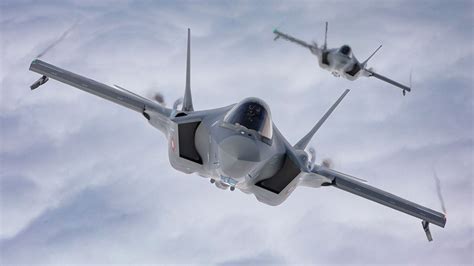
One of the most recent and publicly discussed examples of this maneuver took place in April 2025, when a U.S. Air Force F-35A Lightning II intercepted a civilian aircraft near Mar-a-Lago in Palm Beach, Florida. The intruding aircraft had entered highly restricted airspace and was unresponsive to repeated radio transmissions. The F-35 executed a controlled headbutt, flying in front of the aircraft and disrupting its path with jetwash to capture the pilot’s attention. Once contact was acknowledged, the fighter guided the plane to land safely outside of the restricted zone.
The Mechanics of a Headbutt: Precision and Danger
Despite its dramatic nickname, the maneuver requires precision flying, calculated distance, and split-second decision-making. There are several tactical variations depending on the urgency of the situation and the behavior of the intercepted aircraft:
- Wake-Based Headbutt: The most recognizable form, where the fighter jet deliberately flies just far enough ahead of the target to disrupt it with jet exhaust turbulence.
- Silent Shadow Pass: A lower-risk version where the fighter approaches beneath the target and then ascends in front of it, minimizing wake disturbance while remaining visible.
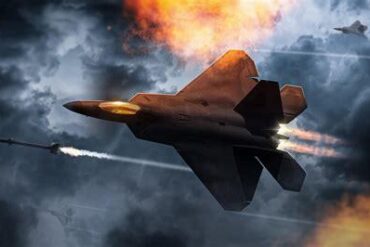
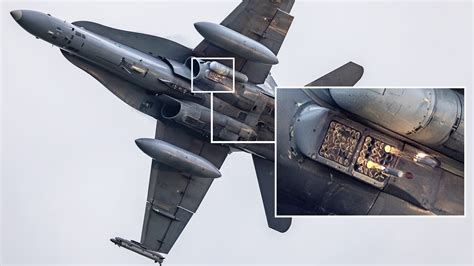
- Flare Escalation: If the initial headbutt is ignored, the fighter may release infrared flares to create a bright, unmistakable visual signal to the pilot.
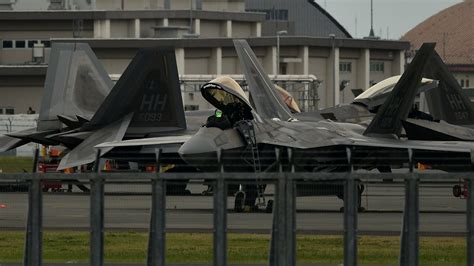
The wake produced by aircraft like the F-22 Raptor or F-35 can be intense enough to make stable flying nearly impossible for smaller planes. This physical cue is extremely difficult to overlook, even if the pilot lacks radio reception or is distracted.
Non-Lethal Communication in High-Stakes Airspace
The purpose of the headbutt maneuver is non-lethal engagement. In most scenarios, the aircraft being intercepted is not assumed to be hostile—rather, it may be suffering technical failure, miscommunication, or navigational errors. However, the stakes are high. Unauthorized incursions over sensitive facilities, military bases, or presidential no-fly zones can’t be taken lightly.
Once the aircraft acknowledges the presence of the intercepting fighter, they are visually directed to follow, usually through wing gestures or hand signals if close enough. The fighter then guides the plane out of restricted airspace or toward a designated airfield for inspection.
Military Variations: When the Target Isn’t Civilian
While the majority of headbutt incidents involve civilian aircraft, the maneuver can also be employed during military-to-military confrontations. These are far riskier due to the potential for escalation and the fact that the opposing aircraft might be armed and capable of retaliation.
For example, if a foreign strategic bomber enters sensitive airspace, an intercepting fighter might initiate a headbutt while a wingman stays hidden or flanks from another angle. This setup ensures that if the intruder becomes aggressive, backup is already in position to engage.
These military headbutts aren’t just about communication—they’re often a test of resolve, a demonstration of dominance, or a calculated warning. Especially in regions where NATO, Russian, or Chinese forces patrol overlapping flight corridors, these engagements can become geopolitical flashpoints.
Technical Factors and Risks of a Headbutt
Executing a headbutt is not without operational risk. Jetwash can destabilize smaller aircraft to a dangerous degree, possibly leading to loss of control or midair incidents. The intercepting fighter must also maintain precise control of speed, distance, and altitude to ensure the maneuver is assertive—but not catastrophic.
Furthermore, the tactic hinges on pilot judgment. A miscalculation in wake intensity or closing distance could inadvertently cause a near-miss, or worse. That’s why only highly trained military pilots—typically from elite squadrons such as the U.S. Air Force’s 33rd Fighter Wing or Navy’s VFA squadrons—are authorized to perform them.
International Protocols and Rules of Engagement
Globally, there are recognized interception procedures governed by the International Civil Aviation Organization (ICAO) and tailored by national air forces. These include:
- Approaching from the left side of the aircraft
- Waggling wings as a visual signal
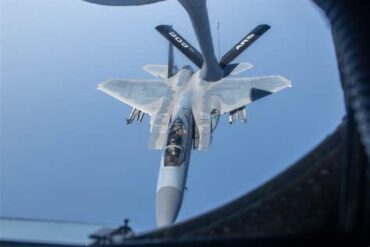
- Flying in close formation before gradually moving ahead
- Leading the aircraft to a landing zone
Headbutts are considered a last resort, used only when more conventional signals—such as visual identification or radio—fail. Despite their aggressive appearance, they are widely seen as a de-escalation tactic designed to avoid combat.
The Psychological Impact: Fear as a Tool
Few things are more terrifying to a civilian pilot than seeing a stealthy fifth-generation fighter like an F-35 or F-22 emerge from nowhere, fly in formation, and then deliberately cut across your path. Even without weapons drawn, the sheer presence and motion of these aircraft is enough to command attention.
Military planners understand this psychological effect. By exploiting the fear and confusion such maneuvers can cause—especially against untrained or panicked intruders—the headbutt becomes a potent method of gaining immediate compliance.
When Headbutts Aren’t Enough
There are rare occasions when headbutts and flares fail to resolve the situation. If the intruding aircraft is still unresponsive or behaves erratically, intercepting forces must consider rules of engagement that allow escalation. This could involve escorting the aircraft with armed fighters in attack posture or, in extreme cases, seeking authorization for a shootdown.
These outcomes are exceedingly rare, but they underscore why the headbutt remains a valuable tool in the air superiority toolbox—it allows nations to signal intent without starting a war.
Conclusion: Tactical Diplomacy in the Sky
The so-called headbutt maneuver is more than just aviation jargon—it’s a tactical, high-stakes method of engagement that walks the razor’s edge between diplomacy and deterrence. Whether it’s over Mar-a-Lago, in contested European airspace, or near the South China Sea, the ability to assert control without engaging weapons is invaluable.
In an age where civilian drones, lost aircraft, and geopolitical tensions collide in the skies, techniques like these remain a cornerstone of aerial defense strategy. Far from being reckless or aggressive, a headbutt is often the final warning before a situation spirals out of control—and one of the last tools available before conflict turns kinetic.