The Islamic Republic of Iran Air Force (IRIAF) operates one of the most unusual military aviation fleets in the modern world. While most air forces constantly replace older aircraft with newer generations, Iran’s fleet tells a different story—one shaped by revolution, geopolitical isolation, decades of sanctions, and an ongoing effort to maintain operational capability with limited resources.
Today, Iran’s combat aviation inventory is often described as a hybrid force of Cold War-era aircraft, domestically modified fighters, and a small number of Russian and Chinese designs. Many of the aircraft flying under the Iranian flag were originally delivered before the 1979 Iranian Revolution, when the United States was Tehran’s primary military partner.
Over four decades later, the legacy of those purchases still defines the country’s air power. American-built fighters such as the Grumman F-14 Tomcat, McDonnell Douglas F-4 Phantom II, and Northrop F-5 Tiger II remain among the backbone platforms of the IRIAF. Maintaining these aircraft without official spare parts support has forced Iran to become extremely creative with maintenance, reverse engineering, and parts cannibalization.
This article explores the complete aircraft inventory of the Iran Air Force, examining the fighter jets, bombers, transports, trainers, and emerging drone systems that define Iranian military aviation today.
Understanding The Structure Of Iran’s Military Aviation Forces
Before examining the aircraft themselves, it helps to understand how Iran organizes its aviation forces. Unlike most countries that operate a single air force branch, Iran splits aviation responsibilities across multiple organizations.
The Islamic Republic of Iran Air Force (IRIAF) is the main strategic air arm responsible for:
- Air defense and interception
- Strategic strike missions
- Military transport
- Pilot training
- Maritime patrol operations
Alongside the IRIAF exists the Islamic Revolutionary Guard Corps Aerospace Force (IRGCAF). This separate organization focuses primarily on missile forces, drones, and limited tactical aviation, supporting the IRGC’s ground units.
A third aviation component operates under the Islamic Republic of Iran Army (IRIA) Aviation Command, which maintains a large helicopter fleet for battlefield transport and attack missions.
This fragmented structure means Iran’s overall air capability comes from a combination of fighters, helicopters, drones, and missile systems, rather than from the air force alone.
Iran’s Fighter Jets: The Core Of The IRIAF
Fighter aircraft remain the most important element of Iran’s military aviation strategy. The country’s defense doctrine focuses heavily on protecting its airspace from potential strikes by technologically advanced adversaries.
The following aircraft represent the primary fighter jets currently serving in the IRIAF.
Grumman F-14 Tomcat
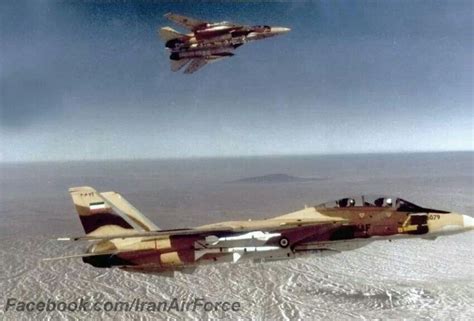
One of the most fascinating aircraft still flying in Iran is the F-14 Tomcat, a legendary American fighter made famous by its variable-sweep wings and long-range radar capabilities.
Before the 1979 revolution, Iran was the only foreign nation allowed to purchase the F-14, receiving dozens of aircraft from the United States. These fighters were originally intended to defend Iranian airspace from Soviet reconnaissance aircraft during the Cold War.
Despite decades of sanctions, Iran has managed to keep a portion of its Tomcat fleet operational through:
- Reverse-engineered spare parts
- Domestic electronics upgrades
- Cannibalization of grounded airframes
Around 40 F-14 Tomcats are believed to remain in Iranian service, although the number of aircraft actually flight-ready at any given time is likely far lower.
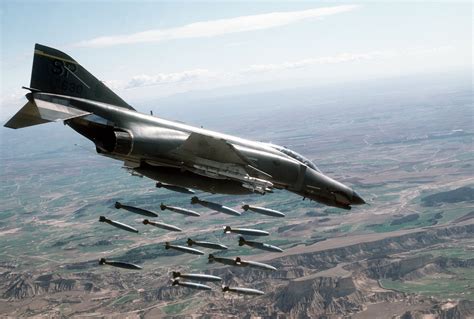
McDonnell Douglas F-4 Phantom II
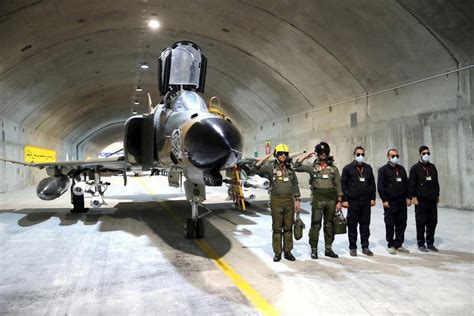
The F-4 Phantom II forms another major component of Iran’s fighter fleet. This twin-engine fighter-bomber entered service in the 1960s but continues flying in Iran decades after retirement in most other countries.
Iran reportedly operates over 60 Phantom aircraft, including variants used for both interception and ground attack missions.
These jets played a significant role during the Iran-Iraq War (1980–1988) and remain valuable due to their:
- Large payload capacity
- Long operational range
- Proven reliability in combat
Iran has implemented several local upgrade programs to keep the Phantom relevant, including improvements to radar systems, avionics, and weapon integration.
Northrop F-5 Tiger II
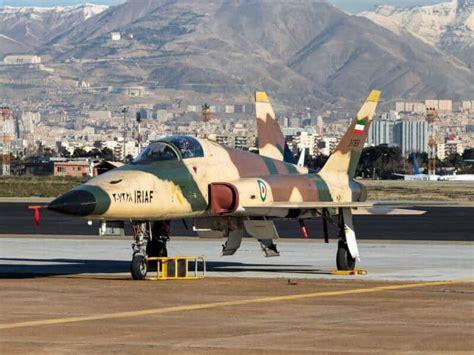
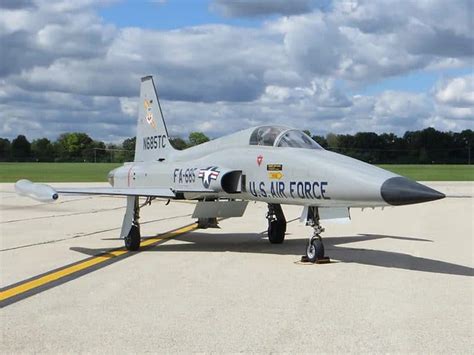
The F-5 Tiger II is another American-built fighter that still forms part of the Iranian air defense network. Originally designed as a lightweight and affordable fighter, the F-5 proved easy to maintain and highly adaptable.
Iran currently operates roughly 50 F-5 fighters, making it one of the most numerous aircraft types in its inventory.
Because of its relatively simple design, the F-5 has become the foundation for several Iranian domestically produced fighters, including:
- HESA Saeqeh
- Azarakhsh
- Kowsar
These aircraft are heavily based on the F-5 airframe but incorporate locally developed avionics and structural modifications.
Russian And Chinese Fighter Aircraft In Iranian Service
In addition to its American legacy fleet, Iran operates a smaller number of Russian and Chinese aircraft acquired after the revolution.
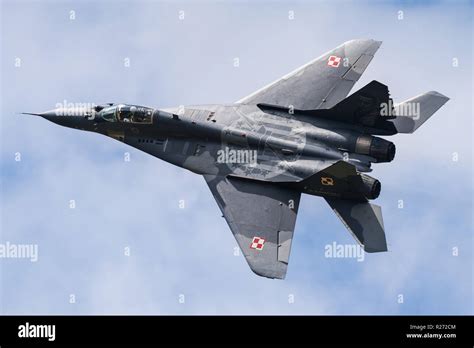
MiG-29 Fulcrum
The Mikoyan MiG-29 represents Iran’s most modern operational fighter in terms of design generation. Delivered in the early 1990s after the collapse of the Soviet Union, the MiG-29 provided Iran with a fourth-generation air superiority platform.
Iran currently fields around 24 MiG-29 fighters, primarily tasked with intercepting hostile aircraft and defending strategic airspace.
These jets feature:
- High maneuverability
- Advanced radar systems for their era
- Short-range air-to-air missile capability
Although capable, many analysts believe the MiG-29 fleet suffers from maintenance limitations and limited spare parts availability.
Sukhoi Su-24 Fencer
The Sukhoi Su-24 is a supersonic tactical bomber designed for deep strike missions. Iran obtained these aircraft during the 1990s, including several Iraqi jets that fled to Iran during the Gulf War.
Approximately 23 Su-24 bombers remain in service today.
These aircraft provide the IRIAF with long-range strike capability, capable of carrying precision bombs, guided missiles, and conventional munitions.
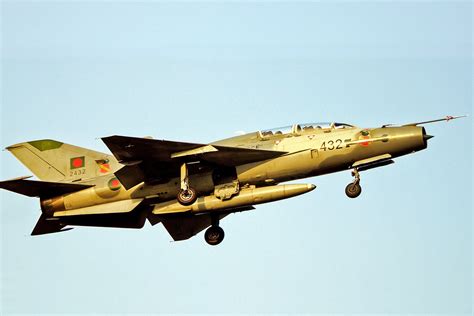
Chengdu F-7
The Chengdu F-7, a Chinese-built derivative of the Soviet MiG-21, also appears in Iran’s inventory.
Though technologically outdated, the F-7 continues to serve as a lightweight interceptor and training platform.
Iran reportedly operates around 17 aircraft of this type.
Iran’s Domestic Fighter Aircraft Programs
Facing decades of international sanctions, Iran has attempted to develop its own fighter aircraft. While these programs rely heavily on existing designs, they represent important steps toward domestic aerospace independence.
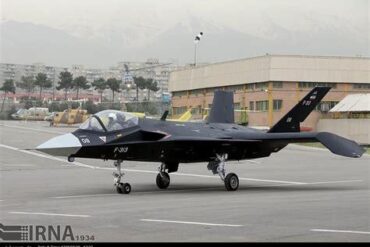
HESA Saeqeh
The Saeqeh fighter is a heavily modified version of the F-5 Tiger II. Its most noticeable feature is a twin vertical tail configuration, giving it a distinct appearance compared to the original F-5.
Iran claims the Saeqeh includes improved avionics and enhanced weapons capability.
About a dozen aircraft are believed to exist.
Azarakhsh Fighter
The Azarakhsh, meaning “Lightning,” was one of Iran’s earliest attempts to produce a locally built fighter jet.
Although the aircraft is largely based on the F-5 design, the program allowed Iranian engineers to gain valuable experience in aircraft assembly, structural design, and systems integration.
Kowsar Fighter Jet
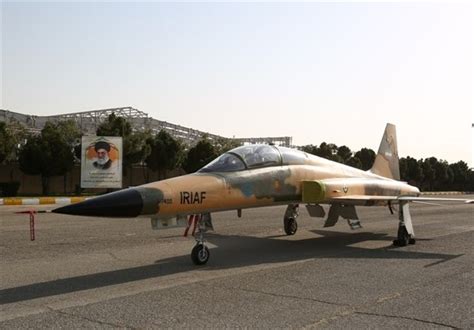
The Kowsar jet represents a more recent evolution of the F-5 platform. Iran describes the aircraft as fully domestically produced, though its design remains closely tied to earlier American technology.
The aircraft features:
- Modern glass cockpit displays
- Indigenous avionics systems
- Upgraded radar capabilities
Despite the improvements, the Kowsar is generally considered a light fighter rather than a modern multirole combat aircraft.
Transport Aircraft In The Iran Air Force
Transport aircraft are essential for logistics, troop deployment, and humanitarian missions. Iran operates several cargo aircraft models to support these operations.
Lockheed C-130 Hercules
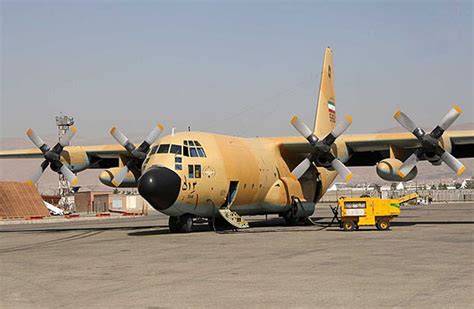
The C-130 Hercules is the backbone of Iran’s military transport fleet. This four-engine turboprop aircraft has been used globally for decades thanks to its ability to operate from short and unprepared runways.
Iran maintains around 28 C-130 aircraft, though actual operational numbers fluctuate depending on maintenance status.
Ilyushin Il-76
The Ilyushin Il-76 is a large Soviet-designed heavy transport aircraft capable of carrying tanks, vehicles, and large cargo loads.
Iran operates five Il-76 aircraft, primarily used for long-distance logistics and military supply missions.
Boeing 707 And Boeing 747
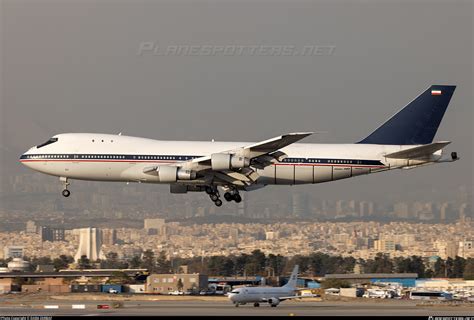
Interestingly, Iran’s military aviation fleet includes several Boeing commercial aircraft adapted for military use.
These include:
- Boeing 707 tanker and transport aircraft
- Boeing 747 strategic transport aircraft
These planes support long-range logistics, aerial refueling, and strategic cargo missions.
Training Aircraft Used By The IRIAF
Pilot training is essential for sustaining any air force, and Iran operates several aircraft dedicated to training new aviators.
Pilatus PC-7
The Pilatus PC-7 is a turboprop training aircraft widely used around the world.
Iran maintains around 34 PC-7 trainers, used for basic flight instruction.
Yak-130 Jet Trainer
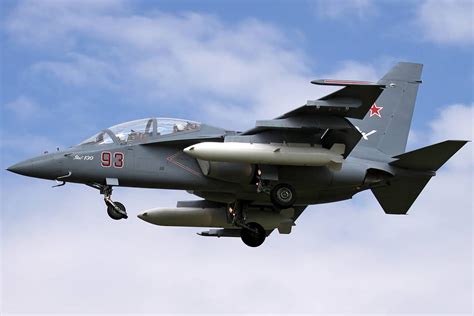
In recent years, Iran acquired Russian Yak-130 advanced jet trainers, marking a rare modernization step in the country’s aviation training infrastructure.
The Yak-130 allows pilots to train on modern cockpit systems and flight characteristics similar to contemporary fighter jets.
Maritime Patrol And Special Mission Aircraft
Iran also operates specialized aircraft designed for surveillance, reconnaissance, and maritime patrol.
Lockheed P-3F Orion
The P-3 Orion is a long-range maritime patrol aircraft originally developed for anti-submarine warfare.
Iran operates five P-3F variants, which are used for monitoring activity in the Persian Gulf and the Strait of Hormuz.
These aircraft play a critical role in maritime surveillance due to their ability to remain airborne for extended periods.
Helicopters And Support Aircraft
While helicopters primarily belong to the Iranian Army Aviation Command, several types contribute to broader military operations.
These include:
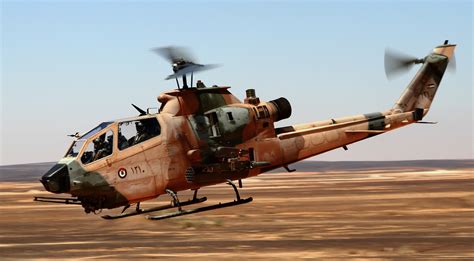
- Bell AH-1J Cobra attack helicopters
- CH-47 Chinook heavy lift helicopters
- Mil Mi-8 transport helicopters
Together, these aircraft provide close air support, troop transport, and battlefield mobility.
Iran’s Shift Toward Drones And Missiles
As maintaining aging fighter aircraft becomes increasingly difficult, Iran has invested heavily in unmanned aerial vehicles (UAVs) and missile systems.
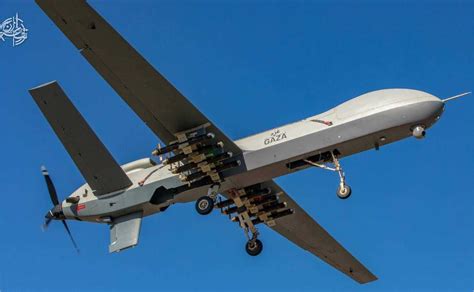
Drone models such as the Shahed-136, Shahed-147, and Shahed-149 have gained international attention for their long endurance and relatively low cost.
For example, the Shahed-149 drone can reportedly remain airborne for up to 35 hours and carry multiple precision-guided weapons.
This approach reflects a strategic shift toward asymmetric warfare, where inexpensive drones and missiles are used to challenge technologically superior opponents.
Future Modernization: The Su-35 Fighter Deal
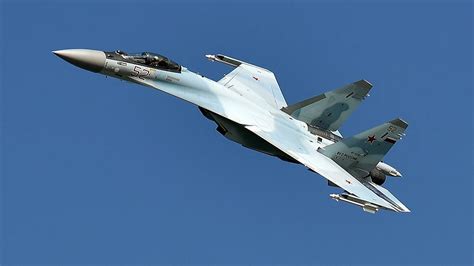
Iran had hoped to modernize its aging fighter fleet through a major acquisition of Russian Sukhoi Su-35 fighters.
The proposed deal reportedly involved 48 Su-35 aircraft, which would represent a massive leap forward for the IRIAF.
The Su-35 is considered a 4.5-generation fighter jet featuring:
- Advanced radar systems
- Supermaneuverability
- Long-range air-to-air missiles
If delivered in full, these aircraft would significantly enhance Iran’s air defense capabilities.
However, geopolitical tensions and international pressure have delayed or complicated the modernization program.
Conclusion: A Unique And Aging Air Force
The Iran Air Force aircraft fleet is one of the most unusual collections of military aviation platforms operating anywhere in the world today.
It combines American Cold War fighters, Russian aircraft, Chinese interceptors, and locally modified designs, all maintained under the difficult constraints of international sanctions.
Despite these challenges, Iran has demonstrated remarkable ingenuity in keeping its aircraft operational through domestic engineering and creative supply chains.
Yet the reality remains clear: compared with the advanced air forces of the United States, Israel, or NATO nations, Iran’s fighter fleet lags significantly behind in technology and readiness.
This gap has pushed the country toward drones, missiles, and asymmetric warfare strategies, shaping the future of Iranian military aviation.
FAQs
How many aircraft does the Iran Air Force have?
The Islamic Republic of Iran Air Force is estimated to operate around 400 total aircraft, including fighters, transports, trainers, and surveillance planes. However, the number of aircraft that are fully operational at any given time is believed to be significantly lower.
Does Iran still fly the F-14 Tomcat?
Yes. Iran is the only country in the world that still operates the F-14 Tomcat. The aircraft were purchased from the United States before the 1979 revolution and remain a key part of Iran’s air defense strategy.
What is the most modern fighter jet in Iran’s inventory?
Currently, the MiG-29 Fulcrum is considered one of the most modern fighters actively operating in Iran’s air force. However, the planned acquisition of Sukhoi Su-35 jets could dramatically modernize the fleet if deliveries proceed.