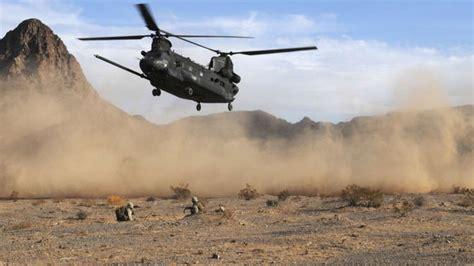
Iran’s military helicopter fleet offers a rare glimpse into the nation’s complex defense strategy — a mix of decades-old American hardware, Russian imports, and domestically produced adaptations that keep its rotary-wing force functional despite sanctions, limited access to spare parts, and global isolation. This force, though heavily reliant on pre-1979 models, continues to play a pivotal role in Iran’s ability to project power across its borders and support regional allies.
Pre-Revolution Helicopters: The Backbone of Iran’s Fleet
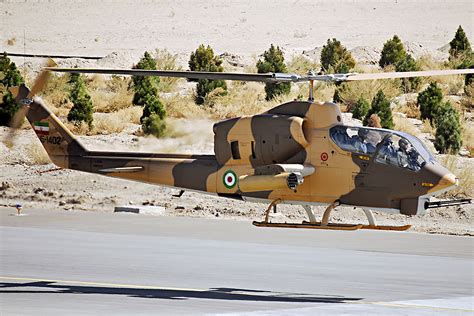
Before the 1979 Islamic Revolution, Iran maintained close defense ties with the United States, acquiring a formidable helicopter arsenal that remains the foundation of its military aviation. These include the Bell AH-1J International Cobra attack helicopters, Bell 206s, Bell 212s, Bell 214s, CH-47C Chinooks, and SH-3 Sea Kings. Many of these aircraft were cutting-edge in the 1970s but are now well beyond their intended service lives.
Iran originally received more than 200 AH-1Js, nearly 100 CH-47 Chinooks, and over 300 light and utility helicopters. These helicopters were heavily deployed during the Iran-Iraq War (1980–1988), where they conducted troop transport, close air support, medical evacuation, and logistical operations under intense battlefield conditions. Despite their age, these models remain the backbone of the Islamic Republic of Iran Army Aviation (IRIAA) today, proving that even legacy platforms can endure with persistent maintenance and strategic repurposing.
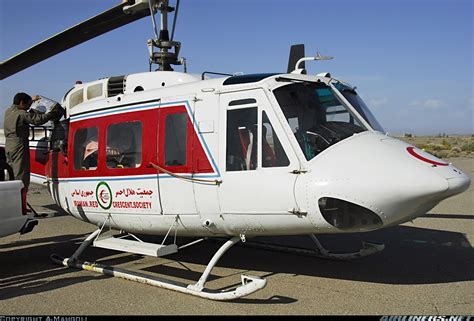
The Bell 212, notably involved in the 2024 crash that killed President Ebrahim Raisi, continues to serve vital roles in transport and VIP movement. However, decades of wear, compounded by sanctions that restrict access to spare parts, have left Iran struggling with fleet readiness. Cannibalization — dismantling grounded aircraft to keep others operational — remains a standard practice.
Domestic Overhauls and Local Variants
Faced with supply shortages, Iran’s aerospace industry has developed a robust repair and reverse-engineering capability. Iranian defense authorities claim that many Bell helicopters have been comprehensively overhauled domestically. In some cases, this includes new avionics, missile systems, and even indigenously manufactured components to replace unavailable U.S. parts.
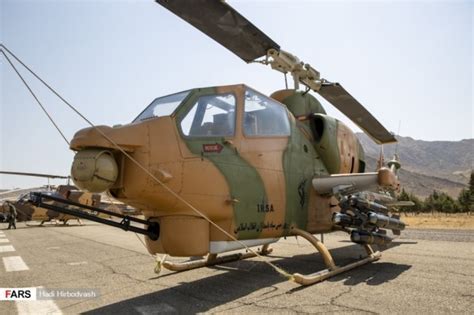
One of the most prominent examples is the Toufan I and II, Iranian-modified versions of the AH-1J Cobra. While these upgrades reportedly include improved targeting systems and the integration of Iranian-built Ghaem-114 air-to-ground missiles (an analogue to the U.S. AGM-114 Hellfire), external analyses suggest that some of these capabilities may be overstated, serving more as a strategic deterrent narrative than fully fielded technologies.
The Bell-212 fleet has also reportedly been upgraded with locally designed SONAR systems for maritime operations and anti-submarine roles — though concrete evidence of these systems’ operational use remains limited. Still, Iran’s ingenuity in prolonging the service life of its aging helicopters underscores its determination to maintain self-sufficiency in critical defense assets.
Russian Models and Strategic Partnerships
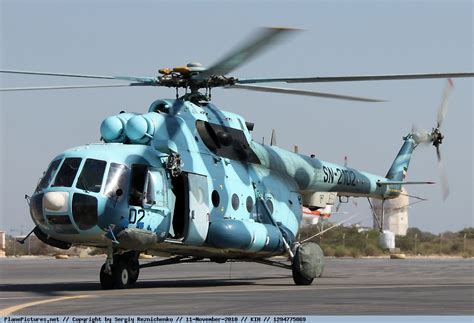
As relations with the West collapsed, Iran turned to Russia to fill gaps in its rotary-wing capabilities. Since the early 2000s, the country has acquired a significant number of Mil Mi-8 and Mi-17 helicopters, widely used for troop and cargo transport. These platforms, designed for rugged environments, align well with Iran’s operational needs, particularly in supporting ground forces in varied terrain, from deserts to mountainous regions.
Iran has reportedly received around 40 Mi-8/17 series helicopters and at least 21 upgraded Mi-171S units, which remain actively in production. These helicopters provide a reliable backbone for large-scale troop transport and logistics support missions. Beyond these, Iran also operates an unknown number of Mil Mi-24 Hind attack helicopters and possibly Mi-28 Havoc gunships. While exact figures remain classified, reports suggest that recent defense agreements could pave the way for co-production of Mi-28s and even Kamov Ka-52 Alligator attack helicopters, marking a potential leap in Iran’s offensive rotary capabilities.
Reverse-Engineering and Domestic Helicopter Production
Iran has aggressively pursued the reverse-engineering of foreign helicopters to reduce dependency on imports. One such project is the Shabaviz 206-1, a clone of the Bell 206 JetRanger, produced despite U.S. intellectual property claims. Another example is the Shabaviz 2-75, modeled on the Bell 214, which aims to fill the gap in light transport and utility operations. These helicopters, while based on outdated designs, serve Iran’s needs for reconnaissance, training, and limited troop transport.
The Shahid-278 is another indigenous lightweight multi-role helicopter, reportedly influenced by multiple foreign designs. Though limited in numbers and capability, these projects reflect Iran’s gradual transition from an importer to a domestic producer of rotary-wing aircraft.
Integration of New Weapons and Avionics
Iran has increasingly focused on weaponizing its helicopters with indigenous missile systems. The Ghaem-114 and Shafagh are among its most notable additions. The Ghaem-114, similar in concept to the U.S. Hellfire, provides laser and thermal guidance, giving Iran’s Cobras and modified Bell platforms enhanced strike options against armored and fortified targets.
The Shafagh missile, with a range of up to 20 kilometers, further expands the helicopters’ engagement envelope. Iran has also hinted at integrating electronic warfare (EW) suites and advanced targeting pods, though much of this remains unverified. These enhancements not only improve combat performance but also demonstrate Iran’s ambition to leverage even outdated helicopters as credible tools for asymmetric warfare.
Naval Helicopters and Coastal Defense Strategy
Beyond land-based operations, Iran’s helicopters serve critical maritime roles. The SH-3 Sea Kings, once part of Iran’s pre-revolution acquisitions, remain in limited service, likely modified for search-and-rescue (SAR) and anti-submarine warfare (ASW). The integration of locally made SONAR and lightweight torpedoes (at least on paper) suggests Iran’s attempt to project power into the Persian Gulf and the Strait of Hormuz, where maritime tensions with the U.S. Navy and regional rivals remain high.
These helicopters provide Iran with flexible options for patrolling vital sea lanes, conducting amphibious operations, and supporting Iranian naval forces in gray-zone conflicts.
Helicopters as Instruments of Proxy Warfare
Iran’s rotary assets are not limited to conventional warfare. There is growing speculation that Iran could transfer older helicopters to proxy groups in Iraq, Syria, or Lebanon, enhancing their operational capabilities. Such transfers, whether overt or covert, would give these groups new tools for mobility and light attack operations, potentially shifting the balance in localized conflicts. The modularity of platforms like the Mi-17 makes them ideal for this role.
This potential for proxy warfare amplifies the strategic value of Iran’s helicopter fleet, transforming it from a mere national defense asset to a regional power projection tool.
The Road Ahead: Challenges and Prospects
Despite its progress, Iran’s helicopter force faces significant challenges. Many platforms are over 40 years old, and maintenance relies on makeshift supply chains and reverse-engineered parts of uncertain quality. While domestic production has made strides, it cannot yet replace the reliability and scale of imported systems. Additionally, Iran’s frequent exaggeration of capabilities for propaganda purposes makes it difficult to assess the true combat readiness of its fleet.
Nonetheless, Iran’s defense strategy — blending legacy U.S. models, Russian imports, and indigenous clones — has allowed it to maintain a surprisingly resilient helicopter force. As geopolitical alignments shift, particularly with Russia and possibly China, Iran could access more advanced platforms, further modernizing its fleet.
Conclusion
Iran’s military helicopter fleet tells a story of adaptation under pressure. What began as a Western-supplied force in the 1970s has transformed into a hybrid collection of old and new, sustained through innovation, reverse-engineering, and strategic partnerships. Whether for conventional military operations, maritime defense, or supporting proxy forces, these helicopters remain a crucial pillar of Iran’s defense doctrine, signaling that even aged airframes can be reinvented for modern warfare.