From the raw edge of transonic flight to the boundaries of space and beyond, X-planes represent one of the most ambitious and visionary aerospace programs in history. These aircraft and rocket-powered vehicles, designated with the iconic “X” prefix, were created not for combat or transport, but for discovery. They are America’s airborne laboratories, built to defy gravity and conventional thinking alike. Each X-plane has carried forward the legacy of innovation, producing breakthroughs that have transformed aviation, propulsion, and aerospace engineering at large.
The Birth of Experimental Supersonic Aviation
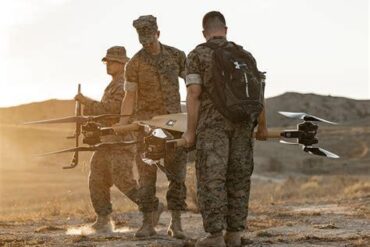
The X-plane program was formally launched in 1944 as a joint venture among the National Advisory Committee for Aeronautics (NACA), the U.S. Navy (USN), and the U.S. Army Air Forces (USAAF). As these organizations evolved into NASA and the U.S. Air Force (USAF) respectively, they continued to sponsor and support X-plane initiatives, later joined by entities like DARPA and the U.S. Marine Corps.
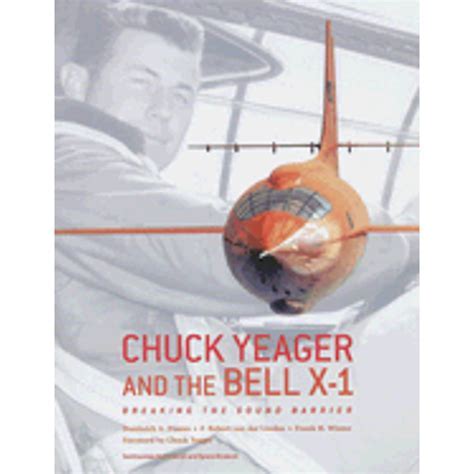
The very first experimental aircraft, the Bell X-1, took its inaugural powered flight in 1946 from Muroc Air Force Base, now known as Edwards Air Force Base, California. Just one year later, it made history when Chuck Yeager broke the sound barrier in level flight, becoming the first human to do so.
Engineering Feats and Aviation Firsts
Throughout the decades, X-planes have been the proving grounds for an incredible range of aerodynamic and propulsion technologies. They enabled innovations such as:
- Variable wing geometry, introduced by the Bell X-5, allowing pilots to adjust wing sweep in-flight.
- Exotic alloys and structural materials tested on aircraft like the Douglas X-3 Stiletto, whose titanium construction pushed metallurgical boundaries.
- Ramjet and scramjet propulsion, developed through the X-7, X-43, and X-51 Waverider, setting records for hypersonic flight.
- Vertical takeoff and landing (VTOL) capabilities explored by the X-13 Vertijet and X-14, laying the groundwork for future military aircraft.
- Lifting body concepts, critical to modern reentry vehicle design, pioneered by the X-24A and X-24B.
Perhaps the most extraordinary X-plane accomplishment was by the North American X-15, a rocket-powered aircraft that reached the edge of space. In 1967, Major Pete Knight flew the X-15A-2 at Mach 6.70, marking the fastest piloted flight in history.
The Dormant Years and Revival of Innovation
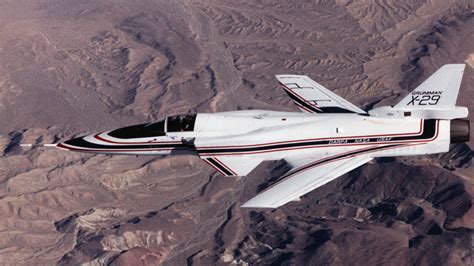
In the early 1970s, following the cancellation of ambitious lifting-body and hypersonic programs, the pace of X-plane development slowed dramatically. Proposed successors to the X-24, including more advanced lifting bodies, never made it to the skies. But innovation found new life in 1984 with the first flight of the Grumman X-29, a daringly unstable aircraft with forward-swept wings and advanced composite materials, pushing the limits of fly-by-wire control systems.
Simultaneously, several X-designated vehicles during this period were missiles or UAVs, including the X-8, X-9, X-11, X-12, and X-17. The X-16, though never flown, was a high-altitude reconnaissance craft whose designation was likely chosen to cloak its true purpose.
From Test Beds to Production Aircraft
While the vast majority of X-planes were never intended for mass production, they have often contributed key data that influenced mainstream military and civilian aviation. However, one notable exception emerged from the Joint Strike Fighter (JSF) program: the Lockheed Martin X-35. In fierce competition with Boeing’s X-32, the X-35’s superior VTOL capability and advanced systems won out, leading to its evolution into the F-35 Lightning II, now one of the most widely deployed fighter jets globally.
This transition from experimental prototype to full production remains rare, highlighting how X-planes typically serve as technology demonstrators rather than operational assets.
X-Planes in Spaceplane and Reentry Research
Several X-plane programs have delved into spaceplane development and reentry vehicle testing, further merging the boundaries between aviation and astronautics. Key programs in this domain include:
- The X-20 Dyna-Soar, an early reusable military spaceplane that was ultimately canceled before flight.
- The X-33, a half-scale Reusable Launch Vehicle (RLV) prototype aimed at rapid turnaround operations. Though never completed, its research informed future projects.
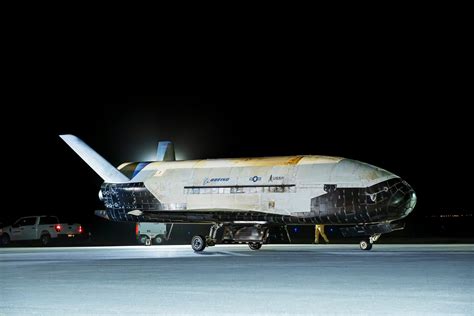
- The X-37, developed by Boeing, which has since launched multiple orbital flights as part of a secretive U.S. Space Force initiative.
- The X-38, a lifting-body Crew Return Vehicle (CRV) designed for potential ISS emergency use.
Advanced Concepts and Future Horizons
The modern era of X-planes is defined by increasingly sophisticated, unmanned, and AI-assisted technologies. These platforms focus not only on performance, but also on sustainability, noise reduction, and novel control surfaces. The X-60, for instance, is an air-launched hypersonic test vehicle used for studying scramjet propulsion.
Even more futuristic is DARPA’s X-65 CRANE, which will test flight without traditional moving control surfaces, relying instead on active flow control — a radical shift from conventional aerodynamics. Meanwhile, the X-66 Truss-Braced Wing program, led by Boeing and NASA, is slated for flight in 2028 and will test ultra-efficient transonic wing configurations to enable fuel savings and lower emissions in commercial aircraft.
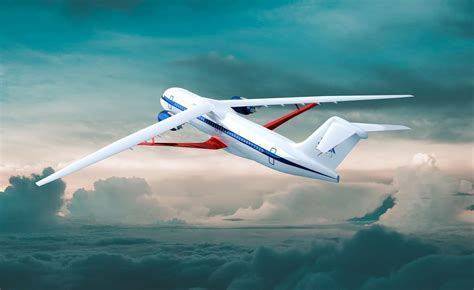
These projects demonstrate that X-planes remain at the forefront of experimental aerospace, bridging gaps between conceptual designs and functional, real-world applications.
The Testbed Legacy at Edwards Air Force Base
Nearly every pivotal X-plane flight originated from the vast runways of Edwards Air Force Base. This facility, etched into aviation history, provided the perfect stage for high-speed, high-altitude, and cutting-edge experimental flight. Its dry lake beds offered a natural safety net, and the clear desert skies allowed for year-round operations.
Edwards has hosted everything from the Bell X-1’s first supersonic run to automated UAV flight trials, establishing itself as ground zero for aviation breakthroughs. Without this unique proving ground, many of the accomplishments tied to the X-plane program might have remained theoretical.
Conclusion: The Experimental Spirit That Redefines Flight
The saga of the X-planes is more than a catalog of flying machines — it is a chronicle of human ambition, scientific risk-taking, and technological revolution. From sonic booms to silent gliders, vertical takeoffs to orbital returns, and from aluminum fuselages to electric propulsion, each X-plane carries the DNA of the next-generation aerospace frontier.
As we look toward 2025 and beyond, with vehicles like the X-65 and X-66 on the horizon, the mission of the X-plane program remains unchanged: to challenge assumptions, unlock possibilities, and fly where no one has flown before.