The story of rear-mounted engines in American commercial aviation is one marked by innovation, efficiency, and ultimately, transition. The Boeing 717, the final commercial aircraft in the United States to feature this distinctive engine configuration, represents the culmination of decades of design evolution that began with the Douglas DC-9 and its successors. Understanding the Boeing 717’s place in aviation history requires exploring its development, operational success, and why rear-mounted engines have faded from the mainstream of commercial aviation in the U.S.
The Boeing 717, originally conceived as the McDonnell Douglas MD-95, emerged as the last chapter of a family of aircraft that began with the DC-9 in the 1960s. The DC-9 and its derivatives, including the MD-80 and MD-90, were known for their rear-mounted Pratt & Whitney engines, T-tail configurations, and narrowbody fuselages designed for short- to medium-haul routes. These aircraft capitalized on the advantages of rear-mounted engines, including cleaner wing aerodynamics, improved ground clearance for the engines, and quieter cabins. Following the merger of McDonnell Douglas with Boeing in 1997, the MD-95 was rebranded as the Boeing 717 and delivered to its first customer, AirTran Airways, in 1999.
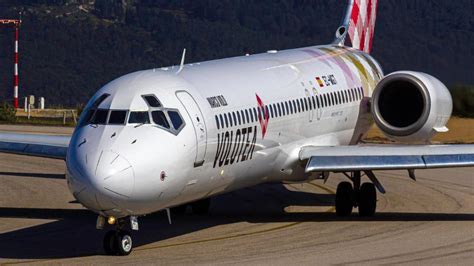
The Boeing 717 was powered by Rolls-Royce BR715 engines, which provided greater fuel efficiency and lower emissions than the older JT8D engines of its predecessors. The aircraft featured a modernized cockpit, improved avionics, and design refinements that built on the legacy of the DC-9 family. Between 1999 and 2006, Boeing produced 156 of these jets, with major operators including AirTran Airways, Delta Air Lines, and Hawaiian Airlines. Despite its strengths, the Boeing 717 entered a market increasingly dominated by newer, more efficient designs, such as the Embraer E-Jet family and eventually the Airbus A220, leading to the aircraft’s production ending in 2006.
The decision to mount engines at the rear of the fuselage brought both advantages and challenges. On the positive side, rear-mounted engines allowed for:
- A cleaner wing design, which improved aerodynamic efficiency and simplified wing maintenance.
- Reduced cabin noise, as the engines were positioned far behind the passenger cabin.
- Enhanced ground clearance, reducing the risk of foreign object ingestion.
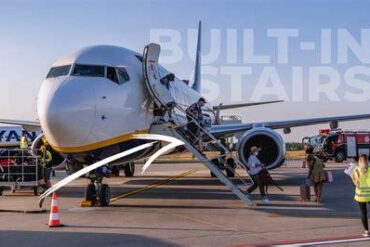
- Lower fuselage height, enabling easier boarding and ground servicing.
However, this configuration also introduced notable drawbacks:
- The T-tail setup made the aircraft more vulnerable to deep stalls, necessitating greater pilot training and design precautions.
- Rear-mounted engines required additional fuselage reinforcement, adding structural weight.
- Fuel systems became more complex, as fuel needed to be routed from the wings to the aft-mounted engines.
- The disturbed airflow from the fuselage and wings could negatively impact engine performance during certain flight conditions.
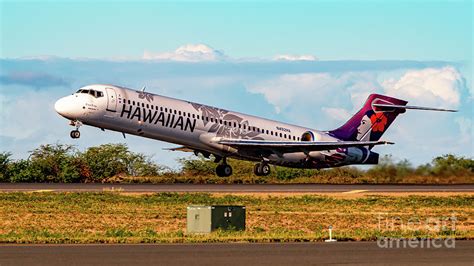
Throughout its service life, the Boeing 717 proved itself as a reliable and quiet workhorse, particularly in the fleets of Delta Air Lines and Hawaiian Airlines. Delta acquired many of its 717s from Southwest Airlines, which inherited them through its merger with AirTran Airways but chose not to integrate them into its fleet of Boeing 737s. This acquisition was a strategic fit for Delta, which operated other DC-9 derivatives and could integrate the 717 with minimal disruption. Today, Delta maintains the largest active 717 fleet, with around 67 aircraft still flying as of mid-2025. Hawaiian Airlines operates 17 of the type, serving inter-island routes where the 717’s short takeoff and landing capabilities shine.

The Boeing 717’s reign as the last American rear-engined passenger jet faces a potential challenger: the futuristic JetZero Z4. This aircraft, currently under development by startup JetZero in partnership with Northrop Grumman, promises a dramatic leap in fuel efficiency—up to 50% better than today’s conventional tube-and-wing designs. The Z4 will feature a blended wing body design with twin rear-mounted Pratt & Whitney PW2000 turbofans. This marks a bold reimagining of rear-engine placement in the context of 21st-century aerodynamics and sustainability goals. If successful, the Z4 could displace the 717 as the final American rear-engine airliner when it takes to the skies, tentatively in 2027.
Beyond the United States, other nations have continued to experiment with and produce rear-engine airliners. The Russian Tupolev Tu-154, produced until the late 1990s, and the Chinese COMAC ARJ21 (now referred to as the C909) are notable examples. Both these aircraft share the configuration of engines mounted at the rear, albeit for different operational needs and technological contexts. Meanwhile, Bombardier’s CRJ series and Embraer’s ERJ family kept the rear-engine tradition alive in regional markets until their respective production lines ended in the early 2020s.
In examining the legacy of rear-mounted engines, one must consider why modern aircraft designers have shifted away from this configuration. Advances in engine technology, including high-bypass turbofans, have made wing-mounted designs more practical. Wing-mounted engines also offer benefits in maintenance accessibility, weight distribution, and structural simplicity. The growing dominance of twin-engine jets like the Airbus A220 and Embraer E2 family underscores this trend, as these aircraft deliver superior fuel economy, lower emissions, and reduced operating costs.
Yet, the Boeing 717 remains a testament to an era when rear-mounted engines provided a distinct performance and design advantage. Its ongoing service with Delta and Hawaiian stands as a living tribute to the robustness of the DC-9 family design philosophy. These aircraft are expected to remain in the skies for several more years as Delta completes its transition to Airbus A220s and as Hawaiian determines its fleet’s future direction.
Looking ahead, the potential of the JetZero Z4 and other emerging designs could signal a renaissance of sorts for rear-mounted engines, albeit in radically new airframe architectures. For now, however, the Boeing 717 proudly holds the title of the last American-built commercial passenger jet with rear-mounted engines, symbolizing both the end of an engineering era and the enduring legacy of one of aviation’s most versatile families.