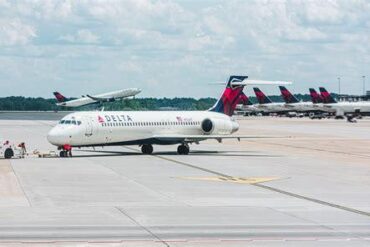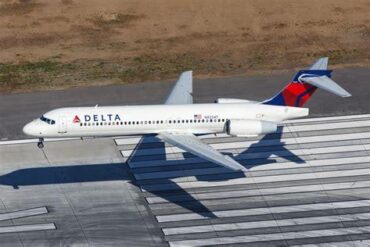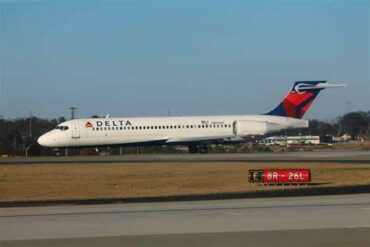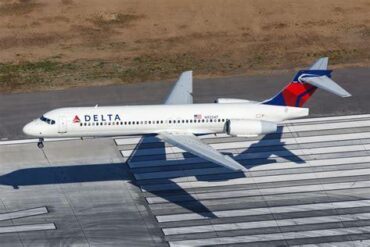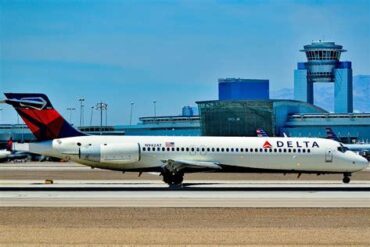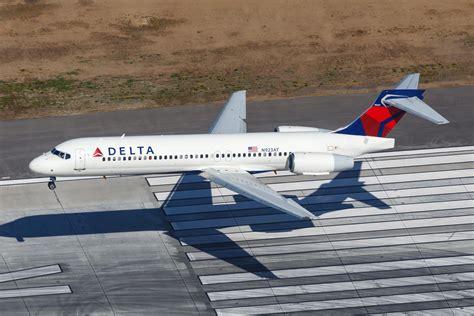
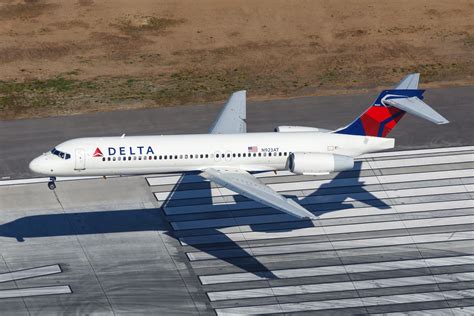
For more than a decade, the Boeing 717 has been one of the most recognizable aircraft in Delta Air Lines’ domestic network, easily identified by its distinctive rear-mounted engines and iconic T-tail design. Once a familiar sight across multiple Delta hubs, the aging narrowbody has now entered a new chapter. The airline has officially withdrawn the type from Minneapolis–St. Paul International Airport (MSP), reducing scheduled Boeing 717 operations to only Atlanta (ATL) and Detroit (DTW).
The move marks another significant milestone in Delta’s long-term fleet modernization strategy. While the carrier has repeatedly emphasized that the Boeing 717 will remain in service until around 2030, its operational footprint continues to shrink as newer aircraft gradually assume missions once dominated by the veteran twinjet. The latest network adjustment reflects both changing economics and Delta’s steady transition toward more fuel-efficient aircraft.
Although the Boeing 717 remains highly reliable and exceptionally well suited for short- and medium-haul routes, its role within one of the world’s largest airline fleets has become increasingly specialized. Instead of dispersing the aircraft across several hubs, Delta is now concentrating maintenance, crew scheduling, and aircraft utilization around just two strategic operating bases.
After years of serving travelers throughout the Upper Midwest, Minneapolis has officially said farewell to one of aviation’s last regularly scheduled T-tail passenger aircraft.
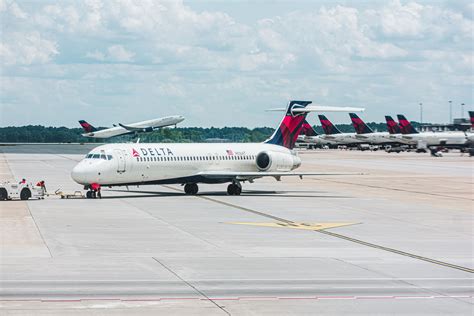
Minneapolis Officially Loses Boeing 717 Service
According to aviation schedule data, May 6 marked the final day of Boeing 717 operations at Minneapolis–St. Paul International Airport. During the aircraft’s final week at the airport, Delta operated only 59 flights, offering approximately 6,490 seats across five destinations before permanently removing the type from the schedule.
The limited May operation represented a dramatic decline compared to previous months. Only weeks earlier, during April, the Boeing 717 still completed 498 flights from Minneapolis, supplying nearly 55,000 seats throughout Delta’s domestic network. March had been even busier, recording an impressive 775 scheduled departures and arrivals, making it the busiest month for the aircraft at MSP during 2026.
The aircraft’s final Minneapolis destinations included:
- Charlotte
- Bradley (Hartford)
- Kansas City
- St. Louis
- Detroit
Charlotte remained the aircraft’s busiest market during its final weeks, while Newark had previously ranked among the strongest Boeing 717 destinations earlier in the year. Savannah also maintained nearly daily service during March before the aircraft’s gradual withdrawal accelerated.
The reduction was not sudden but instead reflected a carefully managed phase-out. Delta progressively reassigned aircraft to other hubs while replacing most Minneapolis Boeing 717 routes with modern Airbus narrowbodies.
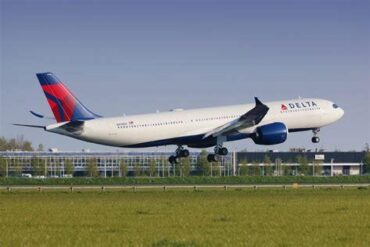
The Airbus A220 Has Become The Boeing 717’s Natural Successor
One reason Delta has been able to retire Boeing 717 flying without significant disruption is the growing presence of the Airbus A220-100.
Capacity between both aircraft is remarkably similar. The Boeing 717 accommodates 110 passengers, while the Airbus A220-100 seats 109, allowing Delta to substitute aircraft with almost no impact on available capacity.
Beyond seat count, however, the Airbus offers major operational advantages.
The Pratt & Whitney geared turbofan engines deliver significantly lower fuel burn, reduced maintenance requirements, quieter cabins, and substantially lower emissions. For an airline operating thousands of daily departures, these efficiency gains translate directly into lower operating costs over many years.
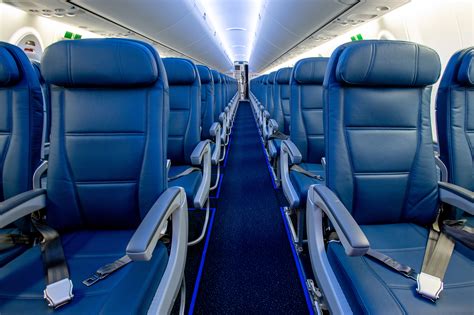
Passenger experience also favors the newer aircraft. While the Boeing 717 cabin has aged gracefully, it lacks many of Delta’s latest interior enhancements introduced across its Airbus and Boeing fleets. The A220 provides larger windows, more spacious overhead bins, improved lighting, quieter cabins, and modern inflight technology that better aligns with Delta’s premium brand positioning.
For passengers, the transition is largely seamless. For Delta, it represents another step toward simplifying long-term fleet planning.
The Boeing 717 Still Plays An Important Role
Despite shrinking operations, writing off the Boeing 717 would be premature.
The aircraft continues to perform exceptionally well on high-frequency domestic routes where quick turnarounds, dependable dispatch reliability, and strong short-field performance remain valuable operational characteristics.
Its cabin layout remains particularly efficient:
- 12 First Class seats arranged in a 2-2 configuration
- 25 Delta Comfort seats providing additional legroom
- 73 Main Cabin seats in a 2-3 configuration
This configuration offers a balanced mix of premium and economy seating while maintaining rapid boarding and deplaning times.
The aircraft’s rear-mounted engines also reduce cabin noise toward the front of the aircraft, a characteristic many frequent Delta passengers have appreciated over the years.
Although the interiors now appear dated compared with recently refurbished Airbus aircraft, the Boeing 717 continues delivering dependable service with high operational reliability.
How Delta Became The World’s Largest Boeing 717 Operator
Interestingly, Delta never directly ordered the Boeing 717 from the manufacturer.
Instead, the airline inherited nearly its entire fleet through a unique series of corporate transactions.
Originally built for AirTran Airways, the aircraft became part of Southwest Airlines after Southwest acquired AirTran in 2011. Since Southwest operates an all-Boeing 737 fleet, the Boeing 717 did not fit its long-term strategy.
An agreement announced in 2012 allowed Delta to lease the aircraft instead of Southwest immediately retiring them.
Delta officially launched Boeing 717 operations in October 2013, with the inaugural flight operating between Atlanta and Newark Liberty International Airport.
The aircraft integrated remarkably well because Delta already possessed decades of experience operating aircraft descended from the McDonnell Douglas DC-9 family, including the DC-9, MD-88, and MD-90. Maintenance expertise, pilot familiarity, and operational procedures already existed within the airline, making the Boeing 717 a natural addition.
At its peak, Delta operated 91 Boeing 717s, making it the largest operator of the type anywhere in the world.
Fleet Retirement Has Quietly Accelerated
Although Delta continues to publicly target 2030 as the Boeing 717’s retirement date, the fleet has steadily become smaller.
The airline currently owns 80 Boeing 717s, but fleet databases indicate only 74 aircraft remain active, suggesting several examples have already been withdrawn from operational service.
The oldest aircraft being retired exceed 26 years of age, while the fleet overall averages approximately 24.7 years.
This gradual reduction follows several earlier retirement waves:
- Eight aircraft exited during the pandemic in 2020
- One aircraft retired in 2021
- Two additional aircraft left the fleet in 2024
- Several more are now disappearing ahead of previous retirement expectations
Rather than retiring large numbers simultaneously, Delta appears to be carefully reducing the fleet as replacement aircraft become available.
This measured strategy minimizes operational disruption while allowing maintenance resources to remain concentrated on the healthiest airframes.
Atlanta And Detroit Become The Boeing 717’s Final Strongholds
Following Minneapolis’ exit, only Atlanta and Detroit remain as Boeing 717 operating hubs.
Atlanta overwhelmingly dominates operations, with more than 10,000 scheduled Boeing 717 flights planned during the current month. Detroit contributes another 2,600-plus scheduled frequencies, making it the aircraft’s secondary base.
Concentrating the fleet at only two hubs offers several operational benefits.
Aircraft maintenance becomes easier to schedule, spare parts inventories can be consolidated, crew assignments become more efficient, and aircraft rotations become simpler to manage. These efficiencies are increasingly important as fleet numbers decline.
Instead of scattering relatively few aircraft throughout nine hubs, Delta can maximize reliability by keeping the Boeing 717 where supporting infrastructure is strongest.
This strategy mirrors approaches used by other global airlines when managing aging aircraft types nearing retirement.
The End Of An Unmistakable Aircraft Is Drawing Closer
The Boeing 717 occupies a unique place in modern commercial aviation. As the final evolution of the legendary DC-9 family, it represents decades of proven engineering wrapped in one of aviation’s most recognizable silhouettes. Its rear-mounted engines, clean wing design, and unmistakable T-tail have become increasingly rare as newer twinjets with underwing engines dominate airline fleets.
Delta has extracted exceptional value from the aircraft since introducing it in 2013, using it to serve hundreds of domestic routes with remarkable consistency and reliability. Yet economics inevitably favor newer generations of aircraft that consume less fuel, require less maintenance, and offer a more contemporary passenger experience.
With Minneapolis no longer seeing scheduled Boeing 717 service and operations now centered exclusively on Atlanta and Detroit, the aircraft’s final years have clearly begun. The transition will likely continue gradually through the remainder of the decade, ensuring that one of America’s last regularly scheduled T-tail passenger jets enjoys a dignified farewell rather than an abrupt retirement. Until then, passengers departing from Atlanta and Detroit will continue to experience one of commercial aviation’s most distinctive aircraft before it ultimately takes its place in airline history.