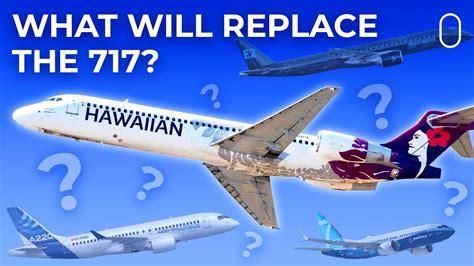
Alaska Air Group appears to be moving closer to a long-anticipated decision regarding the future of Hawaiian Airlines’ interisland fleet, with Boeing 737 aircraft emerging as the leading candidate to replace the carrier’s aging Boeing 717s. While no final commitment has been announced, comments from Alaska Air Group President Shane Tackett suggest that the company increasingly views the Boeing 737 as the most practical long-term solution for one of the world’s most unique and demanding airline networks.
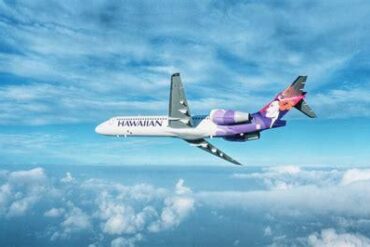
For decades, Hawaiian Airlines’ Boeing 717 fleet has served as the backbone of air transportation between the Hawaiian Islands. The aircraft became synonymous with the carrier’s high-frequency operations, linking communities across Oahu, Maui, Kauai, and Hawaii Island through dozens of daily departures. However, as the fleet continues to age and maintenance requirements become more expensive, Alaska Air Group faces a critical fleet-planning challenge that could reshape interisland travel for years to come.
The discussion gained momentum following remarks made by Shane Tackett during the International Air Transport Association (IATA) Annual General Meeting in Rio de Janeiro. According to reports from aviation industry observers, Tackett indicated that Boeing 737 aircraft currently represent the “default” option and are the most likely replacement for Hawaiian’s veteran 717 fleet.
The statement offers one of the clearest indications yet of Alaska Air Group’s strategic thinking since its acquisition of Hawaiian Airlines.
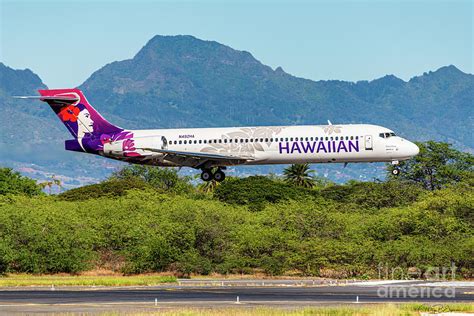
Why Hawaiian Airlines Must Eventually Replace the Boeing 717
The Boeing 717 occupies a unique place in commercial aviation. Originally developed for the 100-seat market, the aircraft was specifically designed to deliver exceptional performance on short routes while maintaining high utilization rates. Hawaiian Airlines leveraged those strengths to create one of the most efficient interisland networks in the world.
The aircraft typically accommodates between 106 and 128 passengers and was optimized for rapid turnaround times. These characteristics made it ideally suited for flights that often last only 25 to 45 minutes. In Hawaii, where multiple islands depend heavily on air transportation, operational efficiency is not merely a competitive advantage—it is essential infrastructure.
Despite its strengths, the Boeing 717 faces an unavoidable reality. Production ended years ago, and the global fleet continues to shrink. As aircraft age, maintenance costs rise, spare parts become harder to source, and long-term operational reliability becomes increasingly difficult to sustain.
The absence of a direct modern successor has complicated replacement planning across the aviation industry. Unlike larger narrowbody aircraft categories, few modern aircraft precisely match the Boeing 717’s combination of size, performance, and economics.
Boeing 737-800 Emerges as the Front-Runner
At first glance, replacing a 100-seat aircraft with a substantially larger Boeing 737-800 may appear unconventional. The two aircraft were designed for different market segments and operational profiles.
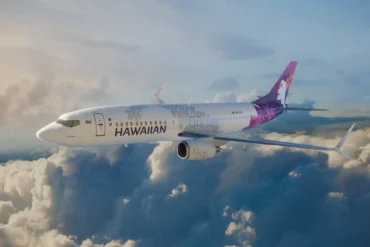
A typical Boeing 737-800 seats between 160 and 189 passengers depending on configuration, representing a significant increase in capacity over the Boeing 717. The aircraft also offers far greater range capabilities, enabling missions well beyond Hawaii’s short interisland sectors.
Yet airline fleet decisions are often driven by more than route-specific performance metrics. Fleet commonality has become one of the most influential factors shaping modern airline strategy.
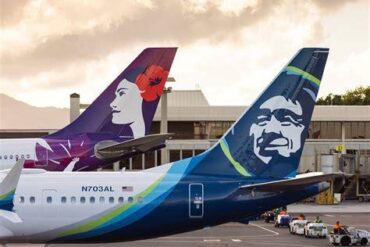
For Alaska Air Group, operating a larger number of Boeing 737 aircraft across both Alaska Airlines and Hawaiian Airlines could generate substantial long-term benefits. Pilot training programs could be simplified, maintenance procedures standardized, spare parts inventories consolidated, and operational flexibility improved throughout the combined network.
Those efficiencies can create millions of dollars in annual savings, particularly for a company seeking to integrate two major airline brands under a unified corporate structure.
Fleet Commonality Could Outweigh Aircraft Size Concerns
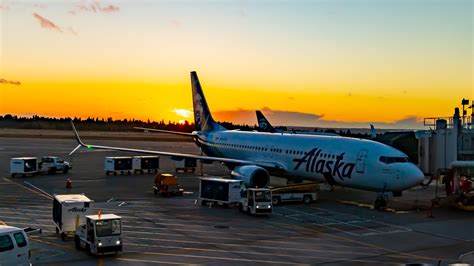
The appeal of the Boeing 737 extends beyond simple aircraft availability. Alaska Airlines already possesses extensive expertise operating the type, making the transition considerably less disruptive than introducing an entirely new aircraft family.
Airline executives frequently evaluate fleet decisions through the lens of total ownership costs rather than individual route economics. While a purpose-built aircraft may deliver superior performance on specific sectors, the broader financial impact of adding another aircraft family can be substantial.
A new fleet type would require separate pilot certifications, dedicated maintenance programs, unique spare parts inventories, additional simulator investments, and expanded technical support systems.
By contrast, expanding Boeing 737 operations would allow Alaska Air Group to leverage decades of existing experience while minimizing integration complexity.
This strategy aligns with broader industry trends, where airlines increasingly prioritize simplicity and standardization as methods of controlling operating costs.
Southwest Airlines Already Demonstrates the Concept
Skeptics may question whether larger narrowbody aircraft are suitable for Hawaii’s short interisland routes. However, practical examples already exist within the market.
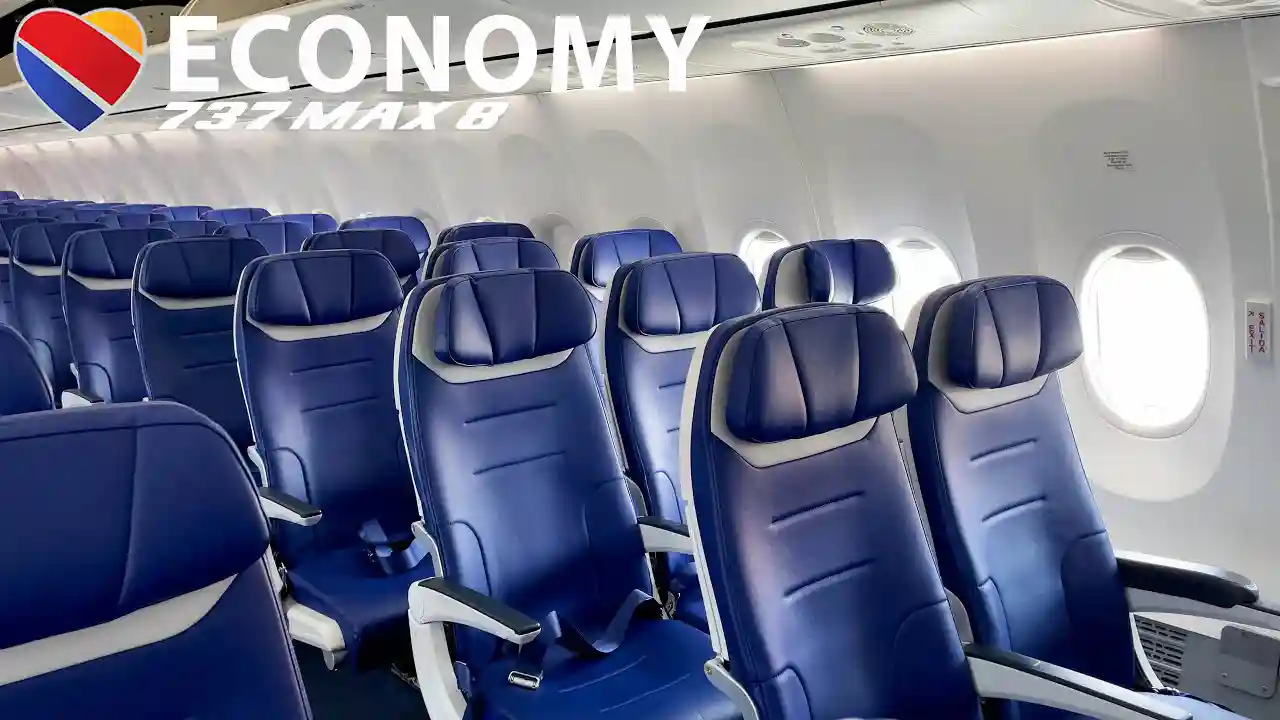
Southwest Airlines currently operates Boeing 737 MAX 8 aircraft on interisland services connecting major Hawaiian destinations. Routes such as Honolulu to Kahului demonstrate that larger single-aisle aircraft can successfully operate in the islands despite the relatively short flight times.
The success of those operations provides valuable evidence that Boeing 737 aircraft are technically capable of performing the mission.
Additionally, Alaska Airlines already operates Boeing 737 aircraft extensively on routes connecting Hawaii with destinations throughout the continental United States. Many of these services involve long overwater segments, providing the airline with significant operational familiarity in Hawaii’s unique environment.
Capacity Challenges Remain a Key Consideration
Despite the operational advantages associated with fleet commonality, significant challenges remain.
Hawaiian Airlines built its interisland network around the characteristics of the Boeing 717. Its smaller capacity and rapid turnaround capabilities allowed the airline to maintain frequent schedules while matching passenger demand across multiple islands.
A larger Boeing 737 introduces the possibility of excess capacity on certain flights. While operating costs can be spread across more seats, profitability depends on consistently filling those seats.
Demand patterns vary throughout the year, and some interisland markets may not support significantly larger aircraft during off-peak periods. Alaska Air Group will need to carefully evaluate whether increased capacity can be absorbed without negatively affecting yields or schedule flexibility.
The challenge is not whether a Boeing 737 can operate the routes. The question is whether it can do so while preserving the operational advantages that made the Boeing 717 such an effective platform for Hawaiian Airlines.
Airbus A220 and Embraer E195-E2 Remain Alternative Possibilities
Although Boeing 737 aircraft appear to have gained momentum internally, alternative aircraft continue to attract industry attention.
The Airbus A220-100 offers seating capacity much closer to the Boeing 717 while delivering impressive fuel efficiency and modern technology. Similarly, the Embraer E195-E2 occupies a middle ground between regional jets and larger narrowbody aircraft, offering a balance of capacity and operating economics.
Both aircraft align more closely with Hawaiian’s traditional interisland mission profile and would require fewer seats to be filled on each departure.
Nevertheless, introducing either aircraft would require Alaska Air Group to add a completely new fleet type, potentially offsetting many of the operational benefits they provide.
As Hawaiian’s Boeing 717 fleet continues to age, Alaska Air Group’s eventual decision will likely reflect a broader strategic calculation. The Boeing 737 may not be the perfect one-for-one replacement, but its advantages in fleet commonality, operational flexibility, and corporate integration increasingly position it as the leading candidate to shape the next chapter of Hawaiian interisland aviation.