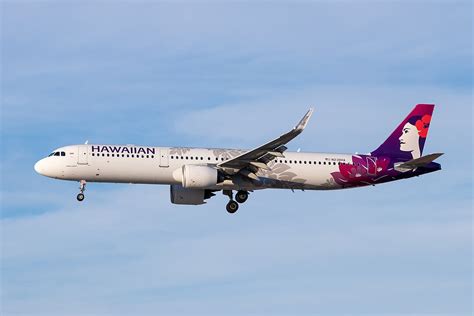
The merger between Alaska Airlines and Hawaiian Airlines created far more than a larger airline network stretching across the Pacific. It also produced one of the most fascinating fleet strategy questions currently unfolding in the aviation industry. At the center of that debate sits a relatively small but strategically important aircraft fleet: Hawaiian Airlines’ Airbus A321neos.
For Alaska Airlines, the issue is not simply whether the Airbus A321neo is a good airplane. Few in the industry dispute its efficiency, range, and operational flexibility. The real question is whether maintaining a small Airbus narrowbody operation makes economic sense inside an airline group historically committed to Boeing simplicity. Alaska executives have already signaled that the future likely points toward one of two dramatically different outcomes: aggressively expand Hawaiian’s A321neo fleet or phase it out entirely.
That statement alone reveals how serious the internal calculations have become. Airlines rarely speak in absolutes unless the economics are impossible to ignore.
Hawaiian Airlines built its modern neighbor-island and West Coast strategy around the A321neo. Alaska Airlines built its entire operational philosophy around fleet commonality and simplified maintenance. Now those two philosophies are colliding inside a newly merged company attempting to define its long-term identity.
For aviation analysts, aircraft manufacturers, and passengers across the Pacific, the outcome could reshape Hawaii-mainland flying for the next two decades.
Hawaiian Airlines Built The A321neo Into A Pacific Workhorse
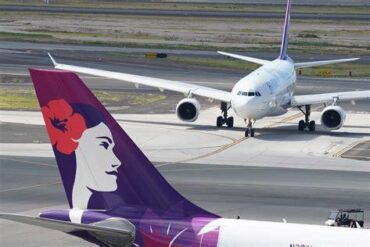
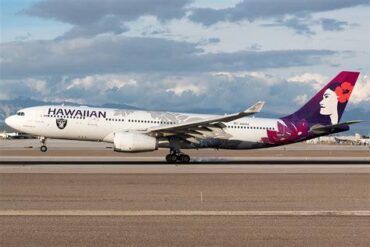
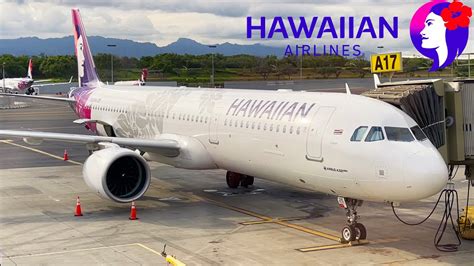
When Hawaiian Airlines accepted its first Airbus A321neo in 2018, the aircraft represented a major shift in strategy. Traditionally, Hawaiian relied heavily on widebody aircraft such as the Airbus A330-200 for mainland routes. While effective on dense trunk routes like Honolulu to Los Angeles or Honolulu to Seattle, widebodies created limitations on thinner markets where demand fluctuated seasonally.
The A321neo solved that problem almost perfectly.
Its long range, fuel efficiency, and lower operating costs allowed Hawaiian to connect Hawaii directly with secondary West Coast cities that could not consistently support a larger twin-aisle aircraft. Routes such as Sacramento, Oakland, Long Beach, and Las Vegas suddenly became economically viable with higher frequency and reduced financial risk.
Instead of flooding a market with hundreds of seats on an A330, Hawaiian could operate a right-sized narrowbody while maintaining premium onboard service. That flexibility became especially valuable during volatile demand periods when airlines worldwide struggled to match capacity with passenger traffic.
Hawaiian’s A321neos quickly became central to the airline’s mainland strategy. The aircraft also enabled operational creativity. Some flights could bypass Honolulu entirely and connect Maui or Kona directly to mainland cities, something more difficult to justify with larger aircraft.
Passengers benefited as well. Travelers gained more nonstop options, reduced connection times, and greater schedule flexibility. For Hawaii tourism markets dependent on convenience, those improvements mattered enormously.
The aircraft itself also fit Hawaiian’s brand surprisingly well. Although narrowbody cabins cannot replicate the spacious feel of an A330, Hawaiian configured the aircraft to maintain much of its premium island experience. Recliner-style first class seating, island-inspired meals, Mai Tais, and friendly onboard service preserved the carrier’s distinct personality even on single-aisle jets.
At the same time, Hawaiian modernized the fleet technologically. Starlink WiFi installations transformed the passenger experience, giving the aircraft one of the strongest onboard connectivity offerings in North America.
The result was a fleet of young, capable aircraft specifically tailored to Hawaii’s unique geography and demand patterns.
Alaska Airlines Has Already Lived Through An Airbus Experiment
What makes this situation especially intriguing is that Alaska Airlines has been here before.
Following the Virgin America acquisition in 2016, Alaska inherited a substantial Airbus narrowbody fleet that included A319s, A320s, and A321s. At first, Alaska maintained those aircraft and integrated them into the broader route network. But over time, management concluded that operating both Boeing and Airbus narrowbody fleets introduced too much complexity.
Pilot training pipelines became more complicated. Spare parts inventories expanded. Maintenance systems required duplication. Scheduling flexibility narrowed because pilots could not seamlessly transition between aircraft families.
Eventually, Alaska made a deliberate strategic decision to return to a nearly all-Boeing narrowbody operation. The airline retired the remaining Airbus aircraft and leaned heavily into Boeing 737 fleet commonality.
That transition significantly simplified operations.
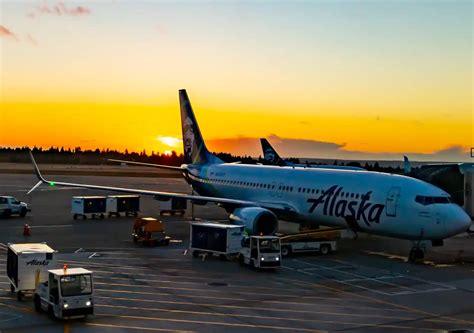
Today, Alaska Airlines operates one of the most streamlined fleets among major US carriers. The company’s heavy reliance on Boeing 737 variants allows greater scheduling flexibility, lower training expenses, and more efficient maintenance planning.
From a corporate perspective, Alaska’s historical bias is clear. Executives value simplicity, consistency, and operational scale.
That history explains why Hawaiian’s relatively small fleet of 18 A321neos now sits under such intense scrutiny.
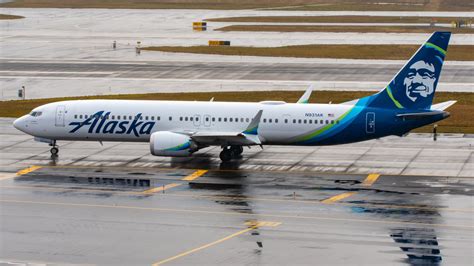
Why Alaska Airlines Sees Risk In Keeping A Small Airbus Fleet
For Alaska management, the problem is not that the A321neo performs poorly. In many ways, it performs exceptionally well. The issue is scale.
An 18-aircraft subfleet creates operational inefficiencies that become difficult to justify inside a much larger airline group. Every aircraft family requires specialized training, maintenance procedures, engineering support, spare parts inventories, and crew scheduling considerations.
Those costs spread efficiently across a large fleet. They become far more burdensome when divided among only a handful of airplanes.
Alaska Airlines Chief Financial Officer Shane Tackett effectively summarized the dilemma when he suggested the company would either significantly expand the A321neo fleet or eliminate it over time.
That statement reflects classic airline economics. Small subfleets often become expensive operational outliers unless they serve a highly specialized purpose unavailable elsewhere in the network.
The challenge becomes even sharper because Alaska already possesses extensive Boeing expertise. Its pilots, mechanics, supply chain infrastructure, and operational systems revolve around the 737 ecosystem. Maintaining a limited Airbus operation introduces duplication across almost every major operational category.
There is also the broader strategic relationship with Boeing. Alaska Airlines remains one of Boeing’s strongest North American airline partners. The carrier continues investing heavily in 737 MAX aircraft, including future MAX 10 deliveries once certification issues are resolved.
From Alaska’s perspective, replacing Hawaiian’s A321neos with additional Boeing aircraft could unify the combined airline under a single narrowbody platform while maximizing operational efficiency.
In theory, that sounds logical.
Reality, however, is far more complicated.
The Boeing 737 MAX Cannot Perfectly Replicate The A321neo
The Boeing 737 MAX 9 and future MAX 10 can perform many of the missions currently operated by Hawaiian’s A321neos. Their passenger capacities align closely, and their range capabilities are sufficient for most Hawaii-West Coast sectors.
But “sufficient” does not necessarily mean “optimal.”
The Airbus A321neo possesses distinct performance advantages on longer overwater missions. Its fuel efficiency, payload flexibility, and operational economics on transpacific narrowbody routes remain highly competitive. Many airlines globally have embraced the A321neo precisely because it excels on medium-to-long-haul missions where smaller narrowbodies struggle.
Hawaiian’s route network represents exactly that kind of operation.
Flying between Hawaii and the mainland United States involves demanding oceanic sectors, strong seasonal winds, and payload management challenges. Aircraft efficiency matters enormously because fuel costs represent such a significant percentage of operating expenses.
The A321neo’s range profile gives Hawaiian flexibility during difficult weather conditions and strong Pacific headwinds. That operational margin can translate into improved reliability and reduced payload restrictions.
The 737 MAX family can absolutely operate these routes. Alaska already flies many Hawaii services successfully using the MAX 9. But replacing an aircraft that was purpose-built for Hawaiian’s unique mission profile with one optimized around broader fleet commonality involves tradeoffs.
Passengers may not notice those tradeoffs directly. Airline accountants certainly will.
Why Expanding The A321neo Fleet Could Make Strategic Sense
Ironically, the strongest argument for keeping the A321neo may involve expanding it dramatically.
If Alaska Airlines doubled Hawaiian’s Airbus narrowbody fleet, many of the economic disadvantages associated with a small subfleet would diminish. Training infrastructure would scale more efficiently. Maintenance investments would spread across additional aircraft. Operational flexibility would improve.
Suddenly, the Airbus operation would become large enough to justify itself.
That possibility explains why Alaska executives have openly discussed fleet expansion rather than immediate retirement.
A larger A321neo fleet could also unlock new route opportunities throughout the Pacific network. Hawaiian already demonstrated the aircraft’s ability to profitably connect secondary mainland cities with Hawaii. Additional aircraft could expand those strategies further while supporting growing leisure demand.
There is another factor often overlooked in fleet debates: replacement costs.
Hawaiian’s A321neos remain young aircraft with many years of productive life ahead. Retiring them early would force Alaska to absorb significant capital costs associated with acquiring replacement aircraft. In an era of supply chain constraints and aircraft delivery delays, replacing modern jets is neither cheap nor simple.
Keeping the A321neos longer may actually represent the financially conservative choice in the medium term.
Additionally, Hawaiian’s Airbus infrastructure already exists. Maintenance facilities, trained personnel, pilot groups, and operational procedures are firmly established. Those sunk costs matter.
If Alaska maintains a semi-independent Hawaiian operation focused heavily on Pacific flying, the Airbus fleet becomes easier to justify strategically.
The Boeing 717 Retirement Could Influence Everything
The A321neo debate cannot be separated from another looming challenge: replacing Hawaiian’s aging Boeing 717 fleet.
Hawaiian’s 717s remain the backbone of interisland operations, flying rapid short-haul sectors throughout the Hawaiian Islands. But those aircraft average roughly 24 years in age, and sourcing parts is becoming increasingly difficult as global 717 fleets shrink.
Replacement decisions for the 717 may indirectly shape the future of the A321neo.
If Alaska chooses Boeing aircraft such as the 737 MAX 7 for interisland service, the airline may push harder toward a unified Boeing strategy across Hawaiian operations. Doing so would simplify fleet planning and strengthen the argument for eventually retiring Airbus narrowbodies.
However, Hawaii’s unique operational environment complicates matters again.
Interisland routes involve extremely short sectors, frequent takeoffs and landings, and high daily utilization cycles. Aircraft optimized for longer mainland flying do not always perform ideally under those conditions.
That reality opens the door to alternative aircraft families such as the Airbus A220 or Embraer E2 series. Either option could potentially offer better economics and operational suitability than larger 737 variants.
If Hawaiian ultimately adopts non-Boeing aircraft for interisland flying anyway, maintaining the Airbus A321neo fleet becomes easier politically and operationally inside the broader organization.
One fleet decision could cascade into another.
Alaska Airlines Faces A Defining Strategic Choice
Ultimately, the future of Hawaiian’s Airbus A321neos will reveal what kind of airline Alaska Air Group truly wants to become.
If management prioritizes operational simplicity above all else, the likely outcome points toward a unified Boeing narrowbody fleet anchored by the 737 MAX family. Such a move would align with Alaska’s historical strategy and streamline long-term operations.
But if Alaska prioritizes network optimization and Hawaii-specific economics, the A321neo may survive — and possibly expand.
The aircraft already proved its value in Hawaiian’s route structure. It opened new mainland markets, improved efficiency, enhanced scheduling flexibility, and strengthened the airline’s competitive position across the Pacific.
Retiring a modern fleet with years of economic life remaining would represent a bold and expensive decision. Expanding it would represent an equally bold commitment to maintaining Hawaiian Airlines as something more distinct than simply a Pacific extension of Alaska Airlines.
For now, Alaska executives appear unwilling to commit fully to either path.
That uncertainty reflects the complexity of the decision itself. Fleet planning in modern aviation is rarely about choosing the “best” airplane. It is about balancing economics, operational philosophy, market strategy, infrastructure, pilot training, manufacturer relationships, and future growth projections simultaneously.
In Hawaiian’s case, the Airbus A321neo sits precisely at the intersection of all those pressures.
And somewhere inside Alaska Airlines headquarters, executives are likely running the numbers repeatedly, trying to determine whether Hawaiian’s Airbus future deserves to grow dramatically — or disappear entirely.