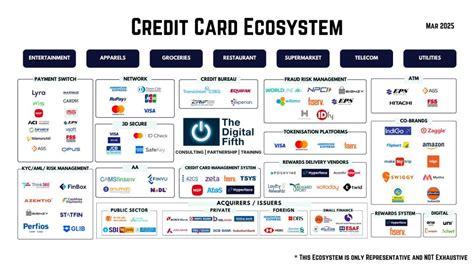
In the evolving world of travel rewards, 2026 marks the year when credit card issuers move from passive points collectors to fully fledged ecosystem architects. The shift is subtle in theory yet sweeping in practice: issuers no longer want to simply reward spending. They want to influence where cardholders shop, how they travel, which digital services they prefer, and ultimately how deeply they embed themselves in a single financial orbit. This is a transformation driven not by perks alone, but by the design of ecosystems meant to keep cardholders cycling through the same proprietary portals, partner networks, and loyalty currencies.
The framework looks familiar. Airlines and hotels have spent decades funneling travelers into closed systems. But the expansion of that logic to credit card issuers shows just how powerful the loyalty model has become. What once revolved around simple multipliers and flexible redemption charts now revolves around curated travel platforms, exclusive partnerships, lifestyle credits, and parallel benefit structures engineered to keep users tied to a brand from booking to checkout.
The idea that a card issuer wants deeper engagement is not new, yet the ambition has changed. Instead of rewarding spending in broad categories, issuers want cardholders to complete an entire transaction cycle within their orbit. This means the journey begins with a premium card, continues through a branded travel portal or lifestyle partner, earns points in that issuer’s loyalty currency, and then returns to the portal to redeem those points. The loop reinforces itself: the more cardholders rely on these pathways to unlock statement credits, the more likely they are to remain loyal to a single issuer.
A striking example of this model emerges with the American Express Platinum Card. Cardholders who want to justify the substantial annual fee quickly discover that the most efficient path is to use Amex Travel, particularly Fine Hotels + Resorts or The Hotel Collection, where credits are structured to encourage usage. Each perk is part of an ecosystem that rewards users not for spending more money overall, but for spending more within Amex’s controlled environment. The psychological effect is powerful. When perks feel too valuable to waste, cardholders adjust behavior to ensure they can use them.
This is also true of Chase, whose recent enhancements to the Chase Sapphire Reserve create a similarly insulated experience. The Chase Travel portal now offers significant incentives, from elevated earning rates to redemption bonuses that can push Ultimate Rewards to valuations few competitors match. When the issuer adds $500 in biannual credits specifically tied to luxury hotel reservations through The Edit, the intention becomes unmistakable: remain in the portal, and the portal will reward you.

The Increasing Importance of Portal-Based Spending
One of the most effective tools in this ecosystem strategy is the issuer-owned travel portal. These platforms provide a controlled environment where issuers can influence consumer decisions through boosted earning rates and high-value redemption opportunities. For the cardholder, the portal promises convenience and exclusive advantages. For the issuer, the portal becomes a gateway to long-term engagement.
Within these platforms, complementary tools strengthen the ecosystem even further. Annual statement credits tied directly to portal spending create financial incentives for cardholders to book through the portal instead of third-party travel agencies or direct hotel and airline websites. Because these credits reset annually — sometimes biannually or monthly — they encourage predictable patterns of use.
This approach allows issuers to both centralize travel spending and shape the trajectory of cardholder habits. Over time, the system becomes increasingly frictionless, particularly for those who commit to a single brand ecosystem. However, the moment cardholders attempt to juggle multiple ecosystems, complexity appears.
How Partner Networks Strengthen Issuer Influence
Travel portals are only one element holding these ecosystems together. The surge in lifestyle partnerships represents the next phase of ecosystem-building, as issuers expand their influence into dining, fitness, grocery delivery, ride-hailing, and entertainment.
Within the American Express ecosystem, partnerships with Resy, Equinox, Uber, Grubhub, and Fine Hotels + Resorts form a broad framework of touchpoints. Chase counters with OpenTable, Peloton, Lyft, DoorDash, Instacart, and The Edit. This constellation of partners creates value, but it also constructs boundaries around where key credits can be redeemed.
Cardholders soon learn that maximizing their premium benefits is easiest when purchases align with these preferred partners. Whether paying for a ride home, making dining reservations, ordering groceries, or renewing a gym membership, the path of least resistance often lies within the issuer’s curated network. The issuer designs the environment, the cardholder navigates it, and loyalty becomes a function of habit rather than intention.

Capital One, Citi, and Emerging Ecosystems in 2026
While American Express and Chase dominate the ecosystem-building landscape, they are not alone in the pursuit. Bilt has created a unique web of benefits rooted in everyday neighborhood spending, backed by partnerships with wellness brands, gyms, and pharmacies. Capital One continues to grow its lounge infrastructure and enhance its travel booking site, aiming to develop a holistic environment for travel-focused cardholders. Citi, meanwhile, deepens its long-standing alliance with American Airlines, effectively merging co-branded and issuer-driven loyalty experiences.
Each of these issuers sees value in guiding cardholders toward preferred partners and proprietary platforms. The outcome is a broader ecosystem landscape where every major issuer tries to decrease dependence on external travel agencies or third-party services.
The Paradox of Overlapping Premium Card Perks
What makes this shift particularly complex is the increasing redundancy among premium card perks. Today, many cards across multiple issuers offer the same benefits: Global Entry credits, TSA PreCheck reimbursement, streaming credits, food delivery credits, and Priority Pass memberships. In theory, more benefits should equal more value. In practice, they often generate redundant perks and unused credits.
Redundancy becomes especially clear with the proliferation of Clear Plus credits. Multiple premium cards now offer the same $209 annual credit, including high-fee cards within the American Express ecosystem and several others across the market. For users holding two or three such cards, only one Clear Plus membership can be used. The remaining credits become dead weight.
Similarly, Priority Pass lounge membership — once a premium differentiator — appears across so many high-end cards that the benefit loses its exclusivity. Cardholders quickly discover there is no practical advantage in having multiple memberships when only one can be used.
This leads to the most significant drawback of the multi-card lifestyle: complexity. It’s not the benefits themselves that become problematic. It is the constant mental load of tracking which card offers which credit, which credits renew monthly or annually, which require activation, and which require specific merchants. Cardholders describe their credit redemptions as modern-day coupon books — valuable yet intimidatingly intricate.
The recent refreshes of major premium cards have worsened this burden. Each update introduces new credits tied to specific partner services, along with restrictions designed to channel spending through issuer ecosystems. More credits mean more earning potential, but they also mean more obstacles.
How Issuers Leverage Complexity to Encourage Loyalty
The structural overlap is not accidental. Redundancy, while frustrating, often drives cardholders to streamline their wallets, choosing one primary ecosystem rather than juggling multiple ones. When benefits begin to feel too scattered or complicated, cardholders naturally gravitate toward the issuer whose system they use most frequently.
Issuers know this. They understand that ecosystems thrive not because cardholders love every perk, but because maximizing value requires commitment. The deeper the commitment, the less appealing it becomes to maintain competing ecosystems. Complexity, therefore, becomes a loyalty mechanism.
The Future of Loyalty: Streamlining Over Stacking
The shift toward more intricate credit card ecosystems creates a fundamental paradox. On one hand, premium cards offer compelling, valuable benefits capable of offsetting their high annual fees. On the other hand, the structure of these perks — across merchants, portals, and networks — often results in unused value for cardholders who hold too many cards across too many ecosystems.
The solution emerging in 2026 is not to acquire as many premium cards as possible but to consolidate. The most effective strategies prioritize depth over breadth, focusing on the perks that align with genuine spending habits rather than chasing overlapping credits that may have theoretical but not practical value.
As issuers continue to refine their ecosystems, ecosystems will become the true battleground for loyalty. Cardholders who manage their portfolios strategically will not only extract maximum value but also develop a smoother, more predictable rewards experience. The era of holding every premium card at once is fading. The era of choosing a single dominant ecosystem is beginning.
This shift signals a broader evolution in how loyalty works in the financial world. Ecosystems are no longer optional enhancements — they are active landscapes where issuers compete, cardholders navigate, and value emerges not from accumulation but from harmony between lifestyle and reward structure.