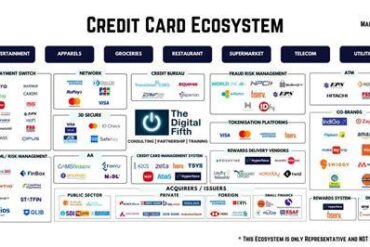
The modern credit card system runs on a delicate balance of incentives, penalties, and profits. When a political figure proposes to radically adjust one of its core levers, the effects ripple far beyond a single line item on a billing statement. President Donald Trump’s call to cap credit card interest rates at 10% for one year starting January 20, 2026 is one of those proposals that sounds simple, even populist, while quietly threatening to reshape the economics of consumer finance.
Credit card interest rates in the United States currently average above 20%, with many consumers paying far more. These rates apply only when balances are carried, yet they represent the most lucrative revenue stream for card issuers. Trump’s proposal, delivered via his Truth Social platform, frames the cap as a direct strike against what he characterizes as predatory lending practices that flourished under the Biden administration. The message is blunt, politically charged, and designed to resonate with households struggling under revolving debt.
What matters most is not the rhetoric, but the mechanics. Whether this cap is enforced through executive authority, regulatory pressure, or voluntary compliance remains unclear. That ambiguity alone is enough to make banks, airlines, and rewards-hungry consumers uneasy.
A One-Year Interest Rate Cap With Outsized Implications
Trump’s proposal is explicitly temporary. The cap would last exactly one year, expiring just as the political calendar heats up again. This design choice introduces uncertainty into a market that depends heavily on long-term forecasting. Credit card issuers price risk over years, not months. A sudden, mandated cut in interest revenue—followed by an equally sudden reversion—forces institutions to hedge defensively.
For consumers who regularly carry balances and maintain strong credit profiles, the short-term benefits are obvious. A balance that previously accrued interest at 24% would suddenly cost less than half as much to finance. That relief is tangible, immediate, and politically powerful.
Yet credit markets are adaptive. When one revenue stream is constrained, others inevitably change to compensate.
How Credit Card Issuers Really Make Money
Credit card companies earn revenue through three primary channels: interchange fees paid by merchants, annual fees paid by cardholders, and interest charges paid by those who carry balances. Of these, interest charges carry the highest margins. They are also the least visible to consumers who pay their cards in full each month.
This matters because the modern rewards ecosystem—airport lounge access, five-times spending multipliers, six-figure welcome bonuses—does not exist in isolation. It is funded, in large part, by interest paid by other consumers. This is the quiet, uncomfortable truth behind “free” travel perks.
If interest rates are capped at 10%, that subsidy shrinks dramatically. The math no longer works the same way.
Winners: Borrowers With Strong Credit and Revolving Balances
Consumers with excellent credit who occasionally carry balances stand to gain the most. These cardholders represent lower default risk, meaning banks are more comfortable extending credit even at reduced interest rates. For them, a 10% cap is a genuine financial win, lowering monthly costs without immediately restricting access.
Small business owners who rely on short-term credit card financing may also benefit, particularly if alternative lending options remain more expensive. In the short run, this cap functions as a targeted form of relief without direct government spending.
That relief, however, is selective.
Losers: Subprime Borrowers and Marginal Credit Profiles
Credit risk does not disappear just because interest rates are capped. For borrowers with weaker credit histories, a 10% ceiling may simply make lending uneconomical. If the expected default rate exceeds the potential return, issuers respond by tightening approval standards, lowering credit limits, or closing accounts outright.
This is not theoretical. Similar dynamics have played out in countries with strict usury laws. The unintended consequence is often reduced access to mainstream credit, pushing vulnerable consumers toward less regulated, higher-risk alternatives.
A policy designed to protect some borrowers may quietly exclude others.
The Quiet Casualty: Credit Card Rewards
The most far-reaching impact of a sustained interest rate cap would be felt not in APR disclosures, but in rewards programs. Today’s generous incentives are built on a cross-subsidized model. Consumers who never pay interest still benefit from those who do.
Slash interest revenue by more than half, and something has to give. Welcome bonuses shrink. Spending multipliers flatten. Premium perks quietly disappear or migrate behind higher annual fees. The golden age of effortless points accumulation becomes harder to sustain.
This is not a moral argument, but an economic one. The rewards ecosystem reflects the flow of money within the system. Change the flow, and the ecosystem adapts.
Airlines and Banks Face Secondary Shockwaves
Airlines, in particular, are deeply exposed. Co-branded credit cards generate billions in annual revenue and often represent a disproportionate share of airline profits. Miles are sold to banks at high margins, then distributed to consumers as rewards.
If banks scale back card incentives, airlines lose a critical income stream. That pressure eventually finds its way into ticket pricing, elite benefits, and route economics. A policy aimed at credit card interest rates can, indirectly, influence airfare and loyalty programs worldwide.
Banks, meanwhile, may respond by leaning more heavily on annual fees and interchange optimization. Cards that once justified high perks with interest revenue may become more expensive to hold.
Political Appeal Versus Market Reality
Capping credit card interest rates enjoys broad bipartisan appeal at the surface level. High APRs are easy to criticize and difficult to defend in sound bites. Yet the structure of the proposal—temporary, ambiguous, and politically timed—raises questions about its long-term intent.
If a 10% cap is sound policy, why limit it to one year? The answer may lie less in economics and more in optics. Markets dislike uncertainty, and uncertainty has a cost that is ultimately passed on to consumers.
What Consumers Should Watch Closely
Even before January 2026, card issuers may begin adjusting product strategies. Expect subtle shifts first: revised approval criteria, lower introductory bonuses, and stricter spending requirements. These changes rarely arrive with announcements; they simply appear in the fine print.
Consumers who rely heavily on rewards should pay attention to total value, not just headline perks. Borrowers should prepare for a landscape where access to credit becomes more segmented by risk profile.
A Policy With Trade-Offs, Not Free Lunches
Trump’s proposed 10% interest rate cap promises immediate relief for some Americans while introducing structural pressure across the credit ecosystem. Lower interest costs do not exist in a vacuum. They reshape incentives, redistribute benefits, and expose hidden dependencies.
Whether this proposal becomes enforceable policy or remains political signaling, it highlights a central truth about credit cards: every reward, every perk, and every mile has a funding source. Change that source, and the entire system recalibrates.
The result will not be uniformly good or bad. It will be uneven, complex, and revealing—exactly what happens when a simple number collides with a sophisticated financial machine.