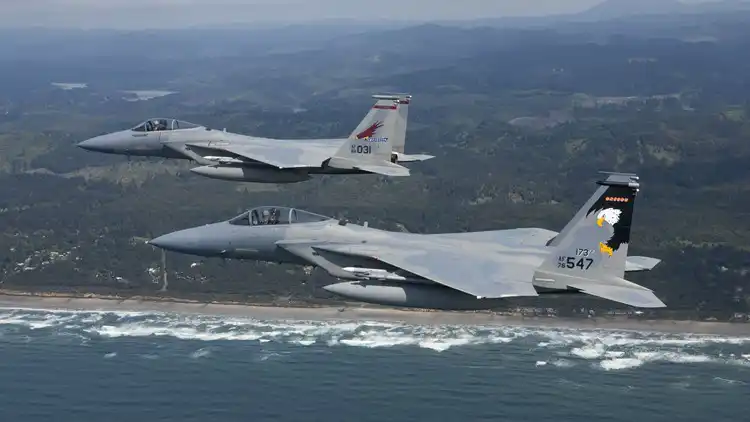
The F-15 Eagle has played a critical role in Oregon’s Air National Guard operations for decades. As one of the most powerful and enduring air superiority fighters in the U.S. Air Force, its evolution in the state reflects both advancements in military aviation and the challenges of maintaining cutting-edge aerial capabilities. From the arrival of the F-15EX Eagle II to the retirement of legacy F-15A/C/D models, Oregon continues to be at the forefront of Air Force modernization efforts.
The Arrival of the F-15EX Eagle II in Oregon
First Operational Deployment
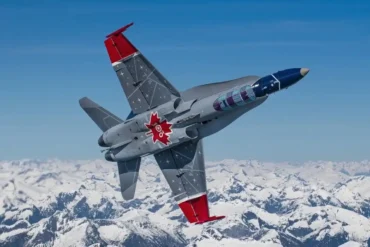
In June 2024, Boeing delivered the first combat-ready F-15EX Eagle II (serial number EX8) to the 142nd Wing of the Oregon Air National Guard. This milestone marked a significant leap in capability, as the F-15EX replaces aging F-15C/D fighters that have been in service for over 40 years.
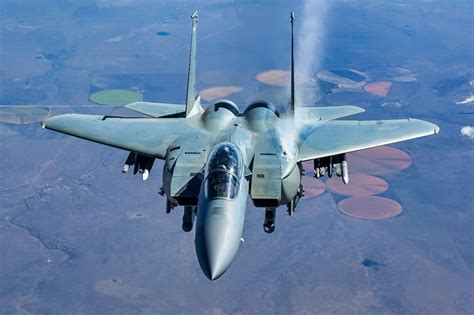
The F-15EX boasts several upgrades, including:
- Enhanced weapons capacity – Capable of carrying up to 22 air-to-air missiles with the AMBER rack.
- Advanced avionics suite – Featuring the APG-82 AESA radar, improving detection and tracking of stealth targets.
- Open Mission Systems (OMS) – Allowing rapid integration of new weapons and software upgrades.
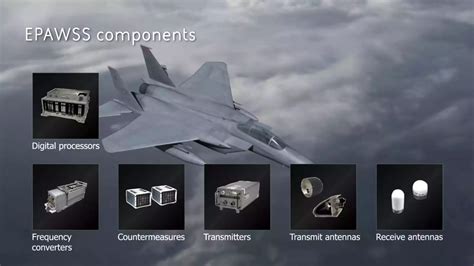
- Expanded electronic warfare capabilities – Incorporating the EPAWSS (Eagle Passive Active Warning Survivability System) to counter modern threats.
Production Challenges and Delays
Despite its cutting-edge features, the F-15EX program faced setbacks in production. Boeing experienced an eight-month delay due to manufacturing defects in the forward fuselage assembly, impacting the timeline of deliveries. To mitigate future disruptions, Boeing acquired supplier GKN Aerospace in 2024, ensuring a more stable production pipeline. The company now aims to reach a production rate of two aircraft per month by 2025.
Retirement of the F-15C/D in Oregon
Final Phases of Decommissioning
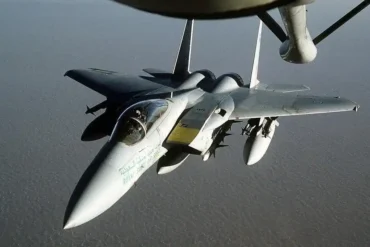
As the F-15EX enters service, the older F-15C/D models in Oregon are being systematically retired. The U.S. Air Force originally planned for 98 F-15EX units, but budget constraints in FY 2025 have only authorized the purchase of 18 aircraft, potentially impacting the full replacement schedule.
The last operational F-15A in Oregon was retired in September 2009, when aircraft 77-0098 completed its final flight before being sent to the “aircraft boneyard” in Arizona. The retirement of F-15C/D units is now underway, with some aircraft being decommissioned or transferred to training roles.
Operational Risks and Incidents
2023 F-15C Crash in Klamath Falls
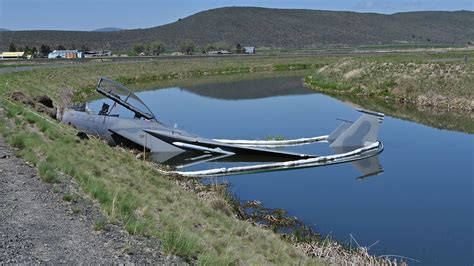
On May 2023, an F-15C from Kingsley Field (173rd Fighter Wing) crashed due to a hydraulic system failure. The pilot attempted an emergency landing, but a miscommunication—failing to repeat “arresting cable” three times—led to the aircraft overshooting the runway and sustaining $35.5 million in damage.
An investigation found that maintenance personnel had not detected hydraulic fluid leakage during pre-flight checks, emphasizing the need for rigorous safety inspections and improved emergency communication protocols.
Training and National Defense Education
Leadership Training for Civilian Officials
The 173rd Fighter Wing has implemented a Leadership Flight Program, where local civilian leaders experience firsthand the capabilities of the F-15. This initiative strengthens public awareness of air defense operations and promotes a deeper understanding of national security priorities.
F-15EX Adaptation Training
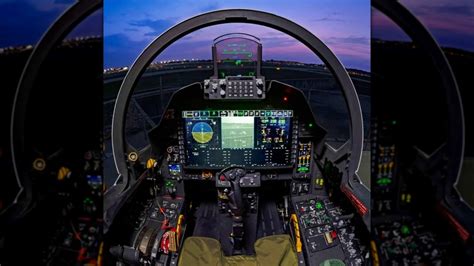
As the first Air National Guard unit to operate the F-15EX, the 142nd Wing in Oregon is undergoing intensive training. Pilots are adapting to new digital cockpit systems, updated weapons integration procedures, and enhanced situational awareness technologies.
Technological Upgrades and Combat Capabilities
F-15EX Weaponry Enhancements
The F-15EX brings significant firepower enhancements, with the capability to deploy:
- AGM-183 ARRW hypersonic missiles (although later canceled).
- Small Diameter Bombs (SDBs) for precision strikes.
- Expanded electronic warfare payloads for improved air-to-air combat survivability.
Survivability Improvements
Equipped with EPAWSS, the F-15EX enhances its electronic countermeasure capabilities, allowing it to evade radar-guided threats and detect incoming missiles with advanced infrared warning systems.
Challenges in the Era of Fifth-Generation Fighters
While the F-15EX offers superior firepower and avionics, its lack of stealth remains a disadvantage in an airspace increasingly dominated by fifth-generation fighters like the F-35. Future conflicts may require collaborative operations where F-15EXs act as missile platforms, complementing stealth aircraft in high-threat environments.
Conclusion
Oregon’s Air National Guard continues to play a pivotal role in the modernization of the F-15 fleet. From the retirement of aging F-15C/D models to the integration of the F-15EX, the state remains a key site for fighter training, technological upgrades, and national defense strategy. While the F-15EX brings substantial improvements, its operational future will be shaped by budget considerations, evolving threats, and the growing dominance of stealth-based air warfare.
Frequently Asked Questions (FAQ)
1. Why was the F-15EX chosen over stealth aircraft for Oregon’s Air National Guard?
The F-15EX was selected due to its lower operational costs, high payload capacity, and seamless integration with existing infrastructure, making it a cost-effective solution for air superiority missions without the high maintenance demands of stealth aircraft like the F-35.
2. What improvements does the F-15EX have over the F-15C/D?
The F-15EX features a new avionics suite, expanded weapons loadout, advanced radar (APG-82), electronic warfare systems (EPAWSS), and a modern digital cockpit, making it significantly more capable than the aging F-15C/D models.
3. Will Oregon’s F-15C/D aircraft be completely replaced by the F-15EX?
The current plan is to replace aging F-15C/Ds with F-15EX units, but budget limitations may impact the total number of aircraft procured. Some older aircraft may continue in training roles until full fleet transition is completed.