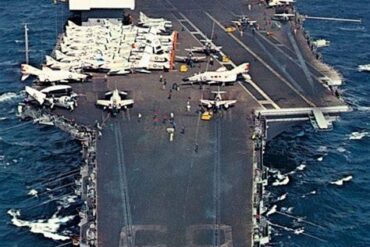
The history of the United States Navy stretches back to October 13, 1775, when the Continental Congress established the first Continental Navy with a modest fleet of frigates, brigantines, and schooners. From those fragile wooden hulls to today’s nuclear-powered supercarriers, the Navy’s evolution reflects the expanding global reach of American sea power. In the modern era, that reach is symbolized by the aircraft carrier strike group (CSG)—a floating projection of air, sea, and electronic dominance capable of sustained operations thousands of miles from home.
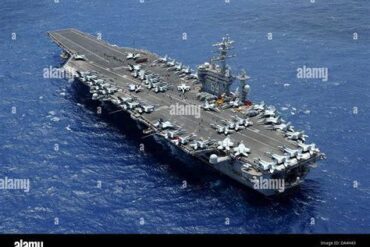
Today, the Navy fields approximately 296 battle force ships, including 11 aircraft carriers that anchor its strategic posture. Each carrier operates at the center of a CSG, typically composed of guided-missile cruisers, destroyers, and anti-submarine warfare vessels. These formations are engineered for endurance, capable of remaining deployed for months at a time. Yet endurance has limits, shaped by logistics, maintenance cycles, crew fatigue, and geopolitical necessity.
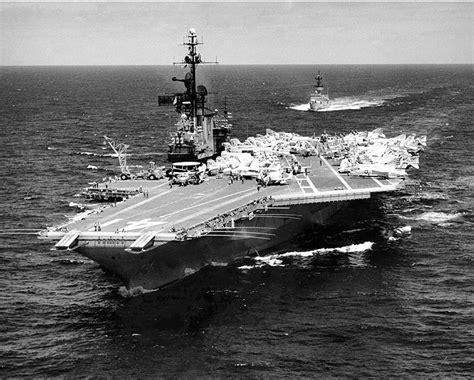
Among all carriers to sail under the American flag, one stands above the rest in raw deployment length: USS Midway (CVA-41). Between April 10, 1972, and March 3, 1973, during the height of the Vietnam War, Midway spent an extraordinary 332 consecutive days at sea. That record remains the longest single deployment in U.S. Navy history, a testament to Cold War-era operational demands and the relentless tempo of combat operations in Southeast Asia.
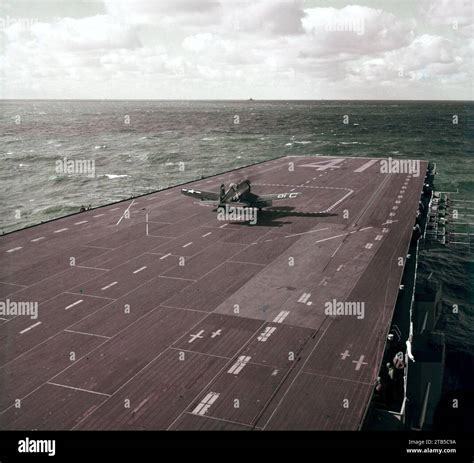
USS Midway’s 332-Day Vietnam War Deployment
The Midway’s historic deployment unfolded during one of the most intense phases of the Vietnam conflict. Operating in the Western Pacific, the carrier launched repeated air strikes against North Vietnamese targets while supporting ground operations. Her air wing flew thousands of sorties, delivering precision strikes, close air support, and reconnaissance missions. The 332-day stretch was not merely a statistic; it represented nearly a full year of sustained combat readiness in hostile waters.
Unlike modern nuclear-powered carriers, Midway was conventionally powered, requiring careful fuel management and logistical coordination. Despite those constraints, the ship steamed continuously through operational zones, embodying the strategic doctrine of persistent presence. The Vietnam War demanded continuous carrier availability, and Midway answered that demand with unparalleled duration.
While Midway technically holds the record, historical context complicates the narrative. Many discussions of deployment records include a qualifier such as “since 1964” or reference the post-Vietnam or post-Cold War era, reflecting shifts in deployment philosophy and global commitments.
USS Coral Sea: A Near-Record Marathon at Sea
Closely trailing Midway was USS Coral Sea (CVA-43). Depending on the source, Coral Sea’s Vietnam-era deployment lasted either 331 or 329 days. Regardless of the precise figure, the ship covered approximately 105,000 miles during an 11-month operational period in the Western Pacific. The minor discrepancy underscores how record-keeping can vary across official and independent sources, but the operational reality remains undeniable: Coral Sea’s deployment was one of the longest sustained naval operations of its time.
The Vietnam-era carriers operated under conditions that demanded relentless tempo. Air wings required constant maintenance. Crews endured extended separation from home ports. Strategic messaging required visible, credible force projection. These deployments were not anomalies; they were reflections of a superpower engaged in prolonged conflict.
The Modern Era and USS Abraham Lincoln’s Record
In the post-Cold War era, deployment lengths generally shortened due to rotational force management and increased emphasis on crew sustainability. However, extended operations did not disappear. The USS Abraham Lincoln (CVN-72), a Nimitz-class nuclear-powered aircraft carrier, departed Norfolk, Virginia, on April 1, 2019, and returned to San Diego on January 20, 2020. Its 295-day deployment stands as the longest in the modern era.
Nuclear propulsion provides near-unlimited range, eliminating refueling constraints that once shaped deployment timelines. Yet modern extensions are typically driven by geopolitical developments rather than fuel limitations. Lincoln’s extended cruise reflected shifting operational requirements and global tensions, underscoring how strategic unpredictability continues to shape naval endurance.
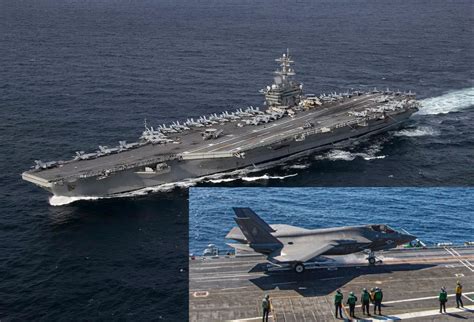
USS Nimitz and the Pandemic Complication
The case of USS Nimitz (CVN-68) illustrates how extraordinary circumstances can blur official records. Beginning April 1, 2020, the carrier remained at sea until February 26, 2021—341 days away from port. However, most official counts recognize only its 263-day formal deployment. The additional months resulted from pandemic-related quarantine measures and operational adjustments. Whether those days should count remains debated, but they reflect a unique moment when global health crises intersected with naval operations.
Could USS Gerald R. Ford Break the Record?
Attention has now turned to USS Gerald R. Ford (CVN-78), the world’s largest aircraft carrier. Deployed since June 24, 2023, the Ford has operated amid escalating tensions in the Middle East. If extended long enough, it could challenge or even surpass historical benchmarks. Whether it does so depends not only on endurance but on political decisions, strategic calculations, and evolving global threats.
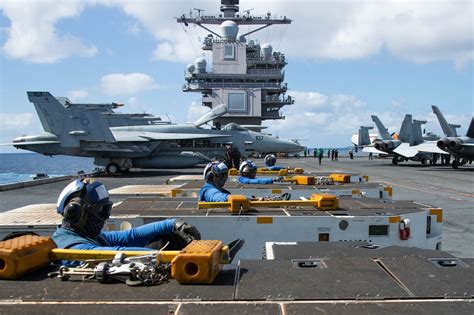
The record of the longest deployment is more than a numerical milestone. It reflects the intersection of strategy, technology, and global conflict. From Midway’s Vietnam-era marathon to Ford’s cutting-edge presence operations, each extended deployment tells a story of how the United States projects power across oceans—and how the demands of history can stretch even the mightiest ships to their limits.