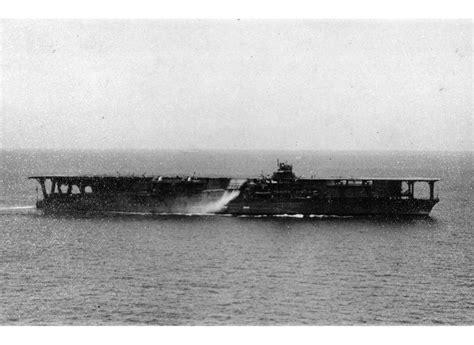
The Battle of Midway, fought from June 4–7, 1942, stands as one of the most decisive naval battles in history, a turning point in the Pacific theater of World War II. Four of the Empire of Japan’s most crucial aircraft carriers—Akagi, Kaga, Sōryū, and Hiryū—were lost in the battle. Their destruction marked the beginning of Japan’s strategic decline, yet for decades, the final resting places of these vessels remained a deep-sea mystery.
The Turning Point in the Pacific War
Following the devastating attack on Pearl Harbor on December 7, 1941, Japan sought to further cripple the U.S. Pacific Fleet. Admiral Isoroku Yamamoto, hoping to lure American carriers into a trap, launched a surprise assault on Midway Atoll. Instead, U.S. Navy cryptographers had broken Japanese codes, turning the ambush against its architect. In a matter of days, Japan lost four of its frontline carriers—an irreversible blow to its naval supremacy.
The scale of destruction was staggering. With carrier-on-carrier combat unfolding across hundreds of miles, aircraft clashed above and ships were torpedoed and bombed into oblivion. As time passed, the location of the wrecks—especially the Akagi and Kaga—eluded searchers, concealed beneath nearly 18,000 feet of ocean, where pressure and darkness reign supreme.
The Search Beneath the Waves
In October 2019, over 77 years after the battle, a dedicated search mission bore fruit. The research vessel Petrel, funded by the late Paul Allen, was equipped with state-of-the-art autonomous underwater vehicles (AUVs) armed with sonar imaging capabilities. The crew meticulously scanned over 500 square miles of seafloor, contending with vast distances and the scattered wreckage of Midway’s brutal engagement.
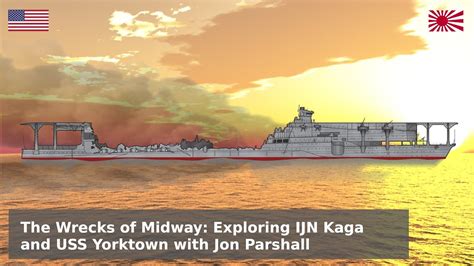
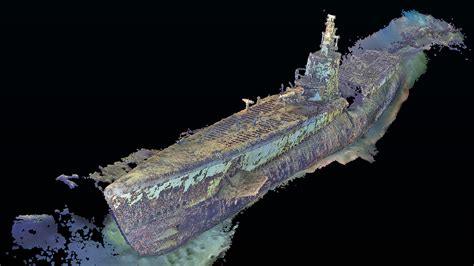
On October 16, 2019, the Kaga was finally located. Resting at a staggering depth of 17,717 feet, it became the first Japanese aircraft carrier wreck to be discovered. Just days later, the Akagi was identified a mere 5,249 feet away. These discoveries were confirmed using sonar scans that matched the known dimensions and features of the original vessels. Their condition—upright on their keels, with large sections of flight decks obliterated—testified to the ferocity of their final moments.
The Complexity of the Undersea Hunt
The search for these ships wasn’t just a matter of combing the ocean floor. The Battle of Midway was waged across an area exceeding 170 miles, and its aftermath scattered debris over thousands of square miles. Each piece of wreckage had to be analyzed and contextualized, forming clues in a painstaking jigsaw puzzle. The Petrel team’s ability to interpret battle records and oceanographic data was as crucial as the technology they deployed.
What complicated the operation further was the depth at which the ships lay. These wrecks are among the fourth-deepest shipwrecks from World War II, and initial imaging attempts only produced low-resolution visuals. A second survey pass was necessary to generate high-definition mappings, revealing telltale features like the armored hulls and partially collapsed hangars that authenticated the finds.
A Legacy Resurfaced
The rediscovery of the Akagi and Kaga does more than solve a historical riddle—it brings closure to one of the most pivotal naval clashes in modern warfare. These carriers were central to Japan’s early Pacific victories and symbolized the reach of its imperial ambition. Their sinking at Midway, and now their rediscovery, underscores the fragility of maritime dominance and the enduring impact of strategic missteps.
While Sōryū and Hiryū remain lost, their absence is a reminder of the vastness and mystery of the ocean. Yet the breakthroughs achieved in locating their sister ships inspire continued exploration. These submerged giants serve as underwater memorials, silent witnesses to a conflict that reshaped the world order.
Honoring the Fallen
As underwater archaeology progresses, the respectful documentation of such wrecks becomes a duty to both history and humanity. The wrecks of Akagi and Kaga are not just relics—they are gravesites, bearing the stories of sailors who perished far from home. Preserved in near-freezing darkness, these hulks rest quietly, etched into the seabed and the memory of a war that changed everything.