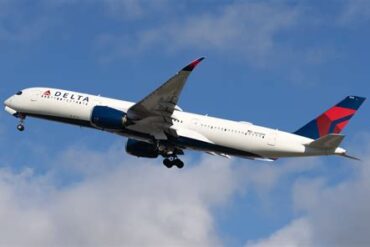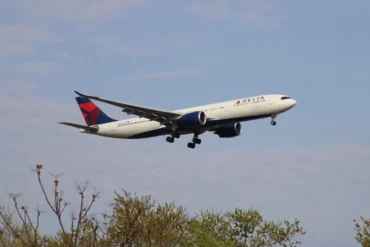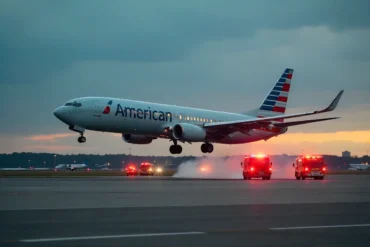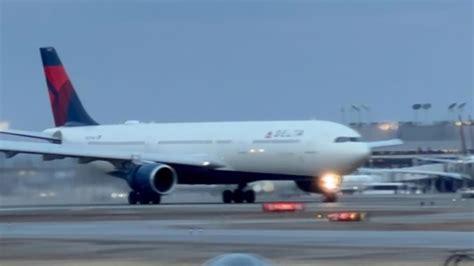
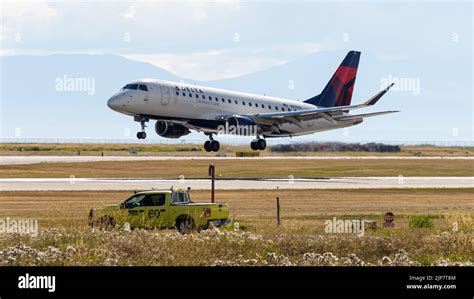
Delta Airlines Flight DL3543, en route from Minneapolis–Saint Paul International Airport (MSP) to Chicago Midway International Airport (MDW), was forced to make a rapid emergency landing on Monday, July 7, 2025, after encountering an in-flight anomaly. The aircraft involved, an Embraer 170-200LR with tail number N259SY, initiated the distress procedure just ten minutes after takeoff, shocking passengers and prompting an immediate industry-wide response.
Midair Emergency Unfolds Over the Midwest
The flight departed MSP at 13:09 UTC under clear conditions. But at 21,000 feet, the flight crew initiated an abrupt halt in ascent and declared a Squawk 7700 emergency, a universally recognized transponder code signaling a critical situation onboard.
Without delay, the aircraft began its return to Minneapolis, where it successfully landed at 13:46 UTC—just 37 minutes after takeoff—on runway 12R. The swift decision-making by the crew not only ensured passenger safety but also drew significant attention from aviation professionals monitoring air traffic.
Passengers were quickly evacuated at Gate C12, visibly shaken yet physically unharmed. However, the psychological impact of the ordeal left a more enduring mark. Social media lit up with firsthand accounts describing fear, anxiety, and confusion onboard. Although the airline commended the crew for their professionalism, the passenger narrative revealed the deeper emotional undercurrents that emergencies like these trigger.
The Anatomy of a Disruption: Beyond a Safe Landing
The true cost of a midair emergency extends far beyond the immediate flight. Regional flights like DL3543 are the backbone of domestic U.S. air travel, crucial for business connections, tourism flows, and regional supply chains. When one flight is disrupted, the consequences ripple outward through an intricate network of schedules and logistical dependencies.
This single event required Delta to:
- Reassign aircraft and crew for connecting and onward flights.
- Reschedule multiple legs of passenger itineraries.
- Initiate full aircraft inspections, grounding the Embraer until deemed airworthy.
- Provide crisis management support both onsite and digitally.
The FAA mandates that every emergency landing be followed by a comprehensive technical investigation, even if the root cause turns out to be minor. In such cases, operational resiliency is tested, not only from a technical standpoint but from the airline’s ability to provide continuity of service and peace of mind.
Passenger Trust: A Fragile Commodity in Modern Aviation
Today’s passengers demand more than a safe journey—they expect predictability, transparency, and accountability. As personal mobile devices turn every passenger into a broadcaster, even a routine emergency becomes a global talking point.
The emotional toll of the DL3543 incident became clear almost immediately. Social media posts described the tense silence in the cabin, the crew’s calm but urgent commands, and the visible distress of some flyers. Even without injury or damage, passengers expressed concerns about aircraft maintenance, flight crew readiness, and whether the airline could be trusted moving forward.

Delta Airlines issued a brief statement confirming the safe landing and praising the actions of the flight crew. However, public relations challenges remain. Restoring faith in a route as vital as Minneapolis to Chicago hinges not only on investigation results but also on how Delta manages passenger follow-up and broader service continuity.
The Regional Backbone of America’s Skies
The route between Minneapolis and Chicago may span less than 350 miles, but its strategic significance cannot be overstated. It links two economic powerhouses, fuels regional tourism, and supports daily business traffic. For many frequent flyers, it is as routine as a morning commute.
Yet regional aviation also represents one of the most operationally vulnerable segments in the airline ecosystem. Aircraft like the Embraer 175LR, while efficient, are deployed with tight turnarounds and razor-thin margins. A single delay, cancellation, or emergency can create a domino effect—grounding future flights, impacting aircraft availability, and straining regional airport capacities.
Why Every Emergency Matters: Industry Implications
The emergency return of DL3543 serves as a cautionary tale about the fragility of airline operations. In an era of post-pandemic recovery and peak summer travel volumes, U.S. carriers are under intense scrutiny to maintain reliability while ramping up service.
This incident exposed several pressure points:
- Crew availability: FAA regulations impose strict duty hour limits. Unscheduled landings may exhaust allowable hours, grounding not just the flight but the crew.
- Aircraft scheduling: Delta’s regional fleet operates on tight rotations. Grounding one jet affects several future legs.
- Maintenance logistics: Emergency inspections require certified engineers and access to technical documentation, sometimes causing delays even in routine findings.
- Passenger rerouting complexity: Real-time rebooking, lodging, and compensation depend on call center load, app performance, and airport ground staffing.
The Federal Aviation Administration has launched a standard procedural review into DL3543’s cause for the emergency call. Delta has yet to release further details, though unconfirmed reports point to a possible cabin pressure irregularity, which triggered the return order.
Emotional Echoes and Booking Behavior
Airline performance is no longer measured solely by safety records or on-time percentages. Consumer sentiment plays an equally critical role. When passengers feel uneasy, their loyalty erodes. Even a single flight disruption can alter the booking behavior of hundreds, possibly thousands, depending on how the story is shared.
In the wake of DL3543, Delta must act fast:
- Clarify the root cause of the emergency.
- Offer transparent communication with affected travelers.
- Provide goodwill gestures such as flight credits or loyalty point boosts.
- Reaffirm safety and service protocols publicly.
For travel advisors, corporate travel managers, and airline analysts, this event serves as a litmus test for Delta’s resilience in crisis mode. The airline’s future on the Minneapolis-Chicago corridor could hinge on its response.
What Comes Next: Repairing, Rebuilding, Reassuring
The next days will be critical. Airline maintenance teams must diagnose the fault and return the aircraft to service—or justify its extended absence. Meanwhile, Delta’s public affairs and operations divisions must stabilize schedules, reassure stakeholders, and prevent a broader loss of passenger trust.
Delta Airlines has long maintained a reputation for safety and operational excellence, especially on key domestic routes. But incidents like DL3543 are stark reminders that even established giants must constantly re-earn passenger confidence.
The aviation industry will watch closely how the situation unfolds—whether this becomes a forgotten footnote or a brand-defining moment. For now, Delta’s task is clear: restore stability, deliver clarity, and ensure that one emergency does not define an entire network.
Conclusion: A Flight’s Detour with Broader Consequences
Flight DL3543’s return to Minneapolis was a technical success, but also a symbolic wake-up call. In a system as vast and interlinked as U.S. domestic aviation, every disruption has meaning. Behind the safe landing lies a story of frayed nerves, logistical complexity, and strategic urgency.
Regional aviation will continue to be America’s connective tissue—but only if airlines maintain not just safety, but also passenger confidence in every seat, on every route, every day.