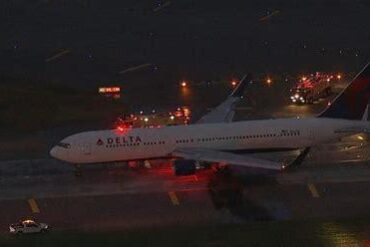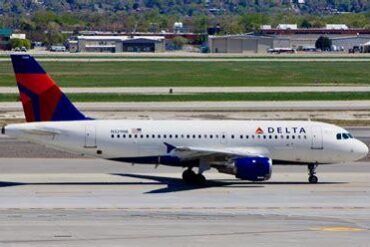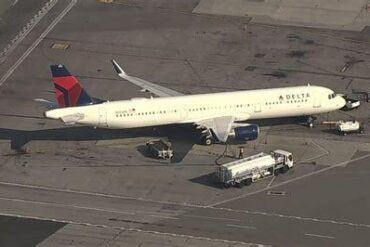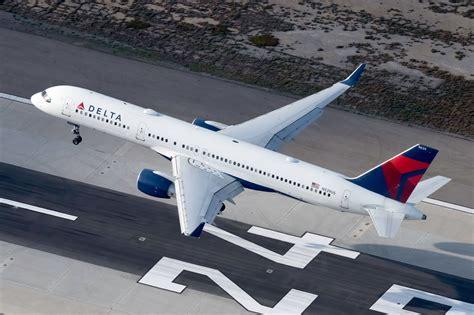
On the morning of July 7, 2025, a Delta Air Lines Boeing 757, operating as Flight 1334 from Atlanta (ATL) to Fort Lauderdale (FLL), made an emergency landing at Southwest Florida International Airport (RSW) in Fort Myers. The urgent diversion was triggered by a lithium-ion battery fire caused by a passenger’s portable battery pack, which ignited mid-flight and filled the cabin with smoke. While all 185 passengers and six crew members escaped unharmed, the event renewed intense scrutiny on the risks posed by lithium batteries in commercial aviation.
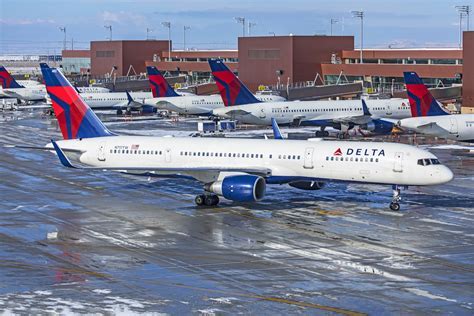
A Midair Crisis Aboard Delta Flight 1334
What began as a routine domestic flight quickly turned into a high-stakes emergency. As the aircraft cruised at altitude en route to Florida’s southeastern coast, a passenger’s power bank overheated and burst into flames. Smoke began to engulf parts of the cabin, triggering immediate emergency protocol by the crew.
Flight attendants deployed onboard fire extinguishers and swiftly contained the flames. Despite their success in dousing the fire, lingering smoke and the potential for further damage prompted the cockpit crew to declare an emergency. The Boeing 757 was rerouted to Fort Myers, roughly two hours away by car from the original destination.
Emergency Landing Executed with Precision
The flight landed safely at 8:48 a.m. local time at Fort Myers’ RSW Airport. Passengers disembarked without incident, and no injuries were reported. Delta confirmed that the aircraft involved, tail number N659DL, is a 35.1-year-old Boeing 757-200. Though aged, the aircraft’s systems and crew coordination ensured a safe conclusion to what could have escalated into a disaster.
This event underscores the effectiveness of Delta’s emergency procedures, particularly regarding smoke and fire mitigation in the cabin. However, it also raises ongoing concerns about passenger-borne electronic devices, which continue to emerge as volatile risk factors in flight safety.
FAA Investigation Highlights Lithium Battery Risks
The Federal Aviation Administration (FAA) has launched an official investigation into the incident. The agency routinely investigates onboard fires—especially those involving lithium-ion batteries, which are known for their instability and risk of thermal runaway. The FAA’s concern is well-founded: between 2015 and 2024, reported lithium battery-related fires on U.S. flights surged by 388%.
So far in 2025, at least 34 lithium battery incidents have been reported on commercial aircraft, 11 of which involved portable chargers or power banks. These numbers highlight the urgent need for regulatory clarity and enhanced safety enforcement concerning consumer electronics onboard.
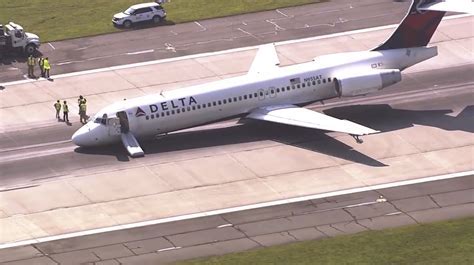
Why Lithium Batteries Are a Growing Threat in the Sky
Lithium-ion batteries power nearly every piece of modern tech—from smartphones and tablets to laptops and portable chargers. Their popularity stems from high energy density, compact size, and rechargeability. However, they also carry a significant risk: if damaged, improperly handled, or exposed to excessive heat, they can ignite or explode.
Within the confined space of an aircraft, even a small battery fire can become a life-threatening emergency. Fires on planes are particularly dangerous due to limited oxygen, high altitudes, and the presence of pressurized systems. Airlines are aware of these risks and have implemented strict carry-on battery policies, including restrictions on spare batteries in checked baggage.
Yet enforcement remains difficult. Passengers frequently bring untested, third-party batteries, or leave devices charging unattended in-flight—factors that increase the chance of ignition.
Airline Policy Shifts Reflect Mounting Concerns
In response to the rising number of incidents, major airlines are adapting their policies. Southwest Airlines, for instance, introduced a visibility rule requiring all power banks and chargers to remain within sight of passengers and crew throughout the flight. Cabin crew are also permitted to inspect devices if overheating is suspected.
Singapore Airlines has gone a step further by banning the charging and use of power banks during flights altogether. These hardline approaches illustrate how seriously carriers are taking the issue, even at the cost of passenger convenience. Airlines now recognize that the frequency of lithium battery-related fires warrants preemptive action rather than reactive response.
Operational Disruption and Cost Implications for Delta
While Flight 1334’s safe landing marked a procedural success, the operational and financial consequences for Delta were significant. The unplanned stop required emergency coordination at Fort Myers, crew realignment, and rebooking of affected passengers. The aircraft also needed technical inspection before returning to service, further complicating Delta’s flight schedule.
Incidents like this add costs related to maintenance, inspections, delays, and even potential compensation to passengers. Additionally, these events can affect brand perception, especially among safety-conscious travelers. Airlines must balance immediate passenger welfare with long-term confidence in their fleet and operational resilience.
Delta Applauds Crew’s Professional Response
Delta Airlines commended its flight attendants and cockpit crew for their swift, textbook response to the midair emergency. Their ability to control the fire, keep passengers calm, and land the aircraft safely is a testament to rigorous emergency training and real-world preparedness. The airline reiterated its top priority: maintaining passenger and crew safety under any circumstance.
While the flight crew’s response was exemplary, the broader safety threat remains unresolved. As passenger dependency on personal electronics increases, airlines are under growing pressure to ensure these conveniences do not undermine aircraft safety.
A Snapshot of the Modern Aviation Safety Landscape
The incident involving Delta Flight 1334 fits into a troubling pattern of battery-related onboard fires, and it emphasizes how a single personal device can jeopardize an entire flight. Modern airliners are built to withstand immense stress, but they are also increasingly vulnerable to unregulated, user-owned technology.
The FAA has been active in issuing guidance for passengers and airlines alike. Education efforts now focus on:
- Avoiding low-quality or counterfeit chargers
- Not packing spare batteries in checked baggage
- Keeping devices accessible during flight
- Reporting any signs of overheating immediately
These guidelines may seem simple, but they are often ignored or misunderstood, increasing the risk of midair incidents.
The Road Ahead: Innovation, Education, and Enforcement
In the aftermath of Flight 1334’s safe landing, the aviation industry faces a clear mandate: innovate faster, educate passengers better, and enforce policies rigorously. As aircraft cabins become increasingly saturated with personal electronics, the margin for error shrinks.
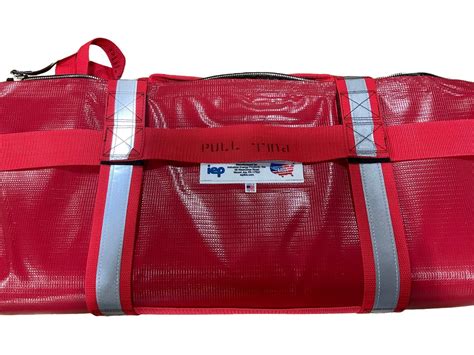
Airlines must explore new technologies such as fireproof containment bags, improved smoke detection sensors, and even automated suppression systems tailored for cabin electronics. Meanwhile, public awareness campaigns must help passengers understand their role in keeping flights safe.
Final Thoughts: Safety Is Never Routine
For the 185 passengers on Delta Flight 1334, the ordeal was likely harrowing. Yet, it concluded safely because of well-trained crew, established emergency procedures, and rapid ground coordination. The incident did not result in injury or greater tragedy—but it easily could have, had the fire spread or gone undetected longer.
As the FAA’s investigation proceeds, the outcome will likely influence future policy on cabin device usage, battery handling, and emergency equipment standards. The aviation world cannot afford complacency. Every safe landing after an inflight emergency should be viewed not just as a success, but as a warning signal and a prompt for systemic improvement.
Passengers, regulators, and airlines must remain vigilant. The sky may be vast, but safety—especially in the age of personal tech—is now a matter of inches and seconds.