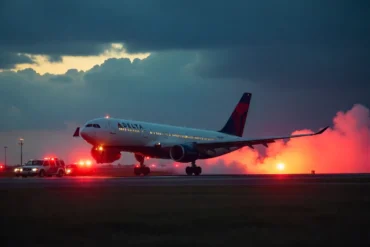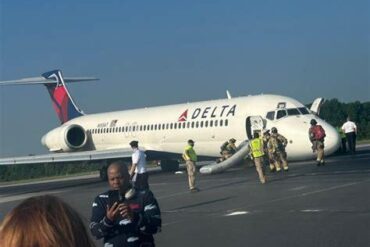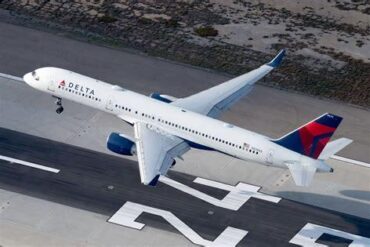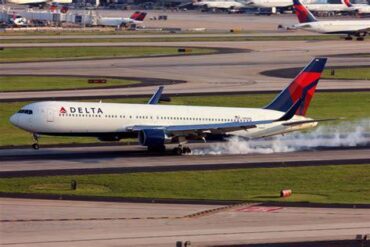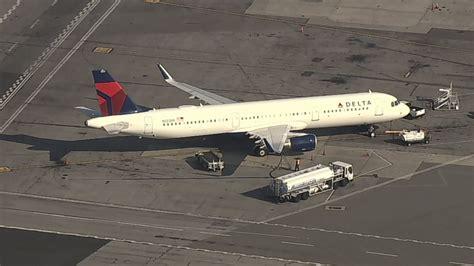
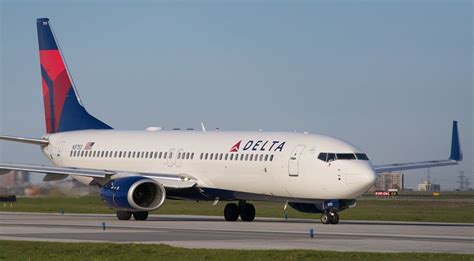
A routine flight from New York LaGuardia Airport (LGA) to Miami International Airport (MIA) turned tense on May 28, 2025, when Delta Air Lines Flight DL2346 was forced to make an emergency landing after the flight crew reported a loud, alarming bang during takeoff. The Boeing 737-800, carrying 154 passengers and crew, diverted to John F. Kennedy International Airport (JFK) and landed safely, avoiding what could have been a far more dangerous outcome.
Emergency Declared Moments After Takeoff
Flight DL2346 had just departed from Runway 13 at LGA when the pilots heard what they later described as a “really, really loud bang” near the nose gear assembly—a critical component of the aircraft’s landing system. The sound occurred during rotation, the high-stress moment when the aircraft leaves the ground and its gear retracts.
Almost immediately, the flight crew contacted New York departure control, declared an emergency, and requested a direct diversion to JFK. The aircraft quickly leveled off at 4,000 feet, maintaining a low altitude in anticipation of a swift landing. This level of response, fast yet composed, underscores the gravity of the situation and the professionalism of the cockpit crew.
A Shaky But Safe Touchdown at JFK
Within 15 minutes of departure, the aircraft made its final approach to Runway 22L at JFK. According to aviation sources, the touchdown was safe but the rollout phase of the landing—when the aircraft slows down along the runway—was described by the pilots as “really shaky.” This instability further supported suspicions of a possible nose gear malfunction.
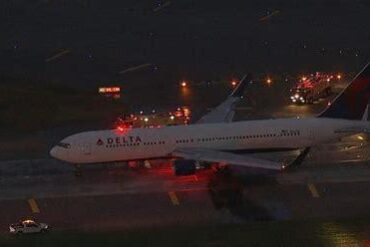
After clearing the runway, the plane came to a stop on Taxiway Z. Emergency response teams were already in position, closely monitoring the aircraft for any signs of additional mechanical failure or hazards such as hydraulic fluid leaks or overheating brakes.
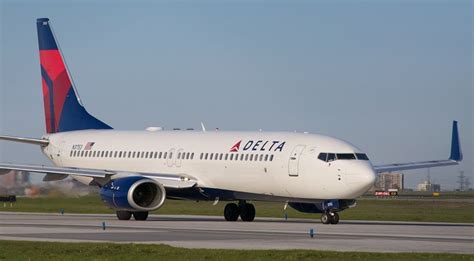
For approximately 20 minutes, the aircraft remained stationary as first responders ensured it was safe to move. Ultimately, the aircraft was towed to a terminal gate, shadowed by fire trucks and support vehicles, adhering to standard precautionary protocols.
No Injuries, But Hours-Long Delay
Despite the tense situation, no injuries were reported among the 154 passengers and crew. However, the aircraft, registered as N383DN, was immediately grounded for technical inspection and has not returned to service more than 22 hours after landing.
To accommodate stranded passengers, Delta dispatched a replacement Boeing 737-800 (registration N390DA) to resume the journey to Miami. Although delayed by nearly seven hours, all passengers eventually reached their destination safely, albeit shaken and fatigued.
FAA Opens Investigation Into Nose Gear Anomaly
With the Federal Aviation Administration (FAA) notified, a formal investigation is underway to determine what caused the loud bang and the subsequent instability during landing. Preliminary hypotheses focus on nose gear mechanical failure, which can stem from issues such as strut misalignment, actuator malfunction, or compromised gear housing integrity.
Aircraft takeoff and rotation are among the most critical flight phases. Any irregularities during this time are cause for immediate concern because they may compromise aerodynamic stability, gear retraction, or control surface behavior. This incident highlights the potential risks that can arise suddenly even during seemingly routine departures.
Pilots Praised for Split-Second Decision Making
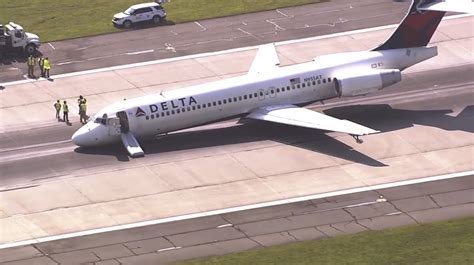
Aviation experts have applauded the actions of the Delta flight crew, calling their reaction a textbook example of emergency flight protocol. Their ability to assess the situation, coordinate with air traffic control, and choose a safe diversion point reflects the intensive simulator training and real-world preparedness Delta pilots undergo.
“This is exactly why rigorous training and procedural discipline matter,” stated an aviation safety consultant familiar with airline emergency protocols. “The crew did everything by the book and got everyone on the ground safely.”
Aircraft N383DN: Maintenance History and Age
The aircraft involved in the incident, Boeing 737-800 tail number N383DN, is part of Delta’s narrow-body fleet designed for domestic routes. Industry databases list its delivery date as 2008, making it nearly 17 years old at the time of the emergency. While aircraft of this age are common in U.S. fleets and regularly undergo stringent maintenance checks, age-related wear can still result in unforeseen issues.
Delta Air Lines is known for its rigorous maintenance schedule, often exceeding FAA minimums. Nevertheless, mechanical failures—especially those affecting the landing gear—are taken extremely seriously. The FAA’s investigation will likely include:
- Inspection of the nose gear strut and actuators
- Review of maintenance logs and recent repairs
- Interviews with flight crew and maintenance personnel
- Retrieval of flight data and cockpit voice recordings
Passenger Reactions: Calm but Concerned
Reports from passengers on board Flight DL2346 paint a picture of calm professionalism from the cabin crew. One traveler recounted, “There was a strange noise, but no one panicked. The flight attendants handled everything smoothly, and we were given updates constantly.”
Others expressed gratitude but also concern, questioning what exactly went wrong and whether the issue could have posed a larger threat if it had occurred at cruising altitude rather than takeoff. Such sentiments are not uncommon after in-flight emergencies, where the psychological impact on travelers often outlasts the physical danger.
JFK’s Role in Emergency Diversions
JFK Airport is equipped with the infrastructure and resources to handle emergency diversions efficiently, making it the ideal location for Flight DL2346’s unplanned landing. Its long runways, rapid-response fire and rescue units, and high-frequency coordination with local air traffic control make it a critical asset during high-alert situations.
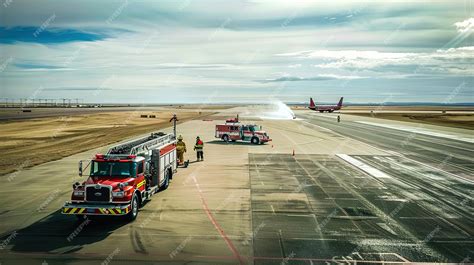
Given JFK’s prominence and capacity, it’s often the first alternative for any aircraft in distress within the New York metropolitan airspace. While diversions to JFK can cause logistical challenges, including gate availability and terminal coordination, the airport’s emergency readiness ensures safety remains the top priority.
Broader Implications for Airline Safety
Though air travel remains statistically safer than other modes of transportation, incidents like this serve as a stark reminder that vigilance, maintenance, and training are the backbone of aviation safety. Mechanical surprises, especially those occurring during takeoff or landing, underscore why flight crews must be prepared to act without hesitation.
Delta’s response—both in the air and on the ground—demonstrates a commitment to these principles. The decision to ground the original aircraft, deploy a replacement jet, and coordinate passenger services reflects a culture of accountability and safety-first thinking.
In the coming weeks, more details will emerge from the FAA investigation, including whether any design, component fatigue, or oversight may have contributed to the issue. Regardless of outcome, the incident will undoubtedly feature in future safety training programs and simulation drills across the airline industry.
Conclusion: Averting Disaster with Precision and Training
In the high-stakes world of commercial aviation, the line between routine and emergency can be razor-thin. On May 28, 2025, Delta Flight DL2346’s flight crew proved that decisive action, paired with procedural discipline, can transform a mechanical emergency into a safety success story.
While the loud bang that startled both cockpit and cabin alike remains under investigation, the safe outcome reinforces a hard truth: even the best machines can falter, but well-trained humans can prevent tragedy.
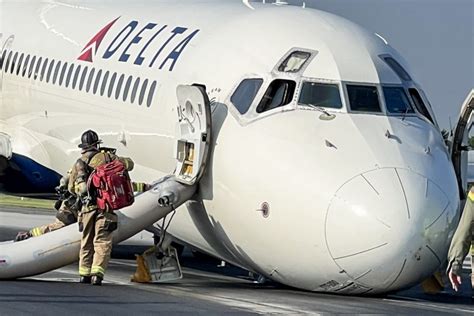
As the grounded Boeing 737-800 undergoes thorough examination, and as Delta and federal regulators work to uncover root causes, one thing remains certain—the day’s events may have ended differently were it not for expert handling, vigilant crews, and unwavering commitment to aviation safety.