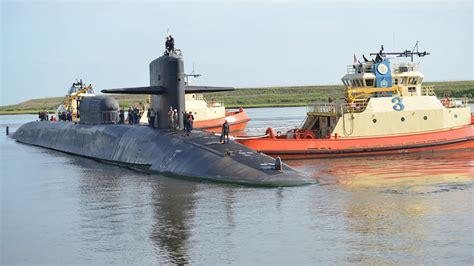
This achievement did not unfold as a publicity stunt or symbolic voyage, but as a calculated demonstration of endurance, logistics, and strategic reach. In August 2022, a U.S. Navy submarine quietly departed its home waters and did not return for nearly two years, rewriting expectations for undersea operations.
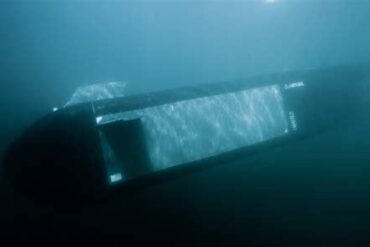
The vessel was the USS Florida, a nuclear-powered guided-missile submarine whose deployment stretched an unprecedented 727 days. From the Atlantic to the Pacific, the submarine operated across multiple theaters, executing missions within the U.S. 5th, 6th, and 7th Fleet areas while traversing tens of thousands of miles beneath contested seas.
While nuclear submarines are designed for long endurance, such prolonged absence from homeport remains extremely rare. The Florida did not simply remain submerged; it sustained operational tempo, intelligence collection, deterrence patrols, and regional presence without returning to Naval Submarine Base Kings Bay in Georgia until its mission formally concluded.
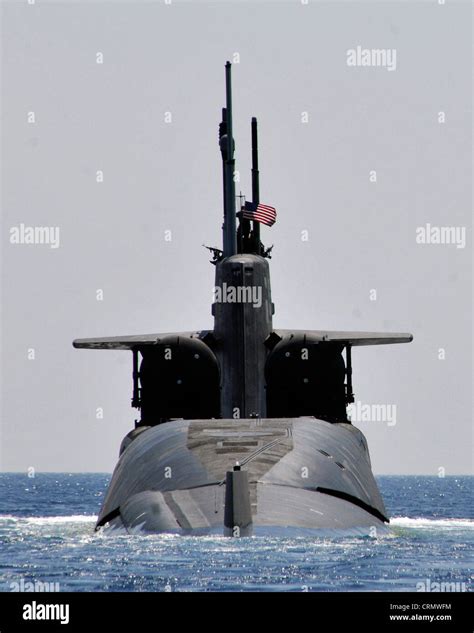
Crucially, the 727-day deployment did not mean one exhausted crew endured the entire span. The U.S. Navy employs a dual-crew system for its Ohio-class submarines, rotating Blue and Gold crews to maximize platform availability while preserving sailor readiness and mental health during extended global operations.
Throughout the mission, the Florida entered ports around the world to replenish supplies, conduct maintenance, and exchange crews. Stops included strategically vital locations such as Greece, Guam, Diego Garcia, and the United Kingdom, underscoring how undersea power integrates seamlessly with allied infrastructure and forward logistics.
By the time the submarine returned in July 2024, it had traveled more than 60,000 nautical miles and completed five full crew swaps. According to commanding officers, the deployment demonstrated rare flexibility, including an East Coast–based submarine executing sustained operations across the Pacific with exceptional coordination.
What Makes the USS Florida Different
The USS Florida is no ordinary submarine. Measuring 560 feet long, it began service in 1983 as a ballistic missile submarine, forming part of the sea-based leg of America’s nuclear triad before undergoing a transformational conversion two decades later.
Following 61 successful deterrence patrols, the submarine entered Norfolk Naval Shipyard in 2003 for refueling and redesignation. Emerging as SSGN-728, it traded intercontinental ballistic missiles for a payload optimized for precision strike, special operations support, and regional power projection.
At the heart of Florida’s lethality are 22 missile tubes capable of carrying up to 154 Tomahawk cruise missiles. With modern variants reaching targets roughly 1,000 miles inland, the submarine can influence events ashore without ever revealing its position or approaching hostile coastlines.
Beyond firepower, the submarine functions as a covert transport hub for elite forces. It can host up to 66 special operations personnel, deploying or recovering them through modified lock-out chambers that allow insertion without surfacing, preserving stealth during some of the most sensitive missions imaginable.
Why the 727-Day Deployment Matters
This record-setting patrol was not about endurance alone. It validated the SSGN concept as a globally persistent asset, capable of responding to crises, supporting allies, and deterring adversaries across multiple combatant commands without interruption or visibility.
With only four SSGNs in the U.S. Navy, each deployment carries outsized strategic weight. The Florida’s 727 days at sea showcased how undersea platforms quietly shape geopolitical balance, offering sustained presence where surface ships and aircraft cannot linger.
Its commanding officers emphasized that success relied on disciplined maintenance cycles, precise logistics planning, and trust between rotating crews. Every handover preserved mission continuity, intelligence awareness, and operational secrecy, ensuring the submarine remained combat-ready despite its extraordinary duration away from homeport. This continuity allowed national leaders to depend on uninterrupted undersea presence during a volatile period of shifting alliances and expanding maritime competition worldwide. Few platforms offer such reliability under relentless scrutiny from rivals monitoring every strategic movement closely.
As global competition increasingly shifts below the surface, the USS Florida’s historic patrol stands as a benchmark for future operations. It proved that endurance, adaptability, and silent reach remain decisive advantages, redefining what modern naval power can achieve without ever being seen.