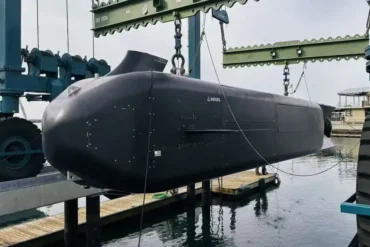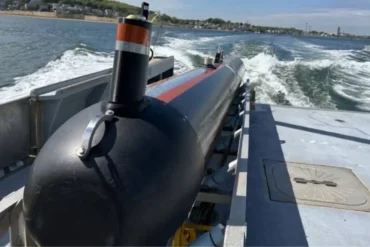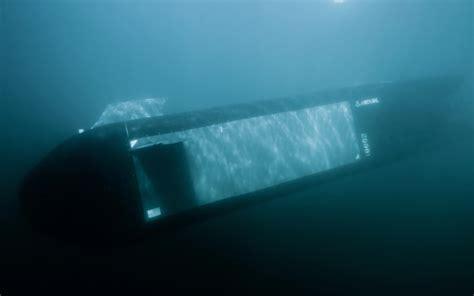
The future of naval warfare is no longer defined solely by nuclear-powered submarines and carrier strike groups. Instead, a new class of autonomous, AI-driven undersea platforms is quietly reshaping maritime dominance. At the center of this shift is the Dive-XL, an advanced unmanned submarine developed by Anduril Industries, which is rapidly emerging as a cornerstone of the U.S. Navy’s next-generation undersea strategy.
This is not just another experimental drone. The Dive-XL represents a calculated leap toward scalable, modular, and deployable underwater warfare systems designed to operate in environments too dangerous—or too contested—for human crews.
The Strategic Vision Behind Autonomous Undersea Warfare
In April 2025, the U.S. Navy launched the Combat Autonomous Maritime Platform program, a forward-looking initiative aimed at developing unmanned vessels capable of operating at significant depths while carrying diverse payloads. The program set clear parameters: deep-diving capability beyond 650 feet, a range of approximately 1,000 nautical miles, and flexible payload deployment.
The underlying vision is both simple and transformative—replace risk-intensive manned missions with persistent, autonomous systems capable of surveillance, logistics, and even offensive operations. The ocean, long considered opaque and uncontested in certain regions, is becoming a digitized battlespace.
Dive-XL didn’t just meet these requirements—it exceeded them in nearly every measurable category.
Dive-XL Specifications: Built for Depth, Range, and Power
Stretching 27 feet in length with a 7-foot beam, the Dive-XL is a formidable platform that redefines expectations of unmanned underwater vehicles. Unlike smaller reconnaissance drones, this system is engineered for heavy payload deployment and long-duration missions.
Its capabilities include:
- Operational range of approximately 2,000 nautical miles, doubling baseline requirements
- Maximum depth capability reaching up to 20,000 feet, enabling deep-ocean missions
- All-electric propulsion system, ensuring low acoustic signature and extended endurance
- Modular payload architecture, supporting single to extended configurations
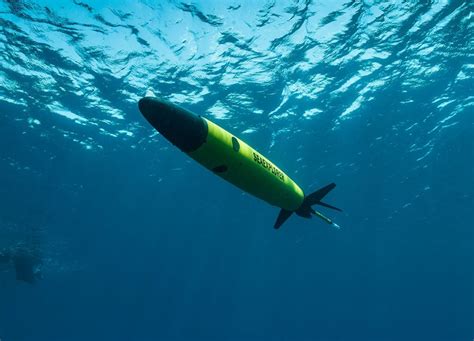
This combination of range and stealth is critical. Operating silently beneath the surface allows Dive-XL to penetrate contested maritime zones, deploy assets, and withdraw without detection—an advantage that traditional submarines cannot always guarantee.
Modular Payloads: The Core of Dive-XL’s Combat Flexibility
What truly separates Dive-XL from legacy systems is its modular payload design, a feature that transforms it from a single-purpose vehicle into a multi-mission platform.
The submarine can deploy a wide range of systems, including the Seabed Sentry, a distributed sensor network powered by advanced AI. These nodes function as underwater sentinels, creating a real-time communication and surveillance grid across the seabed.
Complementing this capability is the Copperhead drone, an autonomous weapon designed specifically for deployment from platforms like Dive-XL. Configurable for different mission profiles, it introduces a new dimension of precision strike capability beneath the waves.
This layered approach—combining surveillance, communication, and strike—means Dive-XL can act as both a force multiplier and an independent operator.
Stealth and Endurance: The Silent Advantage
The transition to an all-electric powertrain is not merely a technological upgrade—it is a tactical necessity. Traditional submarines, even advanced ones, must periodically surface or snorkel, exposing them to detection. Dive-XL eliminates this vulnerability by enabling extended submerged operations without surfacing.
This translates into three decisive advantages:
- Reduced acoustic and thermal signature, making detection extremely difficult
- Extended mission endurance, allowing operations deep within hostile zones
- Persistent presence, maintaining surveillance or readiness for extended periods
In an era where adversaries are rapidly advancing anti-submarine warfare capabilities, stealth is survival. Dive-XL is designed with that reality at its core.
Logistical Simplicity and Rapid Deployment
Beyond its combat capabilities, Dive-XL addresses a critical bottleneck in modern military operations: logistics. The platform is engineered for ease of transport, launch, and recovery, significantly reducing the infrastructure required for deployment.
It can be:
- Launched from ships or piers
- Transported via aircraft or truck
- Shipped in standard containers across maritime routes
This flexibility allows the U.S. Navy to rapidly deploy autonomous assets across multiple theaters, creating a distributed network of undersea systems without the need for large, vulnerable bases.
Reducing Risk While Expanding Capability
One of the most compelling advantages of Dive-XL is its ability to reduce operational risk to human personnel. Submarine missions are among the most hazardous in military operations, involving extreme depths, confined environments, and high-stakes scenarios.
By shifting these missions to autonomous systems, the Navy achieves:
- Lower risk to sailors
- Higher mission frequency and persistence
- Scalable force expansion without increasing crew requirements
This is not just an efficiency upgrade—it is a fundamental shift in how naval power is projected.
The Future Battlespace Beneath the Waves
Dive-XL is more than a platform; it is a glimpse into the future of warfare beneath the ocean’s surface. As autonomous systems proliferate, the undersea domain will become increasingly complex, populated by networks of drones, sensors, and AI-driven platforms competing for dominance.
The U.S. Navy’s investment in systems like Dive-XL signals a clear strategic intent: to dominate this emerging battlespace through innovation, scalability, and autonomy.
Yet, the story is still unfolding. As technologies evolve and new capabilities are integrated, Dive-XL’s role will likely expand beyond current expectations. From intelligence gathering to precision strikes, and even undersea infrastructure protection, its potential applications are vast.
What is certain is this: the era of autonomous undersea warfare has arrived—and Dive-XL is leading the charge.