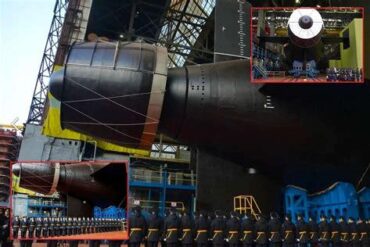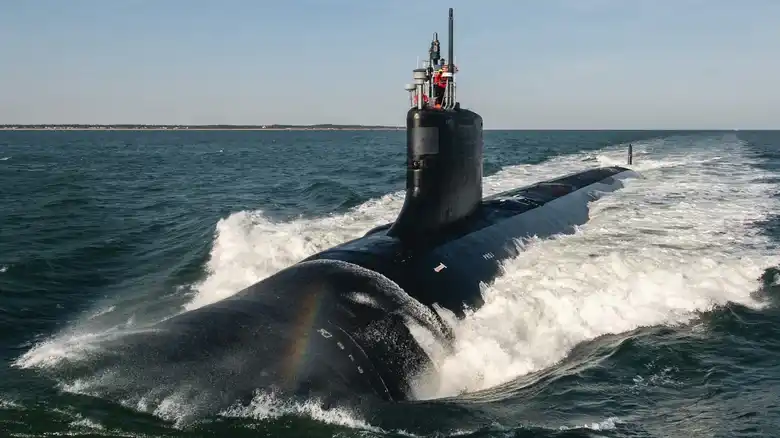
The U.S. Navy’s relentless focus on operational readiness has once again taken center stage with the return of the USS New Jersey, a 7,800-ton Virginia-class nuclear-powered submarine, to active service. After undergoing a critical Post-Shakedown Availability (PSA) period at Newport News Shipbuilding, the vessel has rejoined the fleet with enhanced capabilities, reinforcing America’s undersea dominance in an increasingly complex global security environment.
Post-Shakedown Availability: The Crucial Upgrade Phase
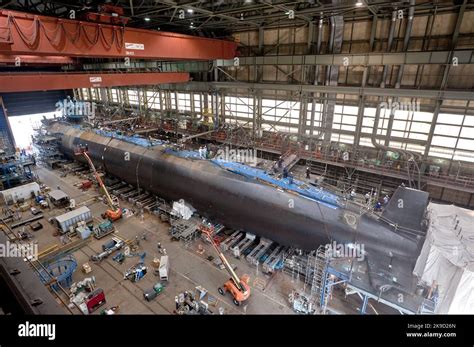
The PSA phase is not a routine maintenance window—it is a strategic refinement process designed to identify and resolve issues that only emerge after initial deployment. For the USS New Jersey, this phase proved transformative. Engineers and technicians conducted deep system diagnostics, implemented combat system upgrades, and refined onboard electronics to ensure the submarine operates at peak efficiency under real-world conditions.
Rather than waiting for operational failures, PSA enables the Navy to preemptively enhance performance, ensuring the vessel is mission-ready across all theaters. Following the upgrades, the submarine underwent rigorous sea trials, a process that validates everything from propulsion and navigation systems to weapons deployment readiness. Only after passing these demanding evaluations was the submarine cleared for full operational return.
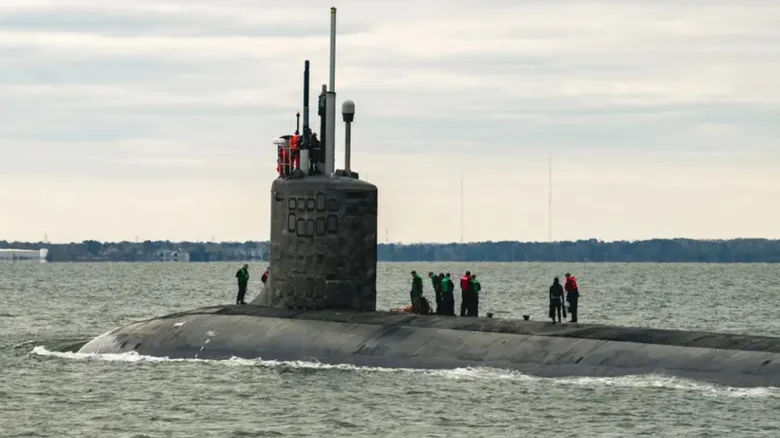
A Virginia-Class Powerhouse Built for Modern Warfare
Commissioned on September 14, 2024, the USS New Jersey represents one of the most advanced platforms in the Navy’s arsenal. As part of the Virginia-class fleet, it is engineered for multi-mission versatility, capable of executing anti-submarine warfare, anti-ship operations, and precision strike missions with remarkable efficiency.
Its advanced architecture allows for real-time data processing and tactical awareness, enabling commanders to make rapid, informed decisions in high-stakes scenarios. Compared to earlier submarine classes, the Virginia-class integrates cutting-edge stealth technology, reducing acoustic signatures and making detection by adversaries significantly more difficult.
This class also boasts an impressive weapons suite. The USS New Jersey can deploy:
- Tomahawk cruise missiles for long-range precision strikes
- Heavyweight torpedoes for underwater combat
- Unmanned underwater vehicles (UUVs) for reconnaissance and surveillance
These capabilities position the submarine as a multi-domain force multiplier, capable of influencing both naval and land-based operations.
Engineering Excellence and Strategic Partnerships
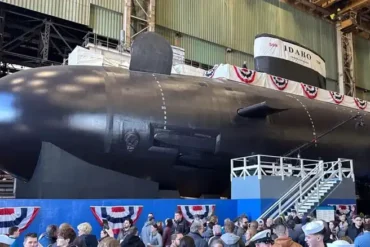
The construction of the USS New Jersey reflects the strength of the long-standing partnership between Newport News Shipbuilding and General Dynamics Electric Boat. As the 11th Virginia-class submarine delivered by Newport News and the 23rd built under this collaboration, it stands as a testament to decades of industrial expertise and innovation.
Thousands of engineers, designers, and skilled workers contributed to its development, ensuring every component—from the nuclear reactor to the sonar arrays—meets the Navy’s exacting standards. The submarine measures 377 feet in length, with a 34-foot beam, and can exceed speeds of 25 knots, giving it both endurance and agility beneath the waves.
Integrated Crew Design: A New Era for Submarine Operations
One of the most notable advancements aboard the USS New Jersey is its integrated crew structure. Designed to accommodate both male and female sailors, it marks a significant step forward in the Navy’s modernization efforts. This shift is not merely symbolic—it reflects a broader commitment to maximizing talent and operational efficiency across the force.
With a crew of approximately 135 personnel, the submarine operates as a tightly coordinated unit where automation and advanced systems reduce workload, allowing sailors to focus on mission-critical tasks. The result is a more adaptable, resilient crew capable of sustaining extended deployments in challenging environments.
Strategic Impact: Strengthening the Undersea Fleet
The return of the USS New Jersey comes at a time when undersea warfare is becoming increasingly निर्णative in global military strategy. Submarines provide unmatched advantages in stealth, intelligence gathering, and strike capability, making them essential assets in both deterrence and active conflict scenarios.
By reintroducing an upgraded Virginia-class submarine into service, the Navy significantly enhances its ability to project power, monitor adversaries, and secure maritime interests. The USS New Jersey’s blend of advanced technology, operational flexibility, and improved systems ensures it will play a pivotal role in maintaining naval superiority for years to come.
The modernization of this 7,800-ton vessel underscores a simple reality: in the silent world beneath the ocean’s surface, technological edge and readiness define dominance.