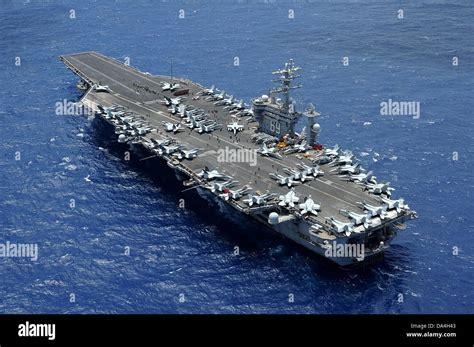
The return of a battle-tested warship is never routine—it is a statement of enduring strength, engineering excellence, and strategic intent. The USS Dwight D. Eisenhower, one of the most recognizable pillars of American naval dominance, is now poised to re-enter active service after a major overhaul that reinforces its relevance in modern warfare.
For a vessel approaching its 50th year, this is not merely a maintenance milestone—it is a calculated revival of combat capability. In an era where maritime power defines geopolitical leverage, the Eisenhower’s return signals continuity in U.S. naval projection across critical regions.
A Nimitz-Class Giant Reawakened
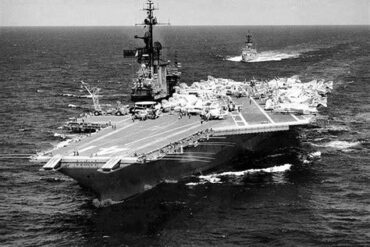
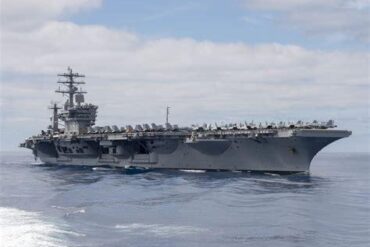
At 1,092 feet in length and displacing over 100,000 tons, the Eisenhower belongs to the formidable Nimitz-class aircraft carrier family—ships designed not just to operate aircraft, but to dominate entire theaters of operation. These floating airbases are engineered for endurance, capable of sustaining high-tempo missions for months without resupply.
Its recent Planned Incremental Availability (PIA), conducted at Norfolk Naval Shipyard, was no ordinary upgrade cycle. This was a comprehensive inspection and modernization effort involving over 4,000 personnel working in synchronized precision.
The result? Completion ahead of schedule—a rare feat in naval engineering—demonstrating not just efficiency but operational urgency.
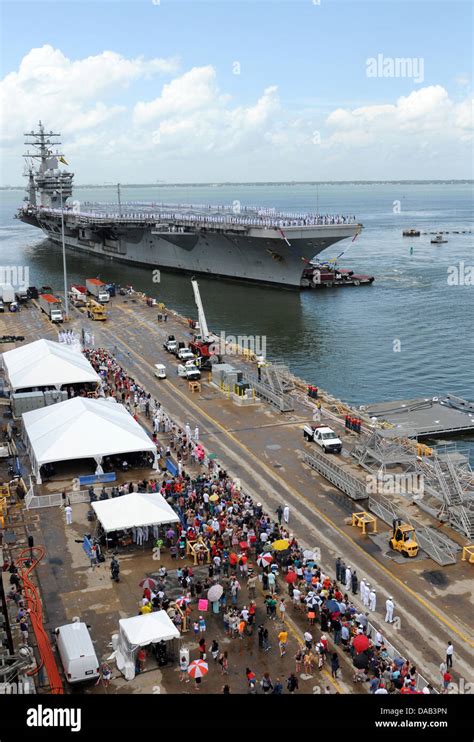
Modernization That Matters: Catapults, Systems, and Combat Readiness
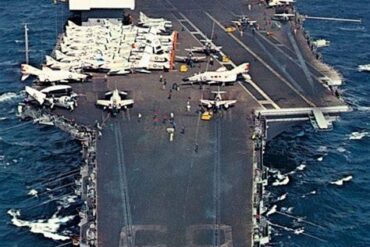
The core of any aircraft carrier’s lethality lies in its ability to launch and recover aircraft efficiently. The Eisenhower’s catapult systems—critical for projecting air power—underwent significant repairs and upgrades, ensuring they remain reliable under combat conditions.
But the transformation runs deeper. The overhaul included:
- Advanced diagnostics and structural assessments
- Upgraded communication systems for network-centric warfare
- Maintenance of propulsion and nuclear systems
- Enhanced survivability features
This is not about turning an old ship into something new—it is about refining a proven war machine to meet contemporary threats with precision.
A Combat Legacy Forged Across Decades
Commissioned in 1977 and christened by Mamie Doud Eisenhower, the carrier has accumulated a combat résumé few vessels can rival. From the tense waters of the Red Sea during the Gulf War era to its central role in Operation Desert Storm, the Eisenhower has consistently operated at the sharp edge of U.S. military operations.
Throughout the 1990s, it participated in NATO and U.S.-led missions such as:
- Operation Uphold Democracy
- Operation Southern Watch
- Operation Deny Flight
Each deployment reinforced its role as a flexible, forward-deployed strike platform.
Endurance Redefined: Record-Breaking Deployment
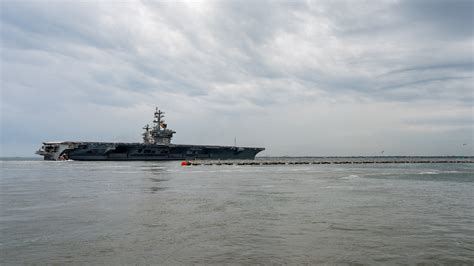
Few statistics capture the resilience of a carrier like time at sea. Between February and August 2020, the Eisenhower set a staggering record: 260 consecutive days without docking. This achievement was not just logistical—it was psychological and operational, reflecting crew endurance and mechanical reliability under sustained pressure.
In more recent years, the carrier has supported operations such as Operation Inherent Resolve and maritime security missions like Operation Prosperity Guardian. These deployments underline a key truth: age has not diminished its utility.
Evolution Through Upgrades: Decades of Strategic Investment
The Eisenhower’s longevity is not accidental—it is engineered through continuous modernization. One of its most significant transformations occurred between 1985 and 1987 at Newport News Shipbuilding, where it received:
- Anti-Submarine Warfare capabilities
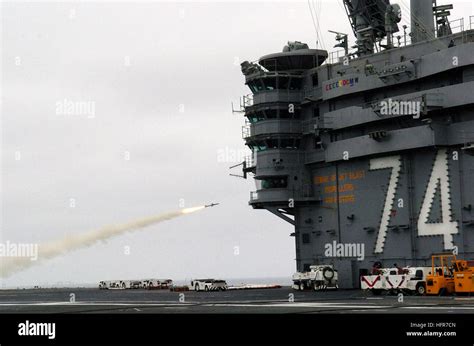
- NATO Sea Sparrow missile systems
- Advanced communications infrastructure
These upgrades ensured interoperability with allied forces and adaptability in multi-domain warfare scenarios.
Why the Eisenhower Still Matters Today
Despite the emergence of newer carriers like the Ford-class, dismissing the Eisenhower would be a strategic miscalculation. It remains a fully capable, nuclear-powered strike platform with decades of operational refinement behind it.
Its return comes at a time when maritime tensions and power competition are intensifying globally. The U.S. Navy’s ability to maintain a robust carrier presence hinges not just on new construction—but on sustaining proven assets.
The Eisenhower embodies that philosophy: modernized, mission-ready, and historically formidable.
As it prepares to sail once again, one thing is clear—the legend is not fading. It is rearming.