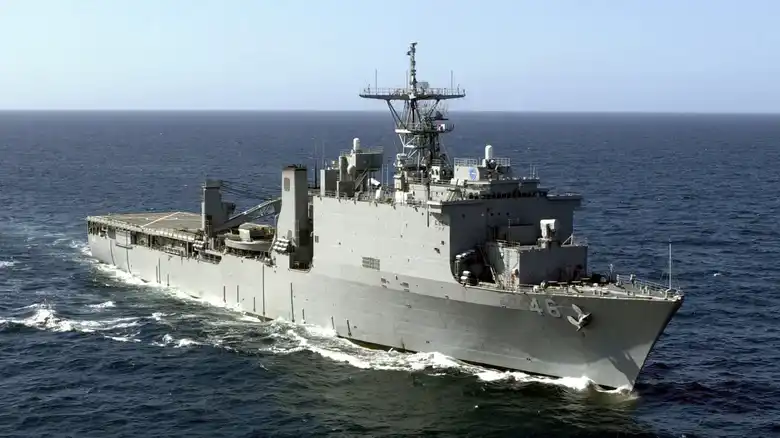
The return of a major naval vessel to open water after years of maintenance is always a significant milestone. For the United States Navy, the recent sea trials of USS Tortuga (LSD-46) represent the culmination of one of the most extensive modernization efforts undertaken for an aging amphibious warship. After spending nearly ten years undergoing repairs, upgrades, and structural improvements, the ship has finally returned to the ocean environment where it belongs.
Although the vessel has not yet fully reentered operational service, its return to sea marks a critical step toward restoring an important capability within the Navy’s amphibious warfare fleet. The lengthy refit demonstrates both the complexity of maintaining large military ships and the continuing strategic importance of vessels like Tortuga in modern naval operations.
The story of the ship’s decade-long renovation reveals not only the technical challenges of naval maintenance but also the evolving role of amphibious assault platforms in U.S. maritime strategy.
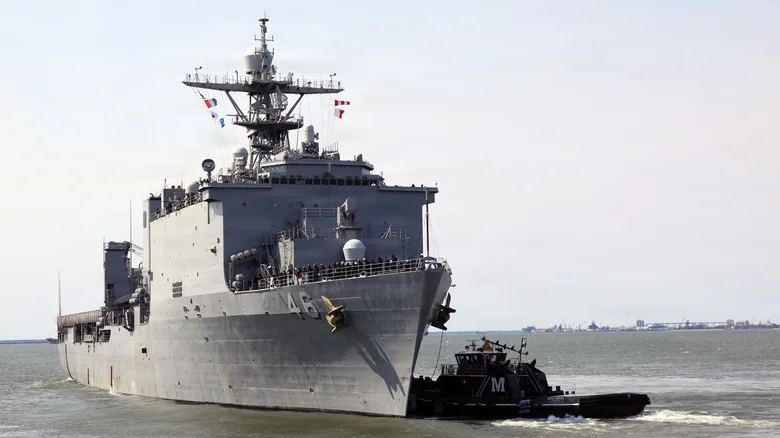
USS Tortuga and the Role of Dock Landing Ships
The USS Tortuga belongs to the Whidbey Island-class dock landing ships, a class specifically designed to support amphibious assault operations. These ships play a crucial role in enabling the U.S. Marine Corps to rapidly deploy personnel, vehicles, and equipment from sea to shore during combat operations or humanitarian missions.
Unlike aircraft carriers or guided missile destroyers, dock landing ships rarely capture public attention. However, their capabilities make them indispensable to expeditionary warfare. The defining feature of ships like Tortuga is a floodable well deck, a large internal bay that can be filled with seawater to launch landing craft directly from the ship.
The Tortuga is particularly notable for its ability to carry and deploy Landing Craft Air Cushion (LCAC) vehicles. These high-speed hovercraft are among the most sophisticated amphibious systems used by the Navy, capable of transporting heavy cargo at remarkable speeds across both water and land.
Each LCAC can carry payloads of up to 75 tons, enabling them to transport armored vehicles, heavy logistics equipment, or large numbers of Marines. This capacity includes the ability to deliver one of the most formidable main battle tanks in service today—the M1 Abrams—directly onto hostile or undeveloped shorelines.
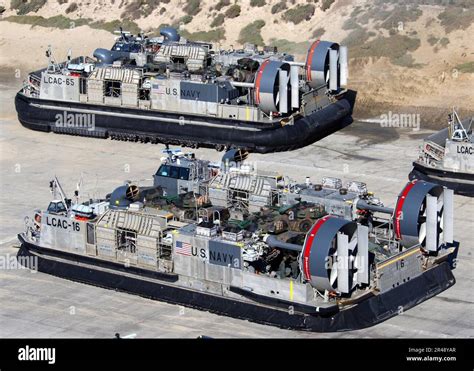
A single Whidbey Island-class vessel like the Tortuga can carry and operate up to four LCAC hovercraft simultaneously, making it a powerful platform for rapid amphibious deployment. This capability allows the Navy to project military power without relying on established ports or infrastructure, a key advantage in both combat and disaster response scenarios.
Why the Renovation Took Nearly Ten Years
The timeline of the Tortuga’s renovation has raised eyebrows among naval observers. After all, the ship originally took only six years to build and commission following its construction contract in 1984. Yet its modernization required nearly a decade to complete.
When the overhaul began, the primary contractor BAE Systems initially projected the ship would return to service by May 2019. However, as work progressed, engineers encountered a range of unexpected issues that expanded both the scope and duration of the project.
Maintenance delays are far from unusual within the Navy’s surface fleet. A 2025 Congressional Budget Office report examining more than 300 naval maintenance projects found that repair work on conventional warships frequently runs 30% to 60% longer than planned. Complex systems, aging infrastructure, and evolving technical requirements often make schedules difficult to maintain.
The challenge is not new. A Government Accountability Office (GAO) report from 2019 revealed that between 2014 and 2019, U.S. Navy ships collectively spent 33,700 additional days in maintenance beyond initial estimates. These delays highlight systemic issues within shipyard capacity, logistics coordination, and long-term fleet sustainment planning.
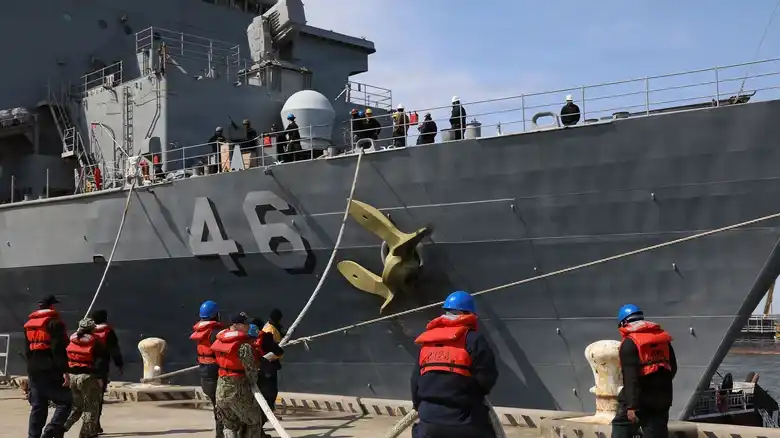
For Tortuga, the extended refit likely involved numerous structural repairs uncovered only after deeper inspection of the vessel’s internal systems. Aging warships often reveal corrosion, wiring deterioration, or mechanical failures once large-scale refurbishment begins, requiring additional work that cannot be predicted during early planning stages.
Modernization and Life-Extension Upgrades
Although the Navy has not publicly detailed every aspect of Tortuga’s renovation, several contracts issued during the refit provide insight into the work performed. A $139 million modernization contract awarded to BAE Systems suggests the project included a comprehensive package of structural improvements, mechanical repairs, and system upgrades.
These upgrades were primarily aimed at extending the operational life of the vessel. Ships in the Whidbey Island class were first introduced in the 1980s, and maintaining their viability requires ongoing modernization to keep pace with evolving naval technology and operational demands.
Refurbishment likely involved updates to command-and-control systems, communications equipment, navigation electronics, and power distribution infrastructure. Structural reinforcement and hull repairs would also be essential for ensuring the vessel can safely operate for many more years.
In addition to combat roles, ships like Tortuga frequently participate in humanitarian assistance missions, disaster response, and logistics support operations. Their ability to deploy vehicles and supplies without port facilities makes them valuable assets during global emergencies.
The Strategic Importance of Amphibious Ships
The Tortuga’s return to sea comes at a time when the U.S. Navy faces increasing pressure to maintain amphibious readiness. Amphibious ships form the backbone of the Navy–Marine Corps expeditionary force, enabling rapid deployment to contested coastal regions.
However, fleet availability has been a persistent concern. A 2024 Government Accountability Office report found that more than half of the Navy’s amphibious fleet was operating in substandard condition due to maintenance challenges and aging platforms.
This shortage directly affects training schedules, deployment cycles, and the overall readiness of Marine expeditionary units. Every ship undergoing repairs or awaiting maintenance reduces the Navy’s ability to maintain global presence and respond quickly to emerging crises.
The potential return of the USS Tortuga therefore represents more than just the revival of a single vessel. It contributes to restoring critical operational capacity within a fleet that plays a central role in U.S. power projection and maritime security.
Sea Trials and the Path Back to Service
With the ship now back at sea, the current phase of testing focuses on sea trials, an essential step before the Navy declares a vessel fully operational. During these trials, engineers and naval crews rigorously evaluate propulsion systems, navigation equipment, onboard electronics, and amphibious deployment capabilities.
Every upgraded system must perform reliably under real-world maritime conditions. The tests also ensure that the ship meets strict Navy safety standards before it rejoins active deployment cycles.
If the trials proceed successfully, the USS Tortuga will soon reenter service as a renewed component of the Navy’s amphibious fleet. After nearly a decade away from operational waters, the ship’s return symbolizes the enduring importance of maintaining and modernizing existing warships.
For the sailors and Marines who rely on these vessels, Tortuga’s reappearance on the horizon is more than a technical milestone—it is a reminder that even aging ships, when carefully maintained and upgraded, remain powerful instruments of maritime strategy.