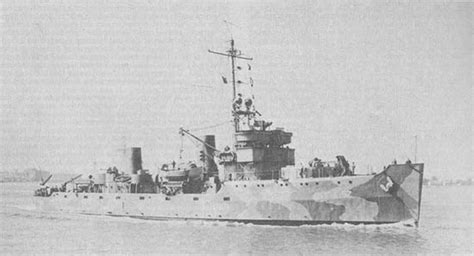
During Exercise Balikatan 2026, a massive multinational military drill involving forces from the United States, Japan, the Philippines, Australia, and Canada, an aging warship with roots in World War II met an explosive and symbolic end. Once known as USS Vigilance, the vessel that had survived Pacific combat operations during the Second World War was ultimately destroyed decades later as a live-fire missile target in one of Asia’s most closely watched military exercises.
The ship’s destruction was not merely a training event. It highlighted the rapid evolution of regional defense cooperation, Japan’s expanding defense export ambitions, and the enduring military afterlife of historic naval platforms.
Originally built in 1944 as an Auk-class minesweeper, USS Vigilance represented a generation of compact but highly capable warships designed to protect Allied naval movements from one of the deadliest maritime threats of the era: naval mines. Measuring 221 feet, 2 inches in length, the vessel entered service during the final and most intense phase of the Pacific War.
The Combat Legacy Of USS Vigilance In The Pacific War
Before becoming the Philippine Navy vessel BRP Quezon, the ship built a notable combat record under the American flag. During the Allied island-hopping campaign, USS Vigilance operated across dangerous Pacific waters, escorting convoys moving between contested island chains.
Its role extended well beyond mine clearance. The warship protected vulnerable transport groups, participated in rescue operations for sailors abandoning damaged vessels, and even engaged hostile aircraft threatening Allied formations. According to its wartime service record, the ship earned three battle stars, reflecting a meaningful contribution to naval operations in the Pacific theater.
These missions demanded extraordinary versatility. Minesweepers of the period frequently worked near front-line combat zones where enemy submarines, aircraft, and hidden explosive fields created overlapping dangers. Survival depended on disciplined seamanship, constant vigilance, and rapid defensive action.
From American Warship To Philippine Navy Corvette
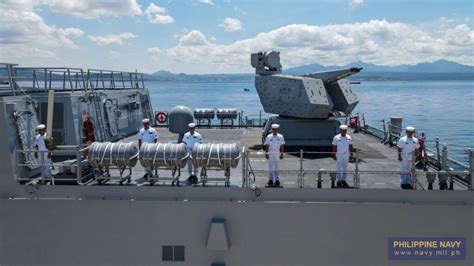
Following World War II, many American naval vessels were transferred to allied fleets. USS Vigilance followed that path, eventually joining the Philippine Navy under the new identity BRP Quezon.
Serving from 1967 to 1980, the vessel transitioned from a wartime American minesweeper into a Philippine corvette, extending its operational lifespan across multiple geopolitical eras. This transfer reflected a long-standing defense pattern in which retired American military hardware continued serving allied nations for decades after initial U.S. retirement.
The ship’s remarkable dual-national career meant that by 2026, it carried historical links to two navies, two strategic periods, and radically different military environments.
How A WWII Warship Became A Missile Target In Balikatan 2026
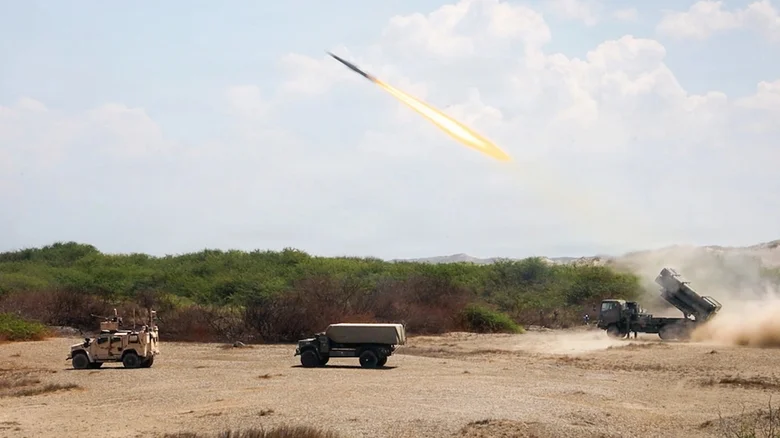
To demonstrate the capabilities of Japan’s Type 88 anti-ship missile, military planners needed a realistic maritime target. The decommissioned BRP Quezon became the ideal candidate.
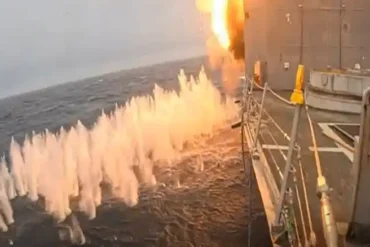
The missile strike unfolded during Balikatan 2026’s coordinated live-fire demonstrations. Japan’s participation carried additional significance because Tokyo has recently relaxed long-standing military export restrictions, making the exercise an opportunity to showcase Japanese defense technology to potential partners such as the Philippines.
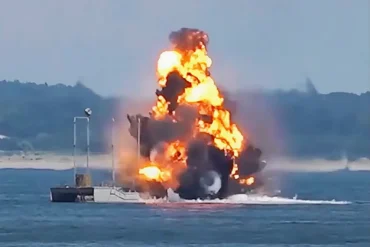
Two missiles were launched. One reportedly missed. It no longer mattered.
The surviving strike inflicted decisive damage, and the former WWII warship sank within minutes.
Alongside the anti-ship demonstration, the exercise also featured combat systems such as the HIMARS rocket launcher and A-29 Super Tucano aircraft, underscoring how modern coalition warfare blends precision missiles, mobile artillery, and interoperable multinational coordination.
The destruction of USS Vigilance closed a naval story spanning more than eight decades — from Pacific War escort duty to a dramatic final role helping shape the future of Indo-Pacific military cooperation.