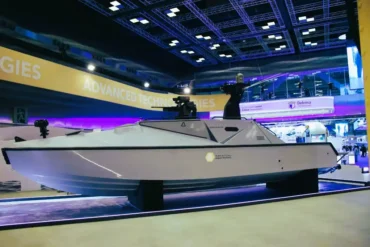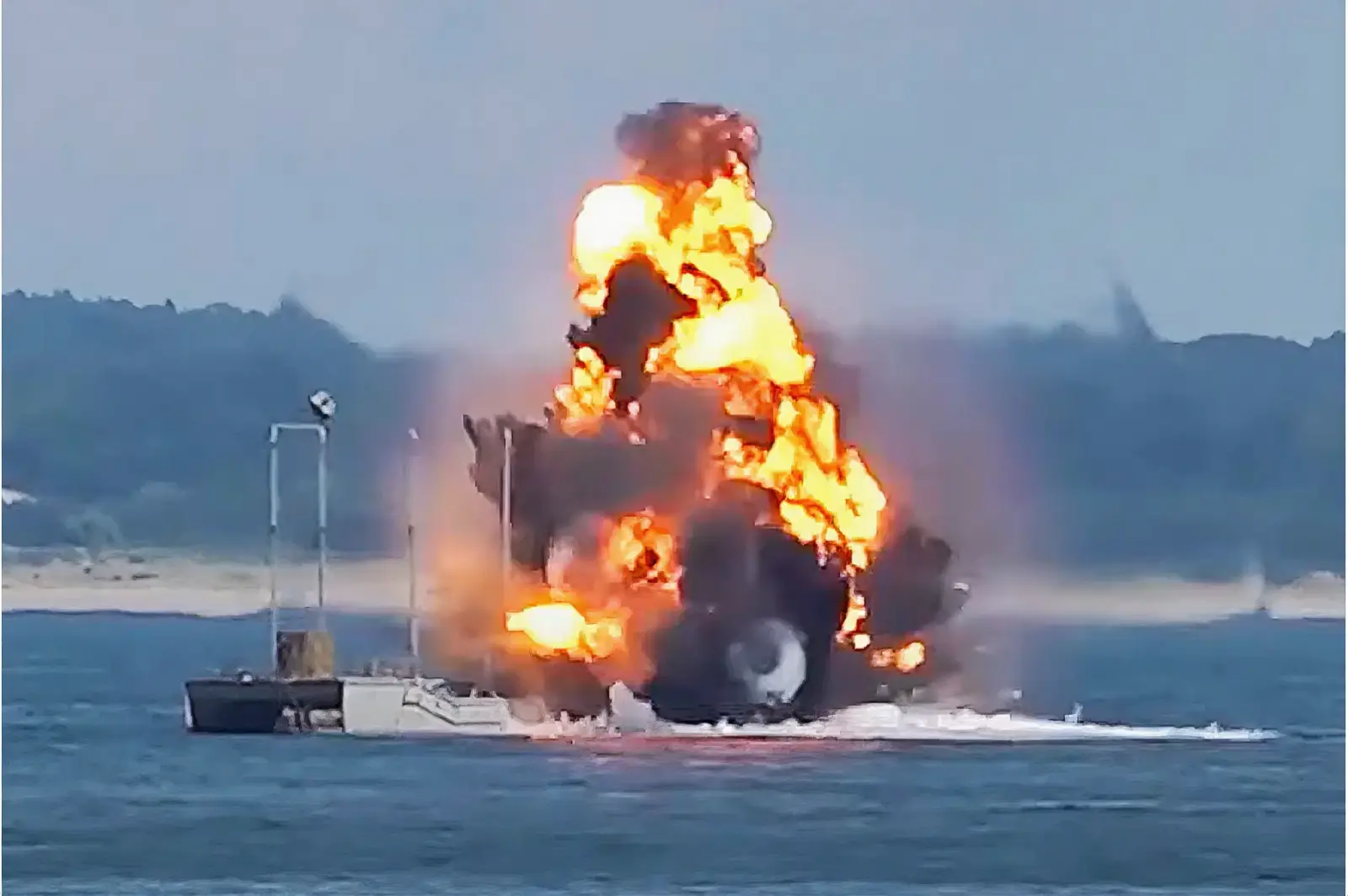
On July 26, 2025, the Russian Navy unveiled a critical evolution in its maritime warfare doctrine during the annual “July Storm” naval exercises by successfully deploying a kamikaze-style unmanned surface vessel (USV) to eliminate a stationary sea target. This event marks Russia’s first publicly acknowledged use of a strike-capable naval drone in a live-fire scenario, and it signals a broader strategic transformation in Russia’s maritime combat posture.
The operation was executed in a controlled environment, with the Russian Ministry of Defense releasing video footage showing the drone accelerating toward a maritime target and detonating on impact in a massive explosion. The vessel exhibited advanced hydrodynamic behavior—partially submerging during the terminal phase—implying a stealth-conscious design and likely housing specialized sensor or propulsion systems optimized for terminal guidance.
The Technological Leap: From Concept to Operational Capability
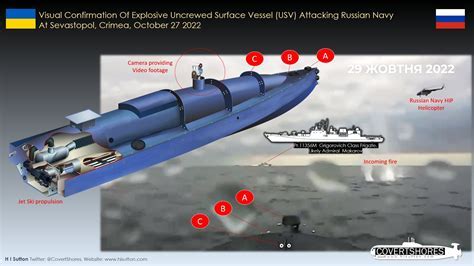
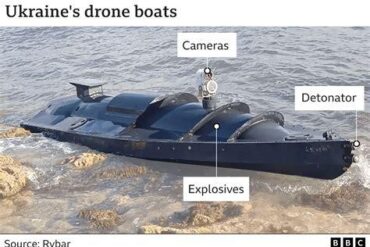
While Ukraine’s naval drones have set benchmarks in real-world naval engagements, Russia’s demonstration highlights its intent to catch up rapidly. The unmanned surface vessel, although officially unnamed, bears a close resemblance to the Ukrainian Magura V5 and Sea Baby drones, which have previously struck Russian assets in the Black Sea. However, there are notable distinctions. Russian state-aligned commentators claim the drone possesses a range of 300 kilometers and 24-hour endurance, though these figures remain unverified by independent sources.
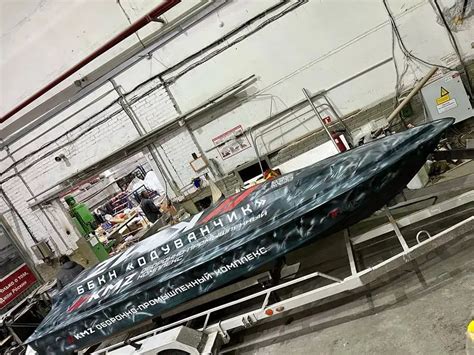
This success follows Russia’s rapid development of naval drone technologies, initiated in 2023 with the introduction of the “Oduvanchik” prototype by KMZ (Kingisepp Machine-Building Plant). Although an earlier attempt in 2023 to strike a Ukrainian bridge with this system failed, the design has evidently matured.
In 2024, the Russian Navy institutionalized autonomous naval warfare by establishing dedicated unmanned regiments, integrating surface, subsurface, aerial, and land-based drones into a cohesive force structure. The recent success in July Storm showcases not just a technical milestone but also the structural commitment of the Russian military to next-generation warfare.
Kamikaze Strategy and the Shift Toward Expendable Systems
Russia’s embrace of expendable naval drones represents a decisive pivot away from traditional blue-water naval doctrine centered on large crewed platforms. These USVs are cheap, fast, stealthy, and deadly—an ideal tool in asymmetric naval engagements where cost-efficiency and deniability are paramount.
Despite the controlled and ideal conditions of the strike—against a stationary, undefended target—the message is clear: Russia intends to saturate the maritime domain with autonomous threats. This doctrine mirrors Ukraine’s earlier successes, particularly in the Black Sea, where inexpensive sea drones have disrupted traditional naval operations, even threatening the integrity of Russia’s Black Sea Fleet.
From Prototype to Industrial Production: KMZ’s Role
The Kingisepp Machine-Building Plant in Saint Petersburg has emerged as the focal point of Russia’s naval drone production. The facility is reportedly equipped with indoor hydrodynamic testing pools and simulated combat environments, allowing for rapid iteration of drone models. Though budgetary details are undisclosed, the creation of specialized unmanned regiments and apparent funding injections suggest that serial production contracts are already active or imminent.
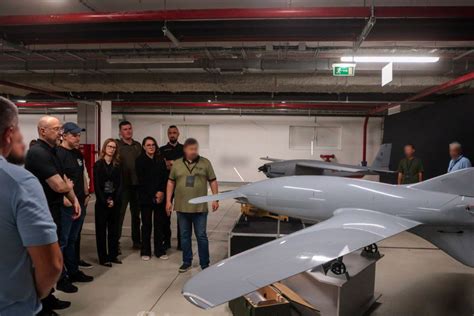
This centralized, vertically integrated industrial base allows for standardization of drone parts, scalability, and doctrinal cohesion across various theaters. It also ensures that Russia can pivot quickly between sea denial and strike roles as the strategic situation evolves.
Strategic Implications for the Black Sea and Baltic Theaters
The July Storm demonstration is not an isolated PR stunt—it’s a clear strategic signal. With these naval drones, Russia can now extend its strike reach across the Black Sea, threatening key Ukrainian coastal assets like Odesa, Mykolaiv, and Izmail, all without putting crewed vessels at risk. This capability forces Ukraine and its NATO supporters to recalibrate their maritime defensive postures, reinforcing harbors and ship lanes against low-signature threats.
In the Baltic Sea, where NATO navies routinely operate near Kaliningrad and other Russian interests, these USVs introduce an unpredictable and asymmetric challenge. Whether deployed in contested chokepoints like the Gulf of Finland or as forward assets from Crimea, their strategic utility lies in attrition, ambiguity, and psychological disruption.
Doctrinal Maturation: From Emulation to Adaptation
Initially inspired by Ukrainian naval drone successes, Russia’s doctrine is evolving from reactive mimicry to proactive integration. By combining aerial reconnaissance with USVs and potentially underwater drones, Moscow aims to execute multi-axis saturation attacks against enemy vessels and infrastructure.
This network-centric warfare model leverages low-cost, high-lethality assets in swarm configurations. Notably, Russian doctrine appears to prioritize psychological warfare—instilling constant uncertainty among enemy naval planners—over precise, tactical annihilation. These USVs, when deployed en masse, serve not just as strike assets but as tools of disruption and deterrence.
Tactical Limitations and Future Trajectory
Despite the triumph, Russia’s USVs are not yet combat-proven against dynamic threats. The July Storm test involved a stationary, unarmed target under optimal environmental conditions—far removed from the complex realities of modern naval warfare, where electronic countermeasures, evasive maneuvers, and layered defenses abound.
Ukraine’s drones, in contrast, have successfully targeted moving warships, proving their resilience in hostile environments. For Russia to reach parity, it must refine its guidance systems, enhance stealth, and possibly incorporate AI-driven adaptive targeting. Whether Russia can maintain the pace of innovation and scale of deployment will shape the future contours of this arms race.
Broader Geopolitical Impact and Naval Arms Race
As NATO observes this evolution, responses are already in motion. Member states are enhancing harbor defenses, integrating drone detection buoys, and investing in autonomous counter-drone systems. The naval balance is no longer governed by aircraft carriers and submarines alone; instead, the future lies in decentralized, expendable platforms operated with strategic precision.
This democratization of naval power creates a new axis in the global arms race. Countries like Iran, China, and North Korea will closely study Russia’s example, likely spurring parallel development programs. Meanwhile, Western navies must accelerate counter-drone technologies or risk ceding strategic dominance in shallow, contested waters.
Conclusion: A Pivot Point in 21st Century Naval Doctrine
The July Storm exercise was more than a weapons test—it was a doctrinal proclamation. Russia has entered the autonomous maritime warfare arena with intent, capability, and strategic clarity. While still trailing Ukraine in real-world engagements, Russia’s demonstrated industrial and doctrinal alignment positions it to rapidly scale and refine its unmanned naval force.
The age of crewless sea combat has arrived. The tactical and strategic ripples of this single drone strike are already reverberating across planning rooms from Sevastopol to Norfolk. The battlefield of tomorrow will not be dominated by massed fleets, but by swarms of intelligent, autonomous vessels, each strike calibrated not only to destroy, but to destabilize.