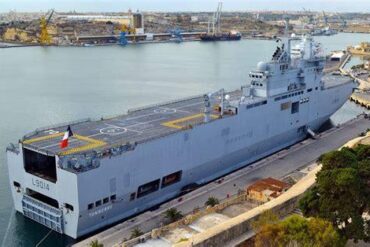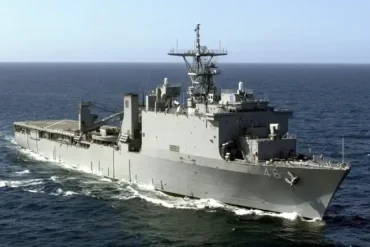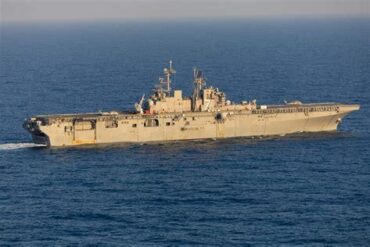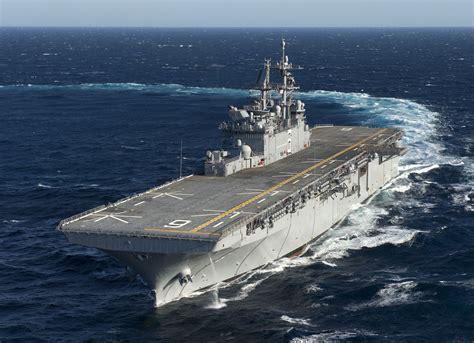
The USS America (LHA-6) often triggers a familiar question among naval observers and defense enthusiasts: is it nuclear powered? The confusion is understandable. The ship is massive, aviation-centric, and visually imposing, echoing the silhouette and mission profile of an aircraft carrier. Yet beneath the flight deck lies a propulsion philosophy very different from the nuclear giants that dominate the U.S. Navy’s carrier fleet.
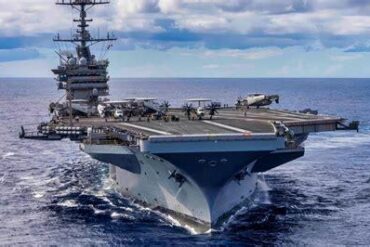
The United States Navy is, without question, the global leader in nuclear-powered warships. Every American aircraft carrier and all operational submarines rely on nuclear reactors, granting them extraordinary endurance and operational independence. However, that dominance does not extend uniformly across every surface combatant. Amphibious assault ships occupy a distinct strategic niche, and the USS America represents a deliberate departure from nuclear propulsion.
Despite its carrier-like appearance, the USS America is not nuclear powered. It is the lead ship of the America-class amphibious assault ships, a design focused on flexibility, expeditionary warfare, and aviation support rather than sustained blue-water dominance. Nuclear propulsion, while powerful, brings immense costs in construction, lifecycle maintenance, crew specialization, and overhaul complexity—factors that are not always justified outside of carriers and submarines.
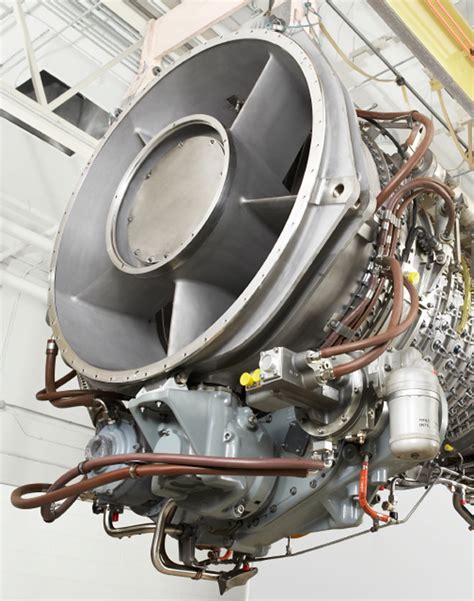
Instead, the USS America relies on a conventional gas turbine propulsion system that balances performance, efficiency, and logistical practicality. Powering the ship are two General Electric LM2500+ marine gas turbines, engines derived from proven aerospace technology and widely used across modern naval fleets. These turbines form the backbone of a hybrid mechanical-electric propulsion architecture designed to meet the ship’s demanding operational profile.
Each LM2500+ turbine produces an impressive 35,290 shaft horsepower, delivering the muscle needed to move a vessel displacing roughly 45,000 tons of seawater. Complementing the turbines are two 5,000-horsepower auxiliary propulsion motors, which enhance low-speed maneuverability and electrical generation. Together, these systems allow the USS America to cruise efficiently while powering its extensive onboard systems, aviation support equipment, and defensive weapons.
This propulsion arrangement enables the USS America to reach sustained speeds of 22 knots, or approximately 25 miles per hour, while maintaining a remarkable operational range. Without refueling, the ship can travel more than 13,000 miles, a figure that underscores why nuclear power, while advantageous, is not strictly necessary for its mission set. For amphibious operations that rely on forward logistics and allied ports, this range is more than sufficient.
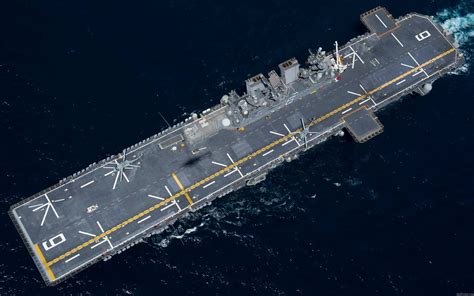
Beyond propulsion, the USS America’s true strength lies in its aviation-centric design. Measuring nearly 844 feet in length, the ship functions as a floating airbase tailored for modern expeditionary warfare. It carries a standard crew of 1,204 sailors and can embark up to 1,871 Marines, enabling rapid force projection from sea to shore.
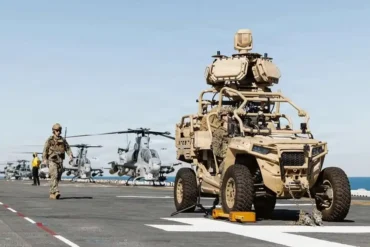
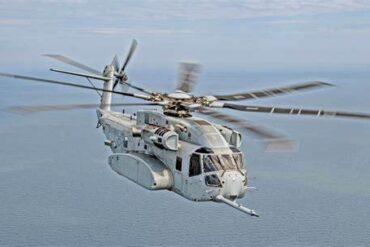
The flight deck and hangar spaces are optimized for a formidable air wing. The USS America can operate 12 MV-22B Osprey tilt-rotor aircraft, six F-35B Lightning II short takeoff and vertical landing fighters, four AH-1Z Viper attack helicopters, four CH-53K King Stallion heavy-lift helicopters, and three UH-1Y Venom utility helicopters. This combination allows the ship to function as both an assault platform and a light aircraft carrier when required.
Defensively, the ship is far from vulnerable. It integrates close-in weapon systems, missile defenses, and naval guns designed to counter airborne, surface, and asymmetric threats. These systems, powered by the ship’s robust electrical generation capacity, reflect how modern naval engineering has evolved alongside—but not always toward—nuclear propulsion.
While it is technically feasible for a ship like the USS America to adopt nuclear power, doing so would sacrifice internal space, inflate costs dramatically, and complicate maintenance cycles without delivering proportional operational benefits. The America-class demonstrates that conventional propulsion remains highly relevant, even in an era dominated by nuclear supercarriers.
In the end, the USS America stands as a compelling example of strategic design discipline. It is not nuclear powered by choice, not limitation—a reminder that the most effective warships are defined not by the reactors they carry, but by how precisely their technology serves their mission.