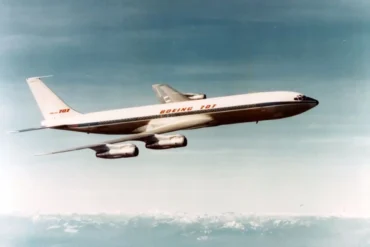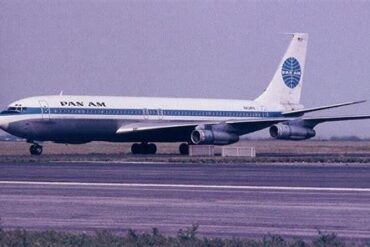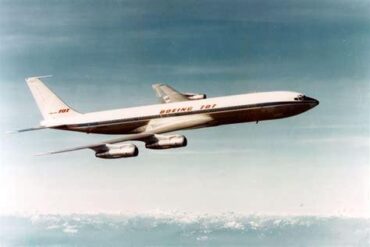
The story of a single aircraft rarely captures the imagination across generations, yet the Boeing 707-138B once owned by Frank Sinatra and John Travolta does exactly that. This jet is not merely a machine; it is a symbol of aviation’s golden age, celebrity culture, and enduring engineering brilliance. Its latest chapter—an ambitious restoration effort—signals that even icons grounded by time can rise again.
Few aircraft carry such a layered legacy. Built in 1964, this particular Boeing 707 was part of an exclusive batch of just 13 specially configured aircraft designed for Qantas Airways. Its shorter fuselage distinguished it from standard models, allowing it to operate on routes that larger jets could not efficiently serve. That design nuance made it both rare and highly adaptable, a combination that would later add to its mystique.
The aircraft’s journey through history reads like a screenplay. After its early service with Qantas and later Braniff International Airways, it entered the world of celebrity ownership when Frank Sinatra acquired it in 1972. Sinatra’s association transformed the jet into a flying extension of his larger-than-life persona, blending aviation with Hollywood glamour in a way few assets ever could.
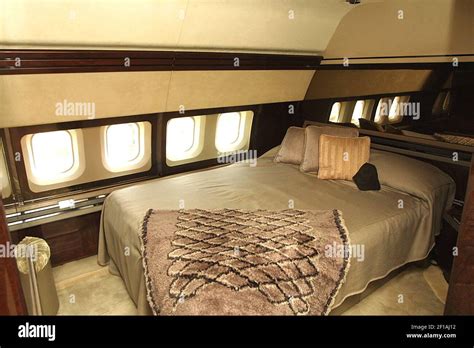
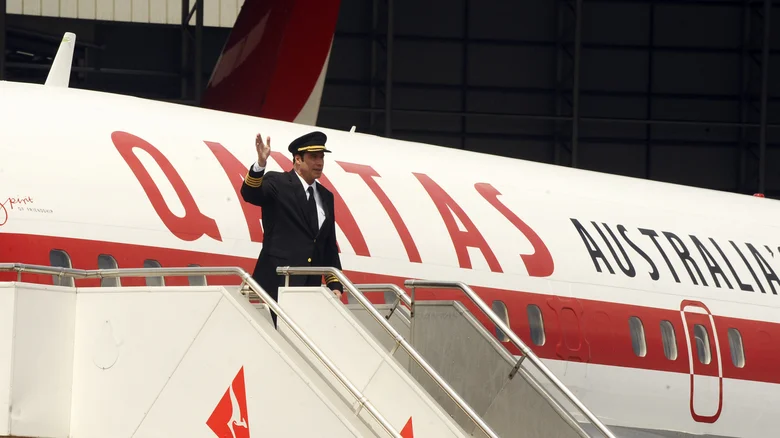
When John Travolta, an aviation enthusiast with serious credentials, purchased the aircraft in the late 1990s, the jet gained a new steward who understood its technical and historical value. Travolta, a licensed pilot capable of flying large commercial jets, didn’t treat the 707 as a static collectible. Instead, he actively flew it, integrating it into his personal life and maintaining its operational spirit. His decision to repaint it in Qantas livery was a deliberate nod to its origins, reinforcing its identity as a living piece of aviation history.
Why the Boeing 707 Still Captivates Aviation Enthusiasts
The enduring appeal of the Boeing 707 lies in its transformative role in commercial aviation. It was among the first jetliners to make long-haul air travel accessible and efficient, fundamentally reshaping global connectivity. The 707-138B variant, in particular, represents a fascinating engineering compromise—lighter, shorter, and optimized for performance over extended distances.
This specific aircraft embodies that innovation while carrying the added weight of cultural significance. Its association with two globally recognized figures elevates it beyond a technical artifact. It becomes a narrative vessel, linking mid-century aviation progress with modern celebrity fascination.
From Florida Runways to Australian Restoration Hangars
Eventually, rising operational costs and evolving aviation regulations made it increasingly difficult for Travolta to maintain the aircraft. Rather than letting it fade into obscurity, he made a strategic decision to donate it to the Historical Aircraft Restoration Society (HARS) in Australia. This move ensured that the jet would be preserved not just as a display piece, but as a working symbol of aviation heritage.
Transporting a vintage aircraft across continents, however, is far from simple. Initial plans to fly the jet directly to Australia were blocked by regulatory hurdles, and the global pandemic introduced further delays. The solution was both complex and fitting: dismantle the aircraft and ship it by sea.
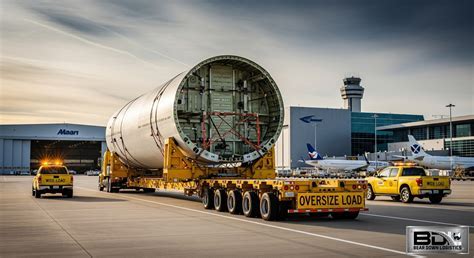
In April 2026, the aircraft was carefully loaded in sections at the Port of Brunswick in Georgia. Its journey by cargo vessel marked a significant turning point, transforming years of planning into tangible progress. The jet is expected to arrive at Port Kembla in New South Wales, before being transported to Shellharbour Airport, where HARS will oversee its restoration.
A Long-Term Vision: Restoration and Potential Flight
The restoration plan is ambitious. HARS aims to return the aircraft to taxi condition, with the possibility—however distant—of flight operations. Such a goal requires meticulous work, from structural assessments to sourcing rare components, many of which are no longer manufactured.
This is not a quick refurbishment but a long-term preservation project that could span years. Yet that timeline reflects the seriousness of the endeavor. Restoring a jet of this caliber demands patience, expertise, and a deep respect for authenticity.
A Centerpiece of Australia’s Aviation Heritage
Once restored, the Sinatra-Travolta Boeing 707 will join an impressive collection at HARS. The organization already maintains significant aircraft, including a Boeing 747-438 known as “The City of Canberra” and the world’s last flying Lockheed Super Constellation. These aircraft collectively narrate the evolution of air travel, offering visitors a rare, immersive connection to aviation history.
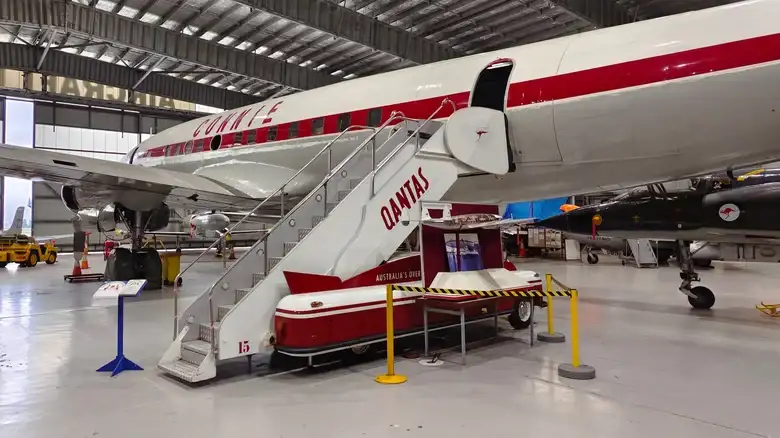
The arrival of this 707 adds a new dimension to that narrative. It bridges continents, eras, and cultural domains, making it one of the most compelling restoration projects in modern aviation.
As this iconic jet begins its next chapter, it proves a simple truth: legendary machines never truly retire—they wait for the right moment to return.