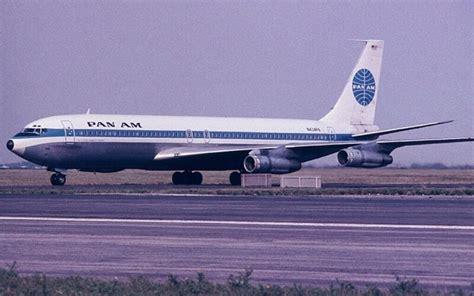
In the waning days of October 1958, a sleek, silver aircraft lifted from the tarmac of Idlewild Airport in New York and turned eastward toward Paris. Pan American World Airways’ Boeing 707, designated Clipper America, would not merely cross the Atlantic; it would rewrite the possibilities of commercial aviation. With that singular takeoff on October 26, Pan Am ushered in the Jet Age, transforming the economics, culture, and reach of air travel for the modern world.
The Boeing 707: An American Leap Forward
In the early 1950s, the United States trailed its international peers in jet transport development. The United Kingdom’s de Havilland Comet had already flown in 1952, while the Soviet Union’s Tupolev Tu-104 Camel entered service in 1956. But both aircraft fell short of ushering in a true revolution. The Comet, plagued by structural flaws, suffered fatal crashes. The Tu-104, with its limited 50-seat capacity, could not scale to global demand.
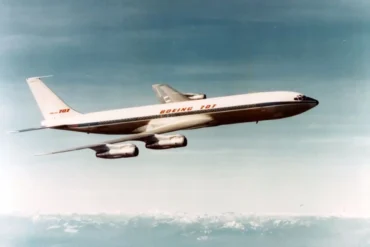
Boeing, drawing on its military aviation expertise, took a radically different approach with the 707’s design. Its engineers implemented swept wings angled more aggressively than those on the Comet, enhancing high-speed performance. Unlike earlier jets, the 707 featured engine pods slung beneath the wings, mounted on pylons that smoothed airflow and improved lift. This configuration would become a global standard.
Crucially, the aircraft was powered by the Pratt & Whitney JT3C turbojet, a groundbreaking two-spool engine capable of generating 11,000 pounds of thrust—eclipsing the Comet’s powerplant. This engine not only provided speed and power, but also quieter and more fuel-efficient operation.
Pan Am and the Dawn of Jet-Powered Luxury
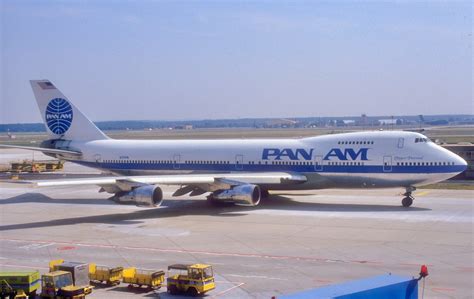
The acquisition of the Boeing 707-120 on August 15, 1958, marked Pan Am’s aggressive move into the future. With visionary leadership under Juan Trippe, Pan Am planned not merely to operate jet aircraft—but to redefine global travel. The airline would offer transatlantic jet service with an emphasis on elegance, safety, and cosmopolitan flair.
To generate public excitement, Boeing and Pan Am launched marketing campaigns that highlighted the jet’s capabilities. One ad cleverly promised, “Only seven hours to brush up your French,” tapping into both wanderlust and modernity. The world watched with fascination.
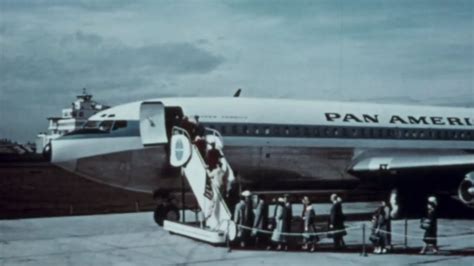
Then came the night of October 26, 1958. On a red carpet rolled out at Idlewild, 111 passengers and 12 crew members boarded Pan Am’s 707, serenaded by a U.S. Army band. Acclaimed actress Greer Garson, a passenger herself, performed the ceremonial ribbon cutting. As the engines roared to life at 7:20 p.m., the first daily jet-powered transatlantic service took flight.
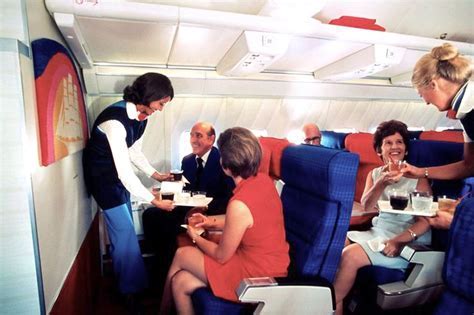
Though headwinds necessitated a brief stopover in Gander, Newfoundland, the 707 landed smoothly at Paris Le Bourget Airport after 8 hours and 41 minutes. Despite the pause, the flight was a resounding success. Passengers reveled in hot meals served on fine china, relaxed in wide seats, and sipped cocktails in a cabin that no longer rattled and roared like its propeller-driven ancestors.
Symbol of a Shrinking World
The Pan Am globe logo painted on the tail of the 707 was more than mere branding. It was an emblem of aspiration. As jetliners slashed travel times, the distances that once separated cultures, economies, and peoples began to collapse. New York to Miami by jet became possible by December 1958. New York to Los Angeles followed in January 1959. The world was not just smaller—it was newly accessible.
The 707 rapidly became the dominant long-range jetliner until the arrival of the Boeing 747 in 1969. Its influence was felt in every aspect of global society. With newfound mobility, international diplomacy accelerated, global trade expanded, and tourism boomed. Business travelers could now reach London or Tokyo within a single day’s span, making jet travel not merely a novelty, but a necessity.
Cultural and Social Ripples of Jet Travel
The Pan Am 707 did more than reshape logistics—it reshaped people. For many, stepping aboard a Pan Am jet was their first international journey. Jet travel democratized the skies, breaking barriers once reserved for the elite.
It also ushered in new roles for women in the workforce. Pan Am’s international routes required multilingual, college-educated women to serve as flight attendants. These positions offered respectable wages and opportunities for travel that were almost unheard of for working women in the 1950s. The cabin became a workplace of liberation and transformation.
Jet travel also influenced fashion, art, and even cuisine. Airport terminals became hubs of style, where tailored uniforms, chic handbags, and cocktail lounges defined the ambiance. The world was discovering itself—by air.
Legacy of the 707 and the Jet Age Explosion
The numbers speak for themselves. According to the International Air Transport Association (IATA), global commercial airline passengers rose from 87.2 million in 1957 to a staggering 4.34 billion in 2018. The seeds planted by the Boeing 707 and Pan Am’s trailblazing vision germinated into a multitrillion-dollar global industry.
The 707’s success propelled Boeing into the forefront of commercial aviation, eclipsing its earlier rivals. More than 1,000 units of the 707 and its military derivatives were built. Even today, echoes of the 707 can be seen in the design of modern aircraft, from engine placement to fuselage dimensions.
Pan Am itself, despite its eventual dissolution in 1991, remains a symbol of aviation’s golden age. The Clipper names, the blue globe, and the 707’s silhouette still evoke a time when flying was an event—an occasion marked by glamour and global promise.
The Flight That Changed the World
That cool October evening in 1958 marked more than a historic flight—it was a declaration that the world had become attainable. The Pan Am Boeing 707 wasn’t merely an aircraft; it was a vector of transformation. It altered how we move, how we think, and how we connect. In delivering us to distant cities in hours instead of days, it didn’t just bridge continents—it opened minds.
As we reflect on the legacy of the Boeing 707, it becomes clear that its ascent was also our own. We rose from the age of ships and steam to a horizon filled with vapor trails. Through engineering ingenuity and Pan Am’s bold vision, the world—once vast and segmented—became a shared space for all of humanity.