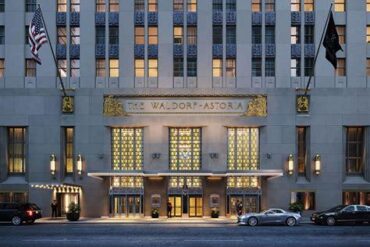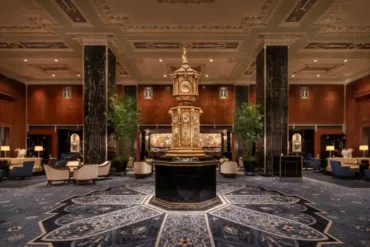
The reopening of the Waldorf Astoria New York has been treated like a coronation. After years behind scaffolding and secrecy, the legendary property returned with the weight of history on its shoulders and premium pricing to match. For loyal guests, especially top-tier elites, expectations were naturally high. What unfolded at check-in for a Hilton Honors Diamond member offers a revealing snapshot of how modern luxury hospitality sometimes fumbles the basics.
A one-night stay in New York using a Hilton Honors free night award should feel like a small victory. Points are redeemed, loyalty is recognized, and the guest walks into a sense of earned indulgence. In this case, the booking confirmed into a standard king room, with an automatic one-category upgrade to a deluxe king room applied before arrival. On paper, that upgrade carried a retail value of $92. In practice, it felt modest, predictable, and very on-brand for elite recognition in the United States.
At check-in, the upgrade was acknowledged and confirmed. So far, so routine. Then came the pivot. Before keys were handed over, the front desk agent presented what was framed as a special opportunity: a junior suite upgrade for $200. The pitch highlighted additional space and elevated comfort, delivered with the polished cadence of a sales script. This was not an upsell to a specialty suite or a once-in-a-lifetime signature accommodation. This was the most basic suite category in a hotel where suites dominate the inventory.
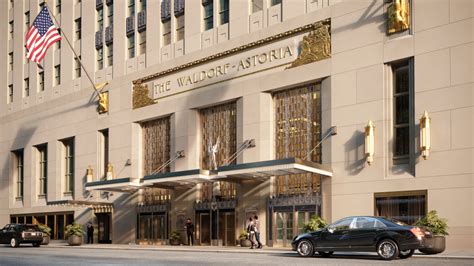
Context matters. The Waldorf Astoria New York has approximately 375 rooms and suites, with suites forming the majority. Originally envisioned as an all-suite hotel, the final configuration still leans heavily in that direction. Against that backdrop, offering a Diamond member a paid upgrade to an entry-level suite feels less like generosity and more like monetization of what many elites reasonably consider part of the loyalty promise.
This interaction stands out because it crosses a subtle but important line. Hotels selling upgrades is nothing new. Cash upgrades before arrival, in-app offers, and front desk upsells are standard industry practice. What made this moment different was the audience. A Diamond member sits at the very top of Hilton’s published loyalty hierarchy. According to Hilton’s own language, Diamond members are eligible for space-available upgrades up to one-bedroom suites. The terms give hotels discretion, yes, but discretion should still align with the spirit of loyalty.
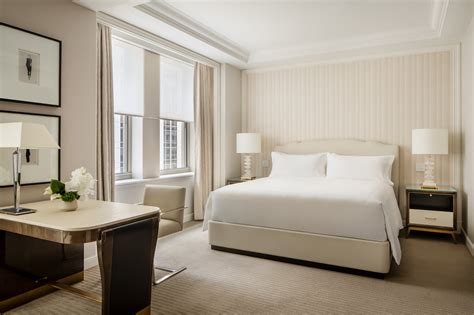
The offered upgrade also collapses under basic arithmetic. The deluxe king room measured 575 square feet, while the junior suite offered 620 square feet. That is a difference of roughly 7% more space, hardly a transformational leap. More striking is the pricing. On the same night, the published rate difference between the most basic room and a junior suite was $184. The upsell price of $200 exceeded that gap. Even more telling, the difference between the upgraded deluxe king room and the junior suite was only $92, yet the guest was asked to pay more than double that amount.
From an editorial perspective, this is where perception hardens into critique. If a hotel chooses to monetize an upgrade that could plausibly fall under elite benefits, the pricing must feel undeniably fair. Anything else risks eroding trust. Charging more than the public rate difference creates the impression that the offer is not tailored, not privileged, and not particularly respectful of loyalty status.
There is also the issue of framing. The upgrade was presented as a deal, an opportunity, something the guest would be wise to seize. When the numbers tell a different story, that framing backfires. Luxury travelers, especially frequent ones, are intensely aware of value. They know square footage. They know rate ladders. They know when an offer is padded.
To be clear, the hotel did not violate Hilton Honors terms. A baseline upgrade was provided. The rest falls within contractual discretion. But luxury hospitality is not built on technical compliance. It is built on emotional intelligence. First impressions matter, and the reopening of an icon is precisely the moment to lean into goodwill rather than extraction.
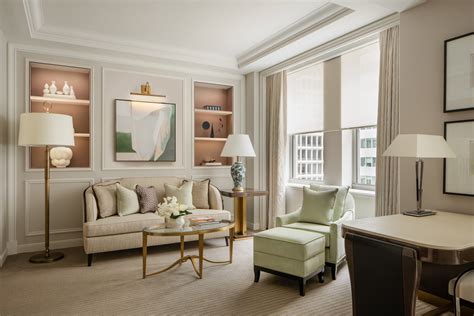
Declining the upgrade led to a perfectly satisfying stay. The deluxe king room was spacious, elegant, and comfortable, delivering exactly what was needed for a short visit. The sour note lingered not because of deprivation, but because of the philosophy behind the offer. When loyalty is treated as a sales funnel rather than a relationship, even beautiful rooms cannot fully mask the friction.
This episode reflects a broader tension in premium travel. As hotels recalibrate revenue strategies post-renovation and post-disruption, elites increasingly find themselves navigating upsells where perks once lived. The risk is subtle but real. Devalue elite recognition too often, and status becomes a hollow badge.
In the end, the question is not whether the Waldorf Astoria New York was allowed to sell the upgrade. The question is whether it should have, at that price, to that guest, in that moment. For a property reclaiming its place at the pinnacle of global hospitality, the answer carries weight well beyond a single $200 offer.