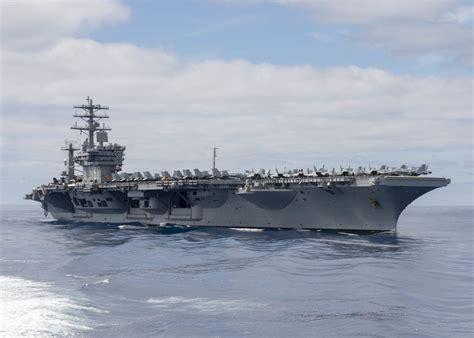
The USS Nimitz (CVN-68)—one of the most recognizable symbols of American naval power—will remain operational until 2027, marking the final chapter in the remarkable service life of the first ship in the Nimitz-class aircraft carrier family. The decision reflects both strategic necessity and logistical reality: the United States must sustain a strong carrier presence in the Indo-Pacific, even while transitioning toward a new generation of aircraft carriers led by the Gerald R. Ford-class.
For nearly five decades, USS Nimitz has embodied the concept of floating airpower. Commissioned in 1975, the nuclear-powered supercarrier has served across multiple eras of geopolitical competition—from the Cold War’s final decades to the modern era of great-power rivalry. Keeping the ship operational through 2027 ensures the U.S. Navy retains sufficient carrier strike group capacity during a period when maritime tensions and strategic competition across the Pacific are intensifying.
The extension of Nimitz’s service life does not delay retirement indefinitely. Instead, it represents a carefully managed transition. While the carrier continues operating, the Navy has already begun the complicated industrial preparations necessary to eventually deactivate and defuel one of the world’s largest nuclear-powered warships.
Strategic Carrier Presence in the Indo-Pacific
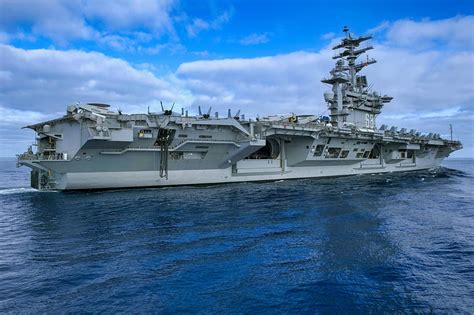
Maintaining operational availability of USS Nimitz is closely tied to the strategic demands of the Indo-Pacific theater, where naval presence plays a crucial role in shaping regional stability. In late 2025, the carrier began what is widely expected to be its final operational deployment, operating in the South China Sea northeast of Malaysia’s Great Natuna Island.
This region sits near several contested maritime zones where overlapping territorial claims, strategic sea lanes, and military patrols create a dense and complex operating environment. Chinese naval vessels, coast guard ships, and maritime militia units increasingly patrol waters surrounding disputed island chains. Against this backdrop, the deployment of a U.S. carrier strike group serves as a visible demonstration of maritime power and alliance commitment.
Carrier operations in these waters support freedom of navigation missions, joint exercises with regional allies, and surveillance activities across critical sea routes. Aircraft launched from the carrier’s expansive flight deck routinely conduct patrols and training flights designed to maintain air superiority and maritime situational awareness.
The presence of a carrier like Nimitz functions as more than a military asset. It represents a strategic signal. A nuclear-powered carrier can operate for months at sea while launching dozens of aircraft sorties per day, effectively projecting a mobile airbase capable of influencing events thousands of miles from U.S. territory.
Preparing for the Complex Retirement of a Nuclear Supercarrier
Although USS Nimitz remains operational, preparations for its eventual retirement have already begun. On March 13, 2026, the U.S. Department of Defense announced a contract modification valued at $95.7 million awarded to Huntington Ingalls Industries’ Newport News Shipbuilding division.
The funding supports advance planning and long-lead material procurement required for the carrier’s future inactivation and nuclear defueling process. These preparations are necessary because dismantling a nuclear-powered aircraft carrier is among the most technically demanding tasks in naval engineering.
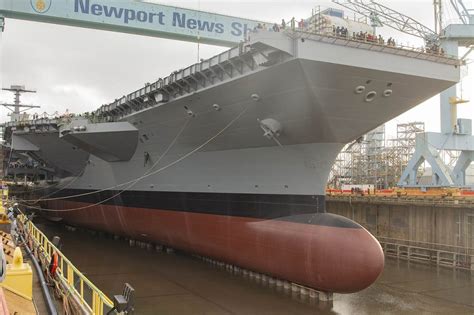
All work associated with this phase will take place at Newport News Shipbuilding in Virginia, the only shipyard in the United States capable of constructing, refueling, and servicing nuclear-powered aircraft carriers. The shipyard has served as the industrial backbone of America’s carrier fleet for decades, building every Nimitz-class and Ford-class carrier.
Retiring a nuclear carrier involves a multi-stage process that includes reactor defueling, removal of sensitive equipment, environmental safety procedures, and large-scale structural dismantling. Specialized equipment must be manufactured years in advance, and technical planning must account for the safe extraction of nuclear fuel from the vessel’s reactors.
The timeline currently anticipates that early preparatory work will continue through March 2027, ensuring the Navy can smoothly transition the ship from operational deployment to decommissioning.
The Engineering Power Behind USS Nimitz
When USS Nimitz entered service in 1975, it represented a revolutionary leap in naval engineering. The ship introduced a new standard for nuclear-powered aircraft carriers, combining massive displacement with long-endurance propulsion.
The carrier displaces roughly 100,000 tons and is powered by two A4W nuclear reactors, which drive four steam turbines connected to four propeller shafts. This propulsion system allows the ship to sustain speeds exceeding 30 knots while operating for extended periods without refueling.
Unlike conventionally powered ships, nuclear carriers do not rely on fuel tankers for propulsion energy. Instead, they can remain deployed for months while only requiring aviation fuel and supplies for their aircraft and crew. This endurance makes them uniquely suited for long-distance deployments in the vast Pacific Ocean.
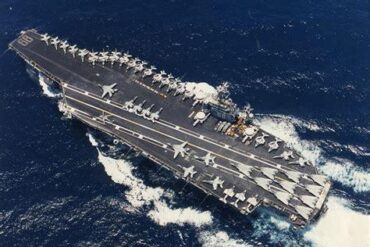
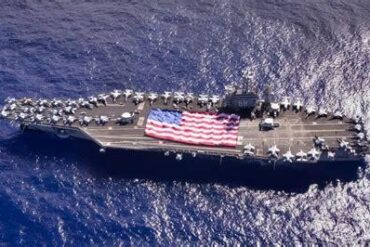
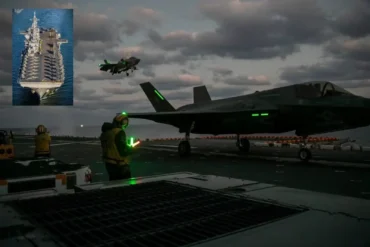
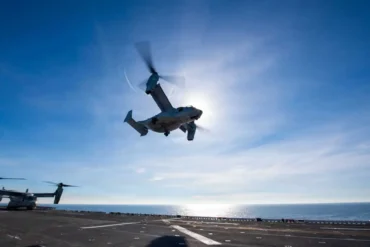
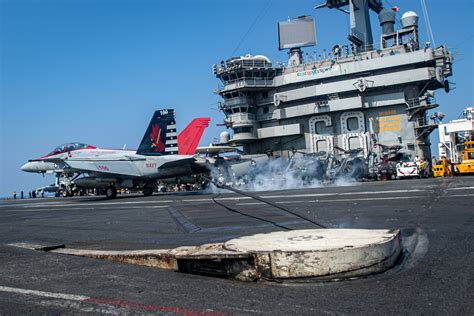
The ship’s flight deck—stretching more than 330 meters—is essentially a floating airport capable of launching and recovering a diverse mix of naval aircraft. A typical carrier air wing aboard Nimitz includes more than 60 aircraft, forming a powerful airborne combat network.
Carrier Air Wing: A Floating Air Force
The aircraft operating from USS Nimitz transform the ship into a highly flexible combat platform. Each component of the air wing performs a specialized mission that contributes to the strike group’s overall capability.
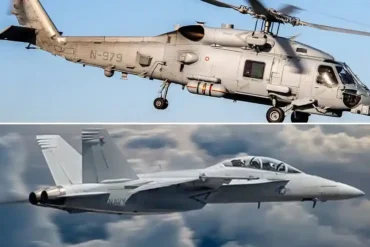
Multirole F/A-18E/F Super Hornet fighters form the backbone of offensive and defensive operations, conducting precision strike missions, air superiority patrols, and maritime attack roles. Supporting them are EA-18G Growler electronic warfare aircraft, which specialize in disrupting enemy radar and communications systems during combat operations.
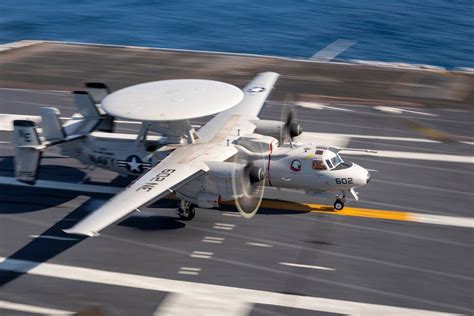
Airborne command and surveillance are provided by the E-2D Advanced Hawkeye, a radar-equipped aircraft capable of detecting threats hundreds of miles away and coordinating aerial operations across a vast battlespace.
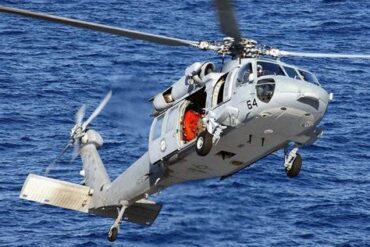
Helicopters such as the MH-60R and MH-60S Seahawk extend the carrier’s reach even further. These aircraft conduct anti-submarine patrols, logistics transport, and search-and-rescue missions, ensuring the strike group remains protected both above and below the ocean surface.
Together, these aircraft create a layered combat capability that allows a single carrier strike group to monitor, defend, and influence enormous maritime regions.
Decades of Global Operations
USS Nimitz has participated in numerous missions across the globe during its long service history. The carrier has deployed repeatedly to the Western Pacific, Middle East, and Indian Ocean, supporting both combat operations and deterrence patrols.
During conflicts in Afghanistan and Iraq, aircraft launched from the ship carried out strike missions, reconnaissance flights, and close air support operations. In other periods, the carrier played a stabilizing role during regional crises, operating near strategic chokepoints and providing rapid response capabilities to U.S. commanders.
The vessel’s deployments have also included large-scale joint exercises with allied navies. These operations strengthen military cooperation with partners such as Japan, South Korea, Australia, and other Indo-Pacific nations.
Few warships in modern history have maintained such an extensive record of operational service. Across decades of deployments, USS Nimitz has served as a cornerstone of American naval aviation.
Transition to the Ford-Class Carrier Era
The eventual retirement of USS Nimitz marks the beginning of a broader transformation in the U.S. Navy’s aircraft carrier fleet. As older Nimitz-class ships approach the end of their service lives, the Navy is gradually introducing the Gerald R. Ford-class carriers, designed to replace them.
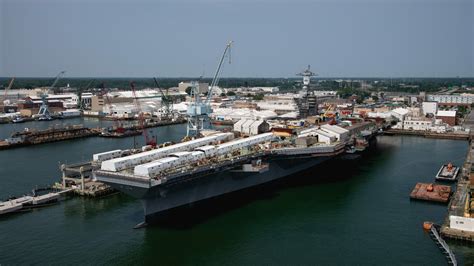
The second ship in this class, USS John F. Kennedy (CVN-79), is currently undergoing final outfitting and testing at Newport News Shipbuilding before delivery to the Navy. Once operational, it will join USS Gerald R. Ford (CVN-78), which already serves as the lead vessel of the class.
These new carriers introduce several technological advances designed to increase operational efficiency and sortie generation rates.
The Electromagnetic Aircraft Launch System (EMALS) replaces the traditional steam catapult system, using electromagnetic energy to launch aircraft more smoothly and with less mechanical stress. The Advanced Arresting Gear (AAG) improves the safety and reliability of aircraft recovery operations.
Ford-class carriers also feature redesigned flight decks, advanced radar systems, and a smaller crew requirement thanks to increased automation. Collectively, these innovations allow the ships to launch more aircraft sorties per day while reducing long-term maintenance demands.
Balancing Fleet Readiness and Modernization
The continued operation of USS Nimitz alongside the construction of Ford-class carriers illustrates the delicate balance the U.S. Navy must maintain between present-day readiness and future modernization.
Aircraft carriers remain one of the most versatile instruments of national power. Unlike land-based air forces, they can operate without relying on host nation bases, allowing rapid deployment to areas of crisis. This independence makes them uniquely valuable in regions where political conditions or geography complicate land-based military operations.
Maintaining sufficient numbers of operational carriers is therefore essential to the Navy’s global strategy. Extending Nimitz’s service life ensures that the fleet retains adequate carrier availability while newer ships complete construction and testing.
The Final Years of a Historic Supercarrier
As USS Nimitz enters its final operational phase, the ship continues to perform the same missions that have defined its legacy for nearly half a century. The carrier still sails at the center of a powerful strike group, launching aircraft, conducting patrols, and demonstrating the enduring reach of American naval aviation.
The approaching retirement of the ship represents both an ending and a transition. The Nimitz-class carriers defined U.S. naval power for decades, and their influence reshaped how aircraft carriers operate in the modern era.
When USS Nimitz eventually leaves service after 2027, it will close a remarkable chapter in naval history. Yet its legacy will continue in the next generation of supercarriers—ships designed to carry forward the same mission of global power projection into the twenty-first century and beyond.