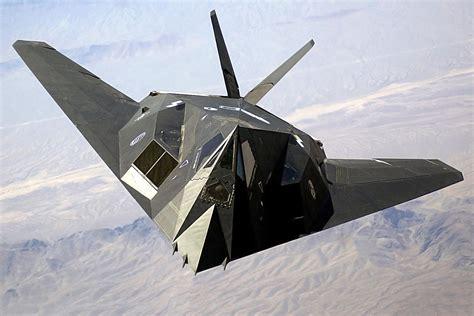
The decision by the U.S. Air Force to keep a small number of retired F-117 Nighthawk stealth aircraft flying until at least 2034 underscores how certain legacy platforms retain unique value long after their formal withdrawal from combat service. Officially retired in 2008, the F-117 has not disappeared from the skies. Instead, it has transitioned into a carefully managed, tightly scoped operational niche where its distinctive low-observable characteristics continue to serve modern defense needs in ways newer aircraft cannot always replicate as efficiently.
This extension is not about nostalgia or symbolic preservation. It reflects a calculated judgment that a mature, well-understood stealth aircraft remains a useful and cost-effective tool for training, testing, and evaluation. Operating far from frontline deployments, these aircraft provide real-world exposure to stealth-related challenges for pilots, air defenders, and sensor developers. In an era where stealth is no longer exotic but expected, the F-117 still offers something rare: a crewed, operationally proven low-observable aircraft that can be flown repeatedly without diverting frontline assets.
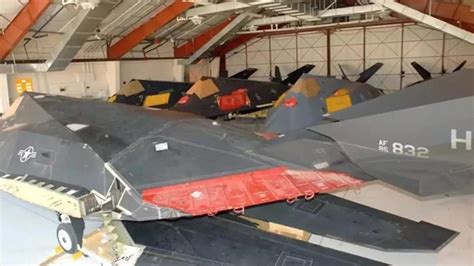
The aircraft continue to operate from Tonopah Test Range Airport in Nevada, a remote and highly controlled facility within the Nevada Test and Training Range and close to Nellis Air Force Base. This location allows the Air Force to conduct sensitive activities away from public view while integrating the F-117 into large-scale exercises and classified trials. The result is a platform that is officially retired yet quietly embedded in the infrastructure shaping future air combat concepts.
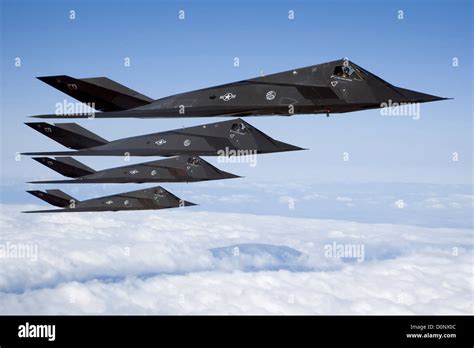
Why a Retired Stealth Aircraft Still Matters
The continued use of the F-117 highlights an often-overlooked reality of military aviation: retirement does not always mean irrelevance. While newer stealth aircraft such as the F-22 and F-35 offer vastly broader capabilities, they are expensive to operate and heavily tasked with operational commitments. Using them for routine testing or adversary simulation can be inefficient. The F-117 fills that gap by acting as a dedicated stealth surrogate, enabling repeated experimentation without disrupting frontline readiness.
One of the aircraft’s primary modern roles is as a “red air” asset, simulating a stealthy adversary during training exercises. Air defense units and fighter squadrons benefit from facing a real, crewed low-observable target rather than relying solely on simulations or drones. This allows operators to stress-test detection methods, command-and-control processes, and engagement timelines against an aircraft that behaves unpredictably in ways software models cannot fully capture.
Beyond training, the F-117 serves as a flying laboratory for sensor development. Radar systems, infrared search and track technologies, and multi-sensor fusion concepts can all be evaluated against a known stealth baseline. Because the aircraft’s signature characteristics are well documented, engineers can measure improvements and limitations with precision. This makes the Nighthawk an invaluable reference point as the Air Force refines how it finds, tracks, and counters stealth threats.
Origins of the World’s First Operational Stealth Aircraft
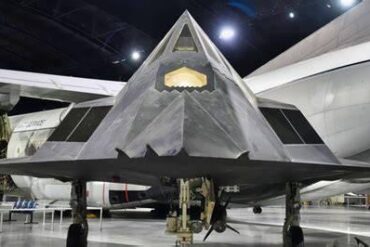
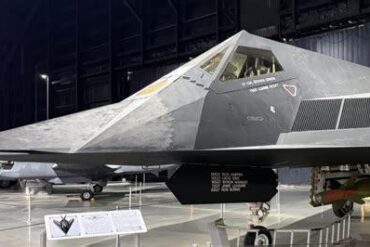
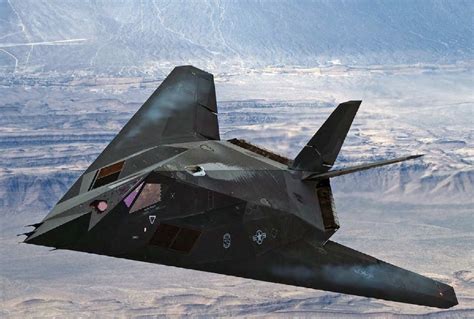
Developed by Lockheed Martin’s Skunk Works, the F-117 was conceived during the Cold War to penetrate dense Soviet-style air defense networks. Its faceted shape, dictated by early computer modeling of radar reflections, sacrificed aerodynamic elegance for survivability. Combined with radar-absorbent materials and internal weapon bays, this design reduced the aircraft’s radar cross section to unprecedented levels for its time.
The aircraft relied on infrared sensors and a laser designator rather than onboard radar, minimizing emissions that could reveal its position. Despite carrying the “fighter” designation, the F-117 was never intended for air-to-air combat and carried no such weapons. Every design choice prioritized precision strike and survivability, even at the cost of speed and maneuverability. The result was an aircraft that looked unconventional but fundamentally changed air warfare.
The F-117 entered service in 1983 under deep secrecy and was publicly acknowledged only in 1988. Its combat debut during the 1991 Gulf War cemented its reputation, as it struck heavily defended, high-value targets with remarkable accuracy. Although it flew a relatively small percentage of total sorties, it attacked a disproportionate share of strategic objectives, demonstrating the operational payoff of stealth.
Combat Experience and Lessons Learned
Following the Gulf War, the F-117 continued to see combat in the Balkans, Afghanistan, and Iraq. Its shootdown over Serbia in 1999 was a pivotal moment, proving that stealth reduced detection probability but did not confer invulnerability. That incident drove changes in tactics, routing, and mission planning, reinforcing the idea that stealth works best as part of a broader operational system rather than as a standalone solution.
By the early 2000s, advancements in stealth technology and the introduction of multirole platforms diminished the need for a single-purpose stealth attack aircraft. In 2008, the Air Force formally retired the F-117, placing most airframes into controlled storage rather than immediate disposal. This decision preserved the option to reuse the aircraft if future needs emerged, an option now being fully exercised.
The fleet was always small, with just 64 aircraft built, including development models. Over time, the inventory has been reduced through demilitarization and museum transfers, leaving roughly 45 airframes. Only a fraction of these remain airworthy, and even fewer are actively flown. Each year, additional aircraft are removed from the inventory, ensuring a gradual and deliberate drawdown rather than abrupt termination.
Technical Characteristics That Enable Continued Use
Technically, the F-117 remains straightforward to operate within its niche. Powered by two General Electric F404 engines, it flies at subsonic speeds and relies on fly-by-wire controls to manage its inherently unstable aerodynamics. Its range, ceiling, and payload are modest by modern standards, but sufficient for training and test missions conducted within U.S. airspace.
The aircraft’s low-observable features remain its defining attribute. Approximately one tonne of radar-absorbent material is bonded to the structure, with seams carefully treated to minimize radar returns. While maintenance of these materials is labor-intensive, the Air Force now benefits from decades of experience sustaining them efficiently. This knowledge further reduces the cost and risk of keeping the aircraft operational in limited numbers.
Strategic Value Through 2034 and Beyond
Extending F-117 operations through 2034 aligns with broader trends in air combat development. As potential adversaries invest heavily in counter-stealth technologies, the ability to test sensors and tactics against a real stealth aircraft becomes increasingly valuable. The F-117 provides that capability without exposing cutting-edge platforms or classified signatures.
This decision also reflects a pragmatic approach to force management. Rather than viewing retirement as an endpoint, the Air Force has repurposed the Nighthawk into a specialized enabling asset. Its continued flight status supports readiness, innovation, and training across multiple domains, all while operating under strict limitations that prevent mission creep.
In practical terms, the F-117’s extended life is less about the aircraft itself and more about what it enables. It bridges generations of technology, linking the origins of operational stealth with the challenges of modern and future air defense environments. Until 2034, the angular silhouette of the Nighthawk will remain an active, if discreet, presence in the evolution of airpower, quietly shaping how the next generation prepares for contested skies.