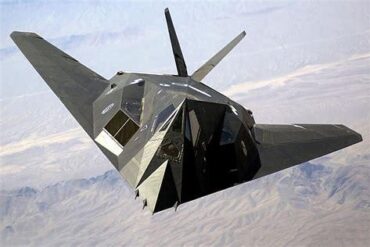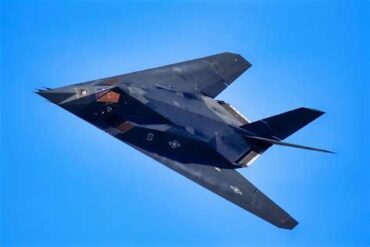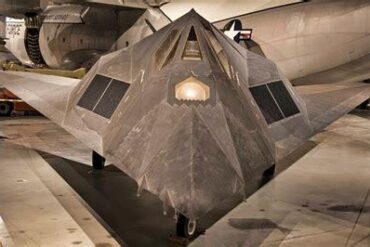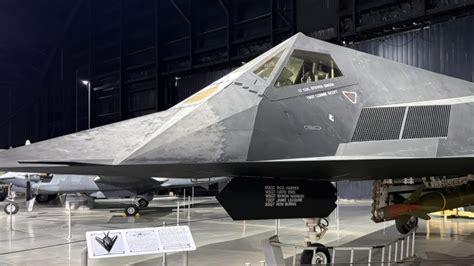
The Lockheed F-117 Nighthawk was officially retired from US Air Force service in 2008, ending its career as the world’s first operational stealth combat aircraft. Yet, more than a decade later, the aircraft that changed modern warfare has refused to disappear. Hidden away from public attention, a small fleet of retired F-117s continues to fly over restricted airspace in Nevada, performing missions that are helping shape the future of stealth aviation.
Rather than being preserved as museum pieces or abandoned in the aircraft storage facilities of the desert, these legendary jets remain valuable military assets. The US Air Force has quietly extended their operational usefulness, with some aircraft expected to continue flying until 2034. Their mission has completely changed, however. The F-117 is no longer a strike aircraft designed to penetrate enemy air defenses and deliver precision weapons. Instead, it has become a flying laboratory, a stealth aggressor, and a test platform for the next generation of air combat technology.
The continued operation of the Nighthawk represents an unusual reality in modern military aviation: sometimes an older aircraft becomes more valuable after it retires. While newer platforms such as the F-35 Lightning II and F-22 Raptor represent the cutting edge of airpower, the F-117 provides something those aircraft cannot easily offer — a predictable, affordable, and realistic stealth target.
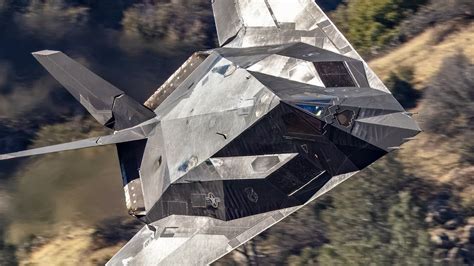
The F-117 Nighthawk’s Second Life After Retirement
When the F-117 entered service in the early 1980s, it represented a revolutionary change in aircraft design. Developed by Lockheed’s legendary Skunk Works division, the aircraft introduced the world to operational stealth technology. Its unusual angular shape, radar-absorbing materials, and carefully controlled radar signature allowed it to penetrate heavily defended airspace during missions where conventional aircraft would have faced extreme risks.
The aircraft became famous during operations such as the Gulf War, where F-117s conducted precision strikes against high-value targets in Iraq. Its success demonstrated that stealth technology could fundamentally change military strategy by allowing aircraft to avoid detection rather than simply survive enemy fire.
However, by the 2000s, the rapid advancement of sensors, networking systems, and newer stealth aircraft led the Air Force to retire the Nighthawk. The arrival of the F-22 and later the F-35 offered greater speed, maneuverability, electronic warfare capability, and battlefield awareness.
Yet retirement did not mean the end of the F-117’s usefulness. The aircraft’s greatest weakness in frontline combat became its greatest advantage in training and research. Because engineers and pilots already understood its radar characteristics, the F-117 became a controlled and reliable stealth target.
The Air Force maintains several airworthy examples at the Tonopah Test Range Airport in Nevada, a location historically connected with the aircraft’s secret development and testing. These aircraft continue to operate under carefully controlled conditions, supporting missions that remain highly relevant to modern warfare.
Why The US Air Force Still Needs A 1980s Stealth Aircraft
At first glance, keeping a decades-old aircraft flying seems unusual. Modern military aviation usually focuses on replacing older platforms with advanced designs. However, the F-117 occupies a unique position because its mission no longer requires it to be the most advanced aircraft in the sky.
The Nighthawk does not need to defeat enemy fighters, carry modern weapons, or survive hostile combat environments. Its role is to replicate realistic threats and provide engineers with a known stealth platform for testing.
Modern air warfare increasingly depends on detection, electronic warfare, and long-range engagement rather than traditional close-range dogfighting. The ability to find and track a stealth aircraft has become one of the most important challenges facing military forces worldwide.
The F-117 provides an ideal training target because its radar signature is well documented. When new radar systems, sensors, or electronic warfare technologies are tested, engineers know what they should expect from the aircraft. Any improvement in detection performance can be measured against a consistent benchmark.
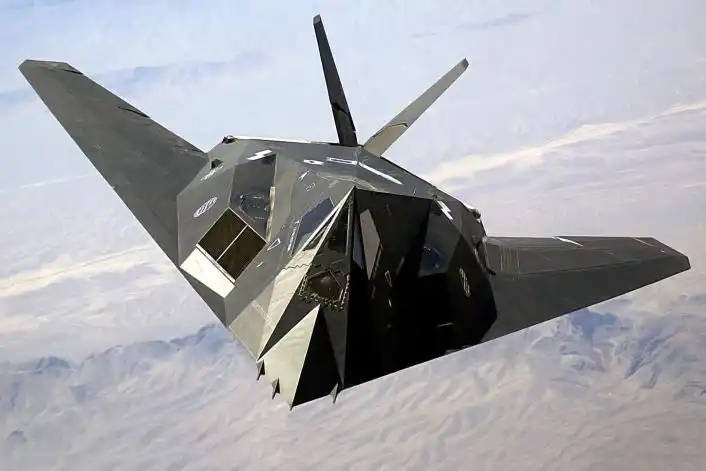
The aircraft also helps prepare American pilots for potential encounters with foreign stealth aircraft. During large-scale exercises such as Red Flag at Nellis Air Force Base, the F-117 can simulate the behavior of low-observable enemy aircraft. While it does not perfectly replicate modern threats such as the Russian Su-57 or Chinese J-20, it provides a realistic challenge that traditional non-stealth aircraft cannot.
A conventional fighter like an F-16 or F-15 may appear too easily on advanced sensors, offering limited training value for fifth-generation pilots. The F-117 forces crews to rely on advanced tactics, sensor fusion, and careful battlefield management.
Its mission is not to win a traditional air battle. Its mission is to remain difficult enough to find.
The Hidden Advantage: The F-117 Is Cheap To Operate
One of the biggest reasons the F-117 remains active is simple economics. Modern stealth aircraft are incredibly capable, but they are also extremely expensive to operate.
The F-35 Lightning II is one of the most advanced fighter aircraft ever built, combining stealth, sensors, electronic warfare, and networked combat capabilities. However, maintaining such a complex aircraft requires significant resources, specialized equipment, and extensive software support.
The F-117 operates under completely different conditions. Since it is no longer expected to conduct combat missions, many expensive systems required for frontline operations have been removed or simplified.
The aircraft’s operating cost is estimated to be around $25,000 per flight hour, significantly lower than many modern stealth platforms. By comparison, the F-35 can cost tens of thousands of dollars per flight hour, while the F-22 Raptor is considerably more expensive. Advanced stealth bombers such as the B-2 Spirit require even greater operating budgets.
Using F-117s for testing and training allows the Air Force to preserve flight hours on more valuable frontline aircraft. Instead of risking wear on an F-35 during every experimental mission, the service can use a proven aircraft that is already available.
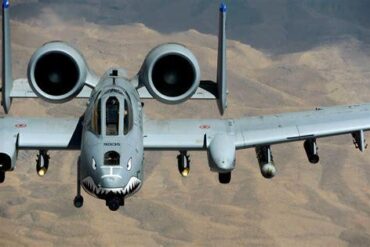
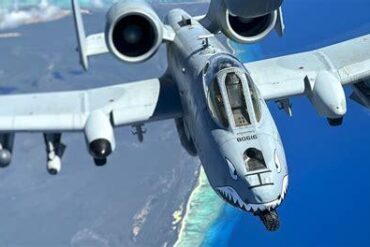
This approach follows a philosophy similar to the continued use of the A-10 Thunderbolt II. Some aircraft remain valuable not because they represent the latest technology, but because they perform a specific mission efficiently and economically.
A Surprisingly Simple Aircraft Beneath The Stealth Technology
Although the F-117 looked like a futuristic aircraft when it entered service, its internal design relied heavily on existing technology. Lockheed engineers created the aircraft by combining proven components from other platforms, reducing development risk and improving reliability.
The Nighthawk is powered by two General Electric F404 non-afterburning turbofan engines, the same engine family originally developed for the F/A-18 Hornet. Unlike modern fighter engines, the F404 is mature, reliable, and relatively easy to maintain.
The aircraft’s landing gear also borrowed components from existing aircraft, including the F-15 Eagle and A-10 Thunderbolt II. Its flight controls were adapted from the F-16 Fighting Falcon.
This practical engineering philosophy is one reason the F-117 remains affordable decades later. It does not depend on constantly updated software, highly specialized components, or complex propulsion systems.
Modern fifth-generation fighters are technological masterpieces, but their sophistication creates additional maintenance challenges. The F-117 benefits from being a simpler aircraft with fewer requirements.
After retirement, many classified combat systems were removed, further reducing maintenance demands. The aircraft no longer needs to carry operational weapons, secure communications systems, or mission equipment designed for enemy territory.
Its purpose is now very different: fly, provide a realistic signature, and help improve future technology.
The F-117 As A Flying Laboratory For Future Stealth Technology
Beyond training missions, the F-117 has become an airborne research platform. Because the aircraft already possesses stealth characteristics, engineers can use it to test new technologies without risking active combat aircraft.
In recent years, observers have noticed unusual F-117 aircraft flying with reflective or metallic-looking coatings. These mysterious surfaces have generated significant interest among aviation analysts.
Although the exact purpose remains undisclosed, some experts believe these coatings may be related to infrared signature reduction or advanced low-observable materials. Similar technologies have reportedly been explored on other stealth aircraft, including the F-22.
Testing experimental coatings on retired aircraft provides a safer development path. Engineers can evaluate performance, durability, and maintenance requirements before introducing new materials onto operational fighters.
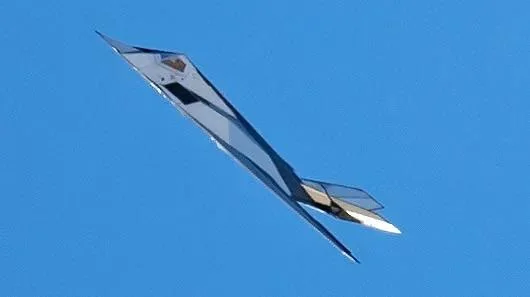
The aircraft can also serve as a test target for emerging weapons and detection systems. Future conflicts are expected to involve increasingly sophisticated stealth missiles, unmanned aircraft, and long-range weapons.
A known stealth platform like the F-117 gives researchers a valuable tool for developing counter-stealth technology. Radar designers, electronic warfare specialists, and weapons developers can measure their systems against a realistic low-observable aircraft.
In this role, the retired Nighthawk is not outdated. It is a controlled experiment flying through the sky.
Why The F-117 Remains Relevant In The Era Of The F-35 And B-21 Raider
The continued flight of the F-117 highlights an important lesson about military technology: older systems can remain valuable when their unique capabilities match modern needs.
The US Air Force is preparing for future conflicts involving advanced stealth aircraft, artificial intelligence, unmanned systems, and increasingly complex electronic battlefields. Training for these environments requires realistic opponents and accurate testing conditions.
The F-117 provides exactly that.
It offers a rare combination of stealth characteristics, predictable performance, low operating costs, and decades of collected data. Few other aircraft can provide the same value.
As the B-21 Raider moves toward becoming the next generation of stealth bomber, and as the F-35 continues expanding as the backbone of American airpower, the humble F-117 continues playing a quiet but important supporting role.
The aircraft that once represented the future of warfare is now helping prepare the world’s most advanced fighters for tomorrow’s battles.
The Nighthawk may have retired from combat, but its stealth mission is far from over. Until at least 2034, the distinctive black aircraft will continue flying through Nevada skies, proving that sometimes the most useful aircraft is not the newest one — but the one that still has something important to teach.