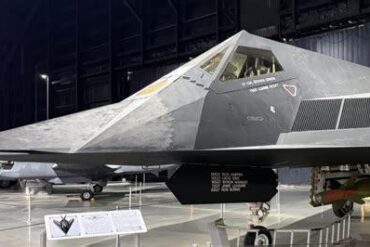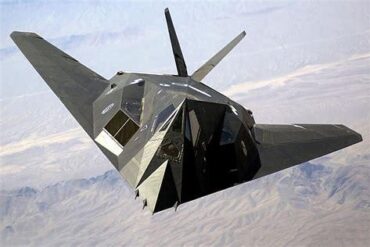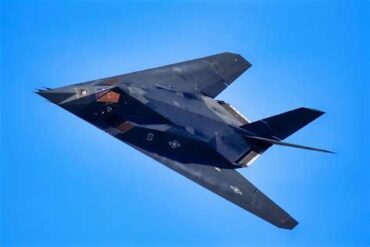
The Lockheed F-117 Nighthawk was supposed to be a relic of the Cold War, a pioneering stealth aircraft that officially left US Air Force combat service in 2008. Yet nearly two decades later, the angular black jet continues to appear over American skies, participating in training exercises, supporting aviation research, and testing the tactics needed to defeat modern air defenses. Its continued activity has turned one of America’s most secretive aircraft into an unexpected fixture of contemporary military aviation.
The Nighthawk’s return to public view is not the result of a sudden decision to restore an obsolete fighter to frontline duty. Instead, the aircraft has found a second life as a specialized test platform and stealth aggressor aircraft, helping the US military prepare for adversaries equipped with increasingly sophisticated detection systems. Reports indicate that the Air Force intends to keep some F-117s flying until 2034, extending the aircraft’s operational usefulness far beyond its original retirement date.
The renewed activity also highlights an important distinction between an aircraft’s retirement from combat and its complete withdrawal from military service. Although the F-117 no longer occupies the position it once held in American strike planning, its distinctive radar characteristics and unusual flight profile make it valuable for training against threats that conventional aircraft cannot accurately reproduce. Its story is therefore less about reviving an outdated warplane than about finding new uses for technology that helped transform modern air warfare.
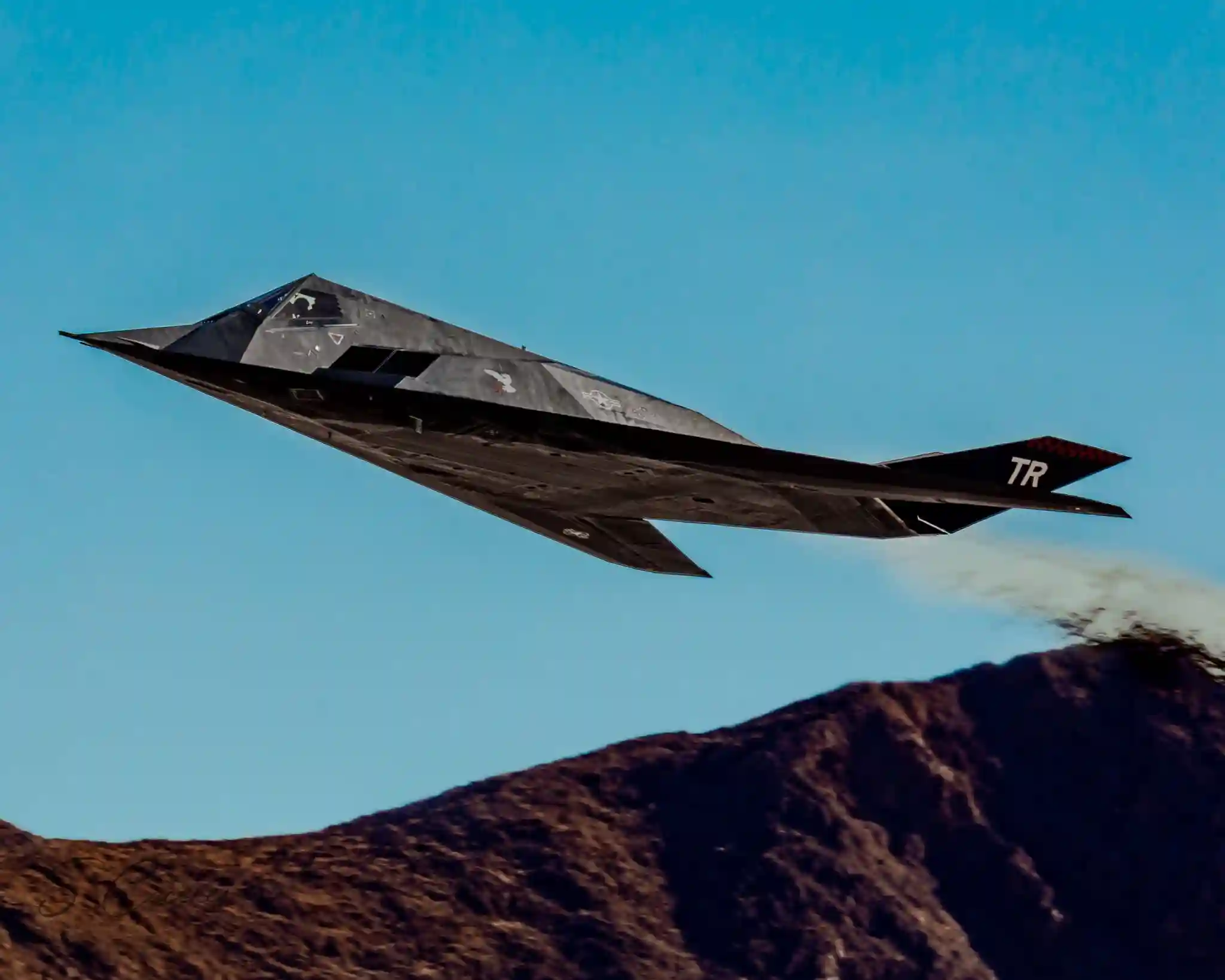
The F-117 Nighthawk Pioneered Modern Stealth Warfare
The F-117 emerged from an American military requirement that became increasingly urgent during the 1970s. Soviet-designed surface-to-air missile systems had made traditional approaches to penetrating defended airspace more dangerous, challenging the assumption that bombers could survive by flying higher, faster, or lower than their opponents could effectively track them.
Earlier American aircraft had relied heavily on speed and altitude to escape interception. Aircraft such as the Convair B-58 Hustler and the proposed XB-70 Valkyrie reflected the appeal of flying above or beyond the reach of enemy defenses. However, improvements in radar, missiles, and integrated air-defense networks steadily weakened the advantages of those approaches. Terrain-following tactics also became less reliable as look-down radar capabilities improved.
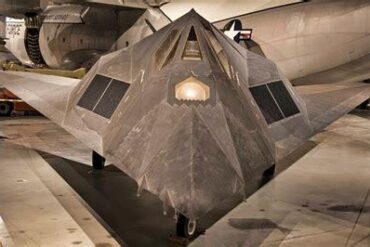
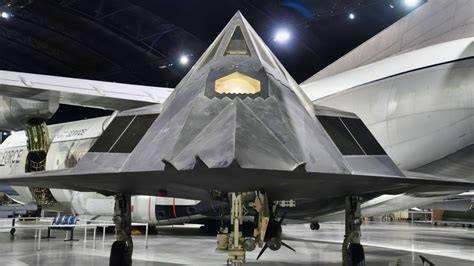
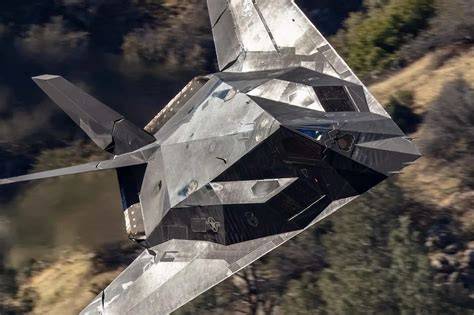
The US Air Force consequently explored a different solution: designing an aircraft that enemy radar would struggle to detect and track. Rather than relying primarily on speed or maneuverability, the F-117 would reduce its radar signature through carefully controlled geometry and specialized materials. The aircraft’s sharply faceted surfaces were designed to redirect incoming radar energy away from its source, while its internal weapons bays reduced the external reflections associated with conventional weapon pylons.
The resulting aircraft looked unlike almost anything else in military aviation. Its angular fuselage, swept surfaces, and dark finish earned it a distinctive appearance, but its unconventional shape served a practical purpose. Engineers had prioritized radar signature reduction over the aerodynamic elegance normally associated with high-performance aircraft.
The F-117 first flew in 1981 and entered operational service in 1983. Its development had remained highly classified, allowing the United States to field an operational stealth combat aircraft before publicly acknowledging the program in 1988. The aircraft subsequently became a defining symbol of the transition from conventional strike aviation toward low-observable operations.
Although frequently described as a stealth fighter, the Nighthawk was actually a single-seat attack aircraft designed primarily to penetrate defended airspace and deliver precision weapons. It was not built for conventional air-to-air combat, and its limited maneuverability reflected the priorities of its designers.
The F-117’s greatest legacy was the pathway it established for later aircraft. The B-2 Spirit, F-22 Raptor, F-35 Lightning II, and forthcoming B-21 Raider represent different approaches to low-observable design, incorporating advances in aerodynamics, sensors, networking, electronic warfare, and mission systems. The Nighthawk did not possess all those capabilities, but it demonstrated that stealth could fundamentally change how the United States approached the problem of penetrating enemy defenses.
Why the F-117 Was Never Truly Retired
The Air Force officially retired the F-117 fleet from combat service in 2008, following decades of operations and the arrival of more advanced aircraft. However, retirement did not mean every surviving airframe was immediately dismantled or permanently grounded.
The service retained aircraft for testing, evaluation, and training, recognizing that the Nighthawk still offered capabilities that were difficult to replicate with conventional platforms. Its low-observable characteristics made it particularly useful for exercises involving radar operators, fighter crews, and integrated air-defense units.
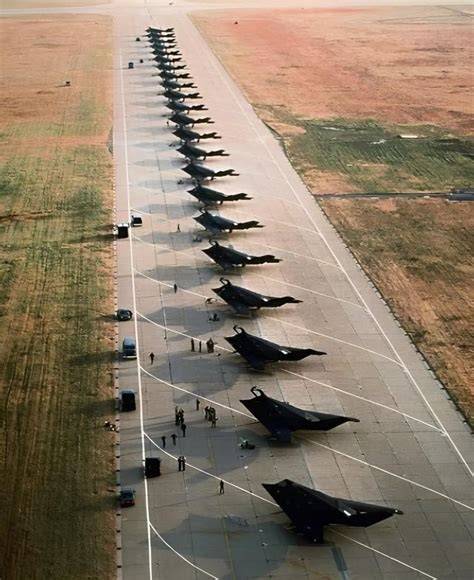
The scale of the surviving fleet has varied over time as aircraft have been transferred to museums, placed in storage, or retained for specialized activities. A total of 64 F-117s were built, including five prototypes and 59 production aircraft. In 2019, the Air Force reported possessing 51 aircraft, although that figure should not be interpreted as the number that remained airworthy or regularly flew.
The remaining operational examples are associated with Tonopah Test Range Airport in Nevada, a location historically connected with classified American aviation programs. Situated within the wider Nevada Test and Training Range environment, Tonopah provides access to extensive restricted airspace and facilities suited to specialized military flying.
The arrangement allows the Air Force to maintain a limited number of aircraft without restoring the entire fleet to its former operational status. Individual airframes can be assigned to particular research or training requirements, while others are preserved or removed from service as necessary.
This approach also helps explain why photographs of F-117s occasionally appear long after their official retirement. The aircraft’s public status changed, but its usefulness did not disappear overnight. Instead, the Air Force adapted a small portion of the fleet to tasks that remain relevant to modern air combat.
The Serbian Missile Intercept Did Not End the Stealth Revolution
One of the most famous episodes in the Nighthawk’s history occurred during the NATO air campaign against Yugoslavia in 1999. On March 27, a Serbian air-defense unit successfully engaged an F-117 using an older Soviet-designed S-125 Neva system, known to NATO as the SA-3 Goa.
The aircraft, commonly identified as Vega 31, was flown by Lieutenant Colonel Dale Zelko, who ejected and was subsequently rescued by American personnel. The loss became an international propaganda victory for Yugoslavia and remains an important episode in debates about the limits of stealth technology.
The incident did not demonstrate that stealth was ineffective. Rather, it showed that low observability reduces the likelihood of detection and engagement without making an aircraft invisible. Radar performance depends on several interacting factors, including viewing angle, frequency, atmospheric conditions, operating procedures, and the geometry of a particular engagement.
The F-117’s design reduced radar reflections most effectively from certain directions, especially the forward aspect. Its signature could vary when viewed from other angles, and the opening of its internal weapons bay introduced another potential change in its radar characteristics. These limitations did not make the aircraft useless, but they meant that its protection depended partly on how a mission was planned and executed.
The Serbian engagement also benefited from circumstances that aligned in the defenders’ favor. Accounts of the incident have highlighted predictable flight routing, the timing of radar activation, and the air-defense crew’s familiarity with NATO operating patterns. The precise contribution of each factor remains difficult to establish publicly, but the event illustrates how intelligence, tactics, and opportunity can combine against even a sophisticated aircraft.
The United States reportedly flew hundreds of F-117 combat missions over Serbia during the campaign, with the aircraft generally demonstrating that low-observable penetration could be highly effective. Another Nighthawk was reportedly damaged by Serbian air defenses on April 30, 1999, but returned to its base. Public accounts of the damage and the aircraft’s subsequent status differ.
The wreckage of the aircraft shot down in March also created a serious intelligence concern. Serbian authorities recovered substantial portions of the airframe, and Western defense observers have long discussed the possibility that foreign engineers gained access to components. The extent to which the material influenced subsequent Russian or Chinese programs remains uncertain.
For the Air Force, the larger lesson was that stealth needed to be treated as one element of a complete operational system. Mission planning, electronic warfare, intelligence, route selection, supporting aircraft, and the management of enemy sensors all influence whether a strike package can reach its target safely.
That lesson remains relevant to the F-117’s modern training role. The aircraft can help recreate some of the challenges that stealth technology presents to defenders, while allowing military units to practice detection and engagement procedures against a real aircraft rather than relying exclusively on computer-generated targets.
The F-117 Is Still Supporting Modern Stealth Training
The most important reason for keeping the Nighthawk airborne is its value as an adversary aircraft. In major US military exercises, designated Red Air units simulate enemy aircraft and tactics, allowing friendly forces to practice against threats that differ from their normal operating environment.
The F-117 offers a particularly useful training target because its radar signature differs from that of conventional fighters. Radar operators and air-defense crews can use encounters with the aircraft to evaluate detection techniques, test sensor performance, and understand how a low-observable target behaves under different conditions.
It can also serve as a surrogate for certain stealthy cruise-missile threats during large-scale exercises. Although a cruise missile and an F-117 are not identical targets, training against a real aircraft with a reduced radar signature can help expose limitations in radar coverage, command arrangements, and engagement procedures.
These activities are increasingly important as potential adversaries invest in layered air defenses. Modern systems combine different radar bands, mobile launchers, passive sensors, electronic warfare, and networked command centers. A force preparing for such an environment needs to understand how its sensors perform against targets that are difficult to detect, rather than assuming that conventional radar tracking will always provide an early warning.
The F-117 cannot reproduce every feature of a fifth-generation fighter, nor can it simulate all the electronic emissions, infrared signatures, networking capabilities, or tactics of a modern stealth platform. Nevertheless, it provides a practical airborne target whose characteristics make it valuable for particular experiments.
The aircraft’s continued presence also gives engineers a way to investigate how legacy low-observable technology interacts with modern sensors. Test organizations can collect data, evaluate procedures, and refine training scenarios using an airframe whose basic characteristics are already well understood.
In this context, the Nighthawk is not competing with the F-35 or F-22. It is helping the military understand the threats those aircraft may encounter and the detection systems they may need to defeat.
Why the F-117 Received Aerial Refueling Support in 2025
A particularly striking sign of the aircraft’s continued usefulness appeared in 2025, when plane spotters photographed an F-117 conducting air-to-air refueling with a Boeing KC-46A Pegasus tanker. The sight was notable because aerial refueling is usually associated with aircraft expected to conduct long missions or operate over considerable distances.
The images demonstrated that at least one Nighthawk remained capable of participating in this specialized activity. They did not, by themselves, establish that the aircraft had returned to combat readiness or received a comprehensive modernization program.
Refueling capability can nevertheless be useful for a test aircraft. It can extend the time available for airborne experiments, provide flexibility when planning sorties, and allow the aircraft to reach training areas without being constrained by the fuel required for the outbound journey. These advantages are relevant when exercises take place across large areas of restricted airspace.
The KC-46A connection is also a reminder that the Air Force continues to integrate new support systems into its wider operational environment. The Pegasus is a modern tanker designed to support multiple aircraft types, and its appearance alongside the Nighthawk illustrates how legacy platforms can participate in contemporary testing and training arrangements.
The F-117’s continued flights should not automatically be interpreted as evidence of major new combat upgrades. Public information does not establish that the aircraft has received the sensors, weapons, electronic warfare systems, or mission computers required to match modern operational stealth aircraft. Its continued use is better understood in light of its established testing and training responsibilities.
The aircraft’s occasional appearance over Nevada also reflects a broader feature of American military aviation: some retired platforms remain useful long after their original missions have disappeared. If an older aircraft can safely and economically reproduce a specific threat, retaining it may be more practical than developing an entirely new surrogate.
Could the F-117 Return to Combat?
Speculation about a possible combat return has periodically followed sightings of the Nighthawk. Reports have suggested that surviving examples may have supported strikes in Syria in 2017, although the United States has not publicly confirmed those reported missions. Consequently, such accounts should be treated as unverified rather than established evidence of a return to frontline service.
The aircraft did conduct combat operations during its original service life. Its first combat mission took place during the 1989 US operation in Panama, followed by a prominent role in the 1991 Gulf War. It subsequently participated in operations over the former Yugoslavia and the American-led campaigns in Afghanistan and Iraq.
Those missions took place in a different technological environment. The F-117’s ability to approach defended targets with a relatively small radar signature gave commanders an option for attacking important installations while reducing the likelihood of detection. Its internal weapons bays also supported a cleaner external configuration than conventional strike aircraft carrying exposed weapons.
Today, however, the United States possesses a much broader collection of strike platforms, precision weapons, and uncrewed systems. The B-2 Spirit offers greater range and payload capacity, while the emerging B-21 Raider is intended to provide a next-generation penetrating strike capability. Other aircraft can launch stand-off weapons from outside heavily defended areas, reducing the need to expose an aging platform to sophisticated air defenses.
The F-117’s payload is also limited. It was designed to carry approximately 5,000 pounds of ordnance, far below the published or estimated capacities associated with larger modern combat aircraft. Payload figures alone do not determine mission effectiveness, but they illustrate why the Nighthawk would offer relatively little advantage for many contemporary strike requirements.
Its survivability would also be uncertain against advanced integrated air-defense networks. Modern systems can combine multiple sensors, mobile launchers, and networked tracking methods, making it dangerous to assume that a low radar signature alone would guarantee access to a defended target.
A highly specific, low-threat mission could theoretically create circumstances in which an F-117 might be considered, but there is no publicly confirmed plan to return the type to routine combat operations. Its more credible future remains testing, training, and research.
Why the F-117 Will Remain Relevant Until 2034
Reports published in recent years have pointed toward a possible extension of the Nighthawk’s limited flying life until 2034. In 2022, the Air Force Test Center sought information concerning potential maintenance and logistics support for the aircraft. The proposed support period was structured around a ten-year window beginning in January 2024, consistent with the possibility of keeping the fleet active for an extended period.
The precise number of flyable aircraft remaining in 2026 is not publicly established. The Air Force has also continued disposing of some airframes, reflecting congressional authorization and service plans to reduce the inventory gradually. Individual aircraft may be transferred to museums, placed in storage, or removed from the flying fleet as maintenance requirements and testing needs change.
Keeping the Nighthawk airborne still requires more than preserving an old airframe. Specialized maintenance, spare parts, qualified personnel, and access to appropriate facilities all contribute to the cost of operating a legacy aircraft. Extending its service life makes sense only if its training or research value justifies those demands.
Nevertheless, the F-117 has an unusual advantage: it represents an established low-observable design that can provide realistic training without requiring the Air Force to expose its most advanced combat aircraft to every experimental scenario. That makes it a potentially useful bridge between older stealth technology and the increasingly sophisticated detection systems used to counter modern aircraft.
Its expected retirement horizon also does not mean every surviving example will necessarily fly until 2034. A projected end date for the program can coexist with the gradual withdrawal of individual aircraft, depending on their condition and usefulness.
The Nighthawk’s return to the skies therefore tells a larger story about the evolution of military technology. An aircraft designed to exploit the weaknesses of Cold War radar has become a tool for studying the next generation of air-defense challenges. Its original combat mission has largely disappeared, but the problem it was created to solve remains central to modern air power.
The F-117 Nighthawk is flying again because retirement did not erase its value. It helped establish the principles behind America’s stealth-aircraft revolution, demonstrated both the strengths and limitations of low-observable operations, and now offers a practical way to train against difficult-to-detect targets. Unless the Air Force changes its plans, the aircraft may continue serving in this specialized role until 2034, nearly half a century after its first flight.
The Nighthawk is no longer the future of American combat aviation. Instead, it has become a flying reminder of how that future began—and why the ability to evade detection remains one of the defining challenges of modern warfare.