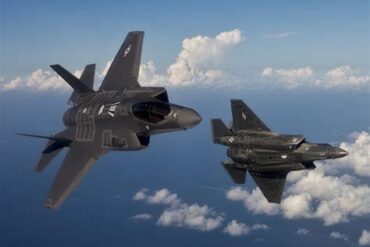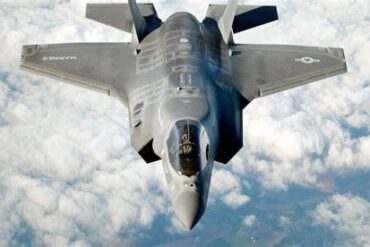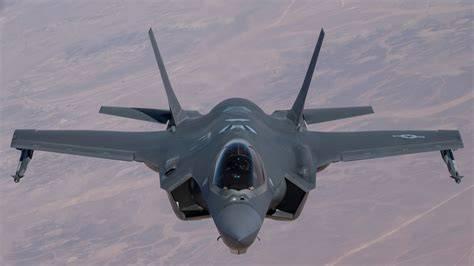
The Lockheed Martin F-35 Lightning II entered 2026 facing a paradox. The fifth-generation fighter has become the backbone of air power modernization for dozens of allied nations, yet several major partners have begun questioning the size, cost, and political implications of their planned fleets. Countries that once viewed the F-35 as an essential symbol of military cooperation are now reassessing their commitments, reducing orders, or exploring alternatives.
The debate surrounding the F-35 program in 2026 is not primarily about whether the aircraft can perform its mission. Its stealth characteristics, sensor fusion, electronic warfare capabilities, and networked battlefield advantages remain unmatched by most operational fighters. Instead, the growing concerns focus on affordability, industrial independence, software access, maintenance control, and long-term reliance on the United States.
Several NATO members have slowed their expansion plans, while others have moved toward European fighter programs or next-generation combat aircraft initiatives. However, despite these challenges, most nations that reconsidered the F-35 have not abandoned it completely. The reason is simple: replacing the Lightning II often creates more problems than continuing with it.
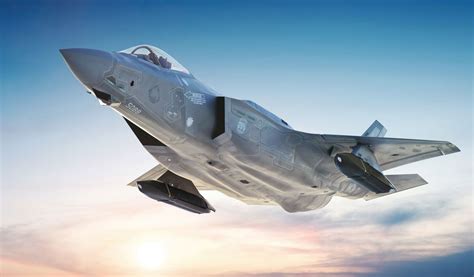
The F-35 has become more than an aircraft. It represents a strategic ecosystem built around advanced sensors, secure communications, global logistics, and interoperability between allied militaries. For countries facing increasingly capable threats from near-peer competitors, the fighter provides capabilities that older fourth-generation aircraft cannot easily replicate.
The result is a complicated situation. Nations want greater independence, but they also need access to one of the most advanced combat aircraft ever produced. This tension explains why the F-35 remains controversial in 2026 while still attracting new buyers.
Why Countries Are Reconsidering the F-35 in 2026
The primary reason behind F-35 reconsiderations is not performance. Instead, the issue revolves around sovereignty and strategic dependence.
The F-35 was designed as a multinational fighter program, but the United States maintains significant control over critical elements of the aircraft. Software updates, advanced mission systems, spare parts, and maintenance infrastructure are deeply connected to American defense networks.
For some governments, this creates uncertainty. A country operating the F-35 must maintain a close political relationship with Washington to ensure uninterrupted access to upgrades and support. While this has traditionally been viewed as an advantage among allies, changing geopolitical relationships have caused some nations to question whether they should depend so heavily on another country for their most important military capability.
The concern has become especially visible among European nations seeking greater defense independence. Countries such as Spain and Portugal have argued that future military systems should provide more control over technology, industrial participation, and operational decision-making.
Cost is another major factor. The F-35 is expensive not only to purchase but also to operate. Although production efficiency has reduced the aircraft’s unit price over time, maintaining a stealth fighter fleet requires significant investment in training, infrastructure, weapons, and upgrades.
For smaller air forces, the question is no longer simply whether they can afford to buy the F-35. The bigger question is whether they can afford everything required to operate it effectively for decades.
Spain Walks Away From the F-35 Over Sovereignty Concerns
Spain became one of the most significant examples of a country stepping away from the F-35 program. Madrid had considered purchasing the aircraft, particularly the F-35B variant, because it is currently the only modern production fighter capable of short takeoff and vertical landing operations.
The F-35B would have been the natural successor to Spain’s aging AV-8B Harrier II fleet operating from the amphibious assault ship. Without a replacement, the Spanish Navy faces the possibility of losing its fixed-wing carrier aviation capability.
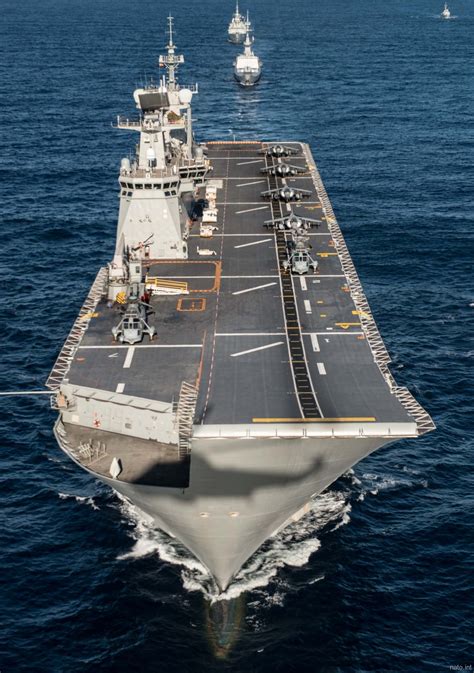
Despite this capability gap, Spain decided to prioritize European defense investment rather than purchasing American aircraft. Madrid’s concern centered around long-term dependence on US-controlled technology, particularly software and maintenance systems.
The decision reflected a broader European defense strategy. Spain has increased its commitment to domestic and continental programs, preferring investments that strengthen European aerospace industries.
However, the decision created a difficult military dilemma. The country must now extend the service life of its existing fighter fleet while waiting for future-generation European projects to mature.
Spain’s situation demonstrates one of the biggest challenges facing nations reconsidering the F-35: alternatives may offer greater independence, but they are often years away from delivering equivalent capabilities.
Germany Keeps the F-35 but Rejects a Larger Fleet
Germany represents a different approach. Unlike Spain, Berlin did not cancel its F-35 purchase. Instead, it limited the size of its commitment.
Germany originally selected the F-35A because it needed an aircraft capable of participating in NATO’s nuclear sharing mission. The fighter’s ability to carry American nuclear weapons under alliance arrangements made it a practical choice.
Germany finalized plans for approximately 50 F-35A aircraft, but the government has made clear that it does not intend to expand significantly beyond that number.
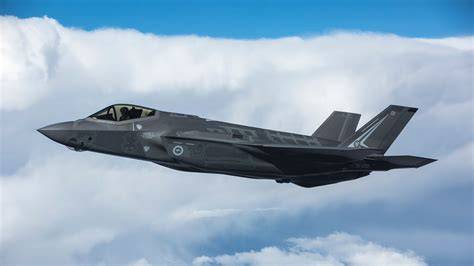
Instead, Germany continues investing heavily in the Eurofighter Typhoon, a program that supports thousands of European aerospace jobs and preserves domestic industrial expertise.
The strategy reflects Berlin’s desire for balance. The F-35 provides immediate fifth-generation capability and NATO compatibility, while European fighters maintain technological independence.
Germany’s position became even more complicated after difficulties surrounding the Franco-German Future Combat Air System (FCAS) project. The sixth-generation fighter initiative suffered from disagreements between major industrial partners, forcing Germany to reconsider its long-term path.
As a result, Berlin has explored closer cooperation with the UK-Italy-Japan Global Combat Air Programme (GCAP) while continuing to operate a mixed fleet approach.
Germany’s decision highlights why many countries continue buying the F-35 even when they have reservations. The aircraft fills an immediate capability requirement that future European programs cannot yet satisfy.
Portugal Cancels Its F-35 Plans Completely
Portugal became one of the clearest examples of an ally abandoning the F-35. The country had planned to purchase between 27 and 28 aircraft to replace its aging F-16 Fighting Falcon fleet.
However, concerns over political uncertainty and technological dependence pushed Lisbon toward reconsideration.
Portuguese officials expressed concerns that relying heavily on American-controlled systems could create vulnerabilities during future geopolitical disputes. The government emphasized the importance of maintaining independent access to military technology.
The decision also reflected broader European discussions about defense autonomy. Portugal has increasingly favored cooperation with European defense industries rather than expanding dependence on American suppliers.
The United States attempted to encourage Portugal to return to the program by increasing industrial cooperation opportunities. However, the concerns surrounding sovereignty proved difficult to overcome.
Portugal’s withdrawal demonstrated that the F-35’s biggest challenge is not technical capability. It is the political relationship surrounding the aircraft.
Canada Faces the Most Complicated F-35 Decision
Canada’s F-35 decision remains one of the most closely watched in 2026. Ottawa originally committed to purchasing 88 aircraft, but rising costs have created political pressure.
The projected cost has increased significantly, creating debate over whether Canada should continue with the entire order or reduce the fleet.
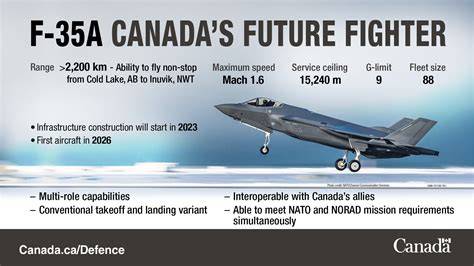
The Royal Canadian Air Force urgently needs a replacement for its aging CF-188 Hornet fleet. The F-35 offers the stealth, range, and interoperability required for missions involving both NATO and North American Aerospace Defense Command commitments.
However, Canada has also explored alternatives such as the Saab JAS 39 Gripen E, which offers greater industrial participation and potential technology-sharing advantages.
Canada’s involvement with future-generation fighter discussions, including interest in the GCAP program, has further complicated the decision.
The problem is timing. Next-generation aircraft are unlikely to enter service until the 2040s, while Canada needs a replacement fighter much sooner.
This makes the F-35 difficult to abandon completely. Even if Canada reduces its final purchase number, the aircraft remains the most realistic near-term option.
The United Kingdom Reduces Its F-35 Ambitions
The United Kingdom remains one of the strongest supporters of the F-35, but even London has adjusted its plans.
The Royal Air Force and Royal Navy originally discussed acquiring up to 138 F-35 aircraft. However, the UK now expects a smaller fleet of approximately 75 aircraft.
The reduction does not represent a loss of confidence in the fighter. Instead, it reflects a strategic shift toward developing future combat aircraft.
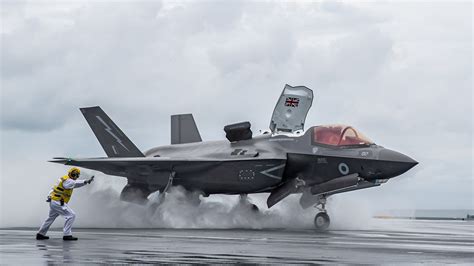
The UK is investing heavily in the Global Combat Air Programme, also known as Tempest, which aims to produce a sixth-generation fighter by the mid-2030s.
By limiting additional F-35 purchases, Britain can preserve funding for domestic aerospace capabilities while still maintaining a powerful fifth-generation fleet.
The F-35 remains essential for carrier operations and NATO missions, but the UK increasingly sees it as a bridge toward future air combat technology rather than the final answer.
Switzerland Reduces Its F-35 Order After Cost Disputes
Switzerland’s relationship with the F-35 became complicated after disagreements over defense costs and supply arrangements.
The country originally planned to purchase 36 F-35A fighters, but increasing expenses led to a reduction toward approximately 30 aircraft.
Switzerland’s concerns were not focused on the aircraft’s combat capability. Instead, the debate centered around financial predictability and maintaining flexibility.
The Swiss government has explored the possibility of combining F-35 aircraft with other defense systems, including drones and additional European platforms.
The country’s approach reflects a growing trend among smaller nations: using the F-35 as a high-end capability while avoiding complete dependence on a single platform.
Australia Chooses Weapons Over More F-35s
Australia has perhaps taken the most pragmatic approach. The Royal Australian Air Force originally planned to acquire 100 F-35A fighters but ultimately stopped at 72 aircraft.
Rather than buying additional aircraft, Canberra redirected funding toward long-range missiles, advanced weapons, and other strategic capabilities.
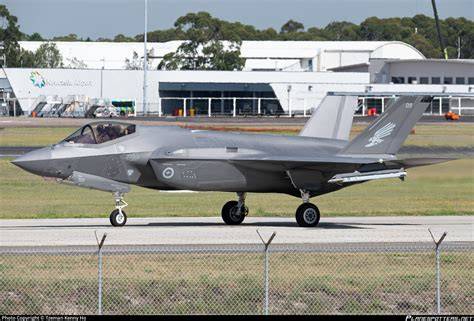
The reasoning is based on modern warfare lessons. A smaller number of highly capable aircraft equipped with advanced weapons may provide greater strategic value than simply increasing fleet numbers.
Australia will continue operating its F/A-18F Super Hornets and EA-18G Growlers alongside the F-35 fleet, creating a mixed force structure.
This approach reflects a broader shift in military thinking. Air power is no longer measured only by aircraft numbers. Sensors, weapons, electronic warfare, and network integration have become equally important.
Why Most Countries Still Choose the F-35
Despite the criticism, the majority of F-35 operators continue expanding or maintaining their fleets because alternatives remain limited.
The aircraft provides several advantages that are difficult to replace. Its stealth design allows it to operate in heavily defended environments. Its sensor fusion gives pilots unprecedented battlefield awareness. Its global support network reduces logistical challenges for allied nations.
For NATO members especially, interoperability is a major factor. Operating the same aircraft as key allies simplifies training, intelligence sharing, and combined operations.
European fighters such as the Eurofighter Typhoon, Dassault Rafale, and Saab Gripen remain highly capable, but they generally do not offer the same combination of stealth, sensors, and alliance integration.
The F-35 also benefits from scale. With thousands of aircraft expected to serve worldwide, operators gain access to continuous upgrades and a large international maintenance ecosystem.
The F-35’s Future After the 2026 Reassessment
The F-35 program in 2026 is entering a new phase. The era of unlimited expansion appears to be ending, but widespread abandonment is unlikely.
Countries are becoming more selective. They are questioning fleet sizes, negotiating costs, and demanding greater industrial benefits. However, most governments still recognize that the F-35 provides capabilities that no immediate alternative can fully match.
The future fighter market will likely become more diverse. Fifth-generation aircraft such as the F-35 will operate alongside sixth-generation programs, advanced drones, and upgraded legacy fighters.
The debate surrounding the Lightning II is therefore not about whether the aircraft has failed. Instead, it reflects a changing defense environment where nations must balance capability, independence, affordability, and strategic relationships.
In 2026, many countries have reconsidered the F-35. Yet most still choose it because, despite its political and financial challenges, it remains the most complete combat aircraft available to allied air forces today.