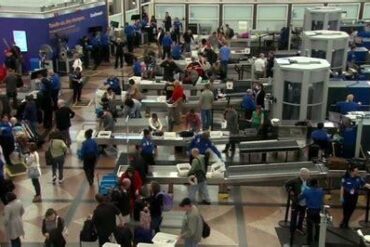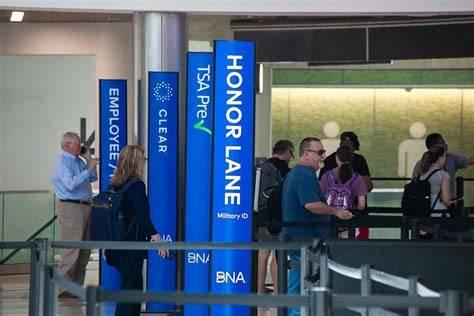
The Transportation Security Administration (TSA) has expanded a special airport security benefit for current military service members, veterans, and their families, introducing dedicated “Honor Lanes” at 33 U.S. airports. The initiative is designed to provide eligible travelers with faster access through TSA checkpoints, adding another travel convenience for members of the armed forces community.
The new lanes are part of the TSA’s broader effort to recognize military service while making the airport experience easier for those who have served or are currently serving. Importantly, eligible travelers do not have to be wearing a uniform to use the dedicated lanes. Instead, they can establish their eligibility by presenting an appropriate military or veteran identification document.
For travelers at airports where a dedicated Honor Lane is not available, the TSA has also provided an alternative. Eligible military personnel and veterans can present a valid military or veteran ID to the checkpoint lane monitor and request front-of-the-line service. That means the program extends beyond the 33 airports with dedicated facilities, although the exact experience can depend on the airport’s checkpoint configuration and staffing.
TSA Honor Lanes Expand Military Travel Benefits
The Honor Lane program is not entirely new. It builds on the TSA’s earlier “Serve with Honor, Travel with Ease” initiative, which expanded travel benefits for military families. In July 2025, Gold Star families received free TSA PreCheck access under that broader effort, establishing a precedent for providing additional airport-security assistance to members of the military community.
The latest expansion extends special treatment to a wider group of current and former service members and their families. At participating airports, the dedicated lanes are intended to make the security process more straightforward, particularly during periods when conventional TSA checkpoints are crowded.
The identification requirements are important because eligibility does not simply depend on appearance or whether a traveler is currently on active duty. The TSA states that certain veteran documents can provide immediate access, while other documents may establish veteran status but need to be presented together with another acceptable form of identification. Travelers therefore need to understand which documentation they have before arriving at the checkpoint.
Military Passengers Do Not Need To Wear Uniforms
One notable feature of the program is that military travelers do not have to be in uniform to use an Honor Lane. A valid military or veteran ID is the key to establishing eligibility.
That distinction makes the program useful for a much broader range of travel. Service members may be traveling for personal reasons, veterans may be flying for business or leisure, and military families may be traveling together without any connection to official duties. The TSA’s policy recognizes the status of the traveler rather than requiring a particular type of trip.
At airports without a dedicated lane, the TSA says eligible passengers can show their military or veteran identification to the lane monitor for priority service. This approach allows the benefit to operate even where an airport does not have enough physical space or checkpoint capacity to establish a separate lane.
Could Honor Lanes Create Longer TSA Lines?
The expansion also raises a practical question for travelers who are not eligible for the program: could faster processing for military passengers create longer waits elsewhere?
The answer depends heavily on how airports manage their checkpoint capacity. A dedicated lane does not necessarily mean that every military passenger is removed from an existing line at a one-for-one rate, nor does it automatically mean that ordinary travelers will face longer waits. The actual effect can vary according to passenger volumes, staffing, checkpoint layouts, and the number of eligible military travelers using the benefit at a particular time.
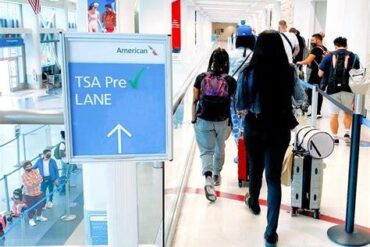
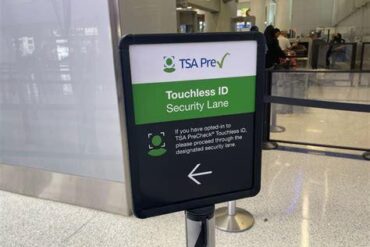
There is also a separate issue involving TSA PreCheck. Military personnel with PreCheck have historically been able to receive priority treatment that can create an unusual situation when they arrive behind other PreCheck passengers. A dedicated military lane can separate these travelers from the standard PreCheck flow, potentially reducing that particular source of friction.
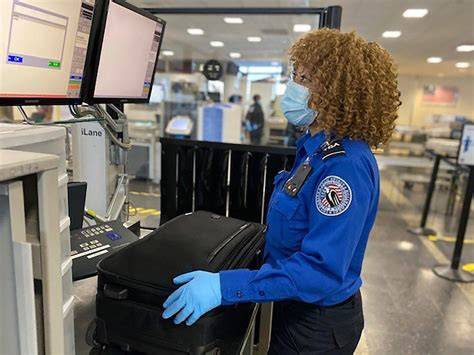
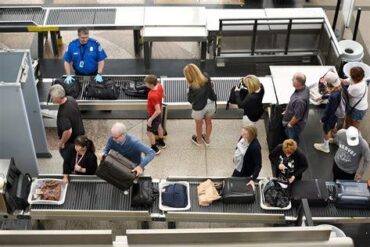
For regular passengers, however, the concern is understandable. Any additional priority category has to be accommodated within a security system that already experiences significant demand at major airports. If staffing or physical checkpoint capacity remains unchanged, moving one group through more quickly does not necessarily increase the total number of passengers that can be screened at the same time.
Where TSA Honor Lanes Are Available
The 33 participating airports cover a broad geographic area, including major international hubs, large domestic airports, and smaller facilities. Among the larger airports listed for the program are Atlanta, Charlotte, Denver, Detroit, Honolulu, Los Angeles, Miami, Seattle, Anchorage, Las Vegas, and Tampa.
Other participating airports include Cleveland, Columbus, Fort Lauderdale, Fort Myers, Nashville, Oklahoma City, Raleigh-Durham, San Antonio, San Diego, and St. Louis. Smaller airports receiving dedicated lanes include Albany, Albuquerque, Birmingham, Boise, Casper, El Paso, Jackson, Little Rock, and Sioux Falls.
Phoenix is also included, although the available information identifies its Honor Lane access as active-duty only, making it an exception to the broader eligibility structure.
What Honor Lanes Mean for the TSA Experience
The TSA’s Honor Lane expansion represents another effort to recognize the military community within the U.S. transportation system. For eligible travelers, the practical benefit is straightforward: less time spent waiting at airport security checkpoints and a clearer process for receiving priority treatment.
For everyone else, the impact is less certain and will depend largely on airport operations. Dedicated lanes could separate military travelers from other priority-processing systems and reduce conflicts within TSA PreCheck, but they also introduce another layer of priority processing into an already complex checkpoint environment.
Ultimately, the success of the program will be measured not simply by how quickly eligible military travelers move through security, but by how effectively participating airports maintain reasonable processing times for the wider traveling public. The TSA has now placed the infrastructure in more than 30 airports, giving travelers a new airport-security benefit while leaving the operational question of its broader effect to be answered at the checkpoint.