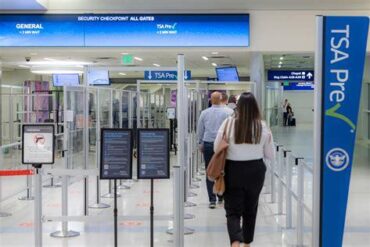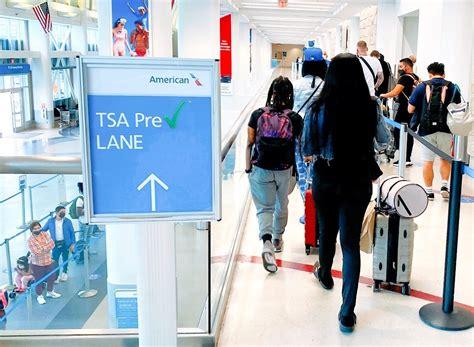
The fast lane has gone dark. As of 06:00 AM Eastern Time on Sunday, February 22, the United States Department of Homeland Security (DHS) has suspended the use of TSA PreCheck and Global Entry lanes at airports across the country. The decision follows a funding lapse tied to a political standoff over immigration enforcement reforms, pushing the agency into a partial shutdown and forcing millions of trusted travelers back into standard screening lines.
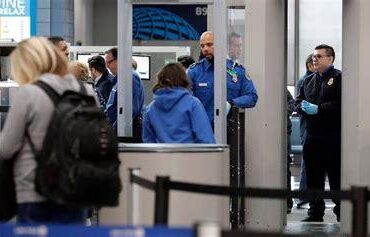
For passengers accustomed to keeping their shoes on and laptops tucked neatly inside carry-ons, the abrupt change has been jarring. With little advance notice, eligible members of both programs arrived at airports to find the expedited lanes closed, signage removed, and officers redirecting them toward general security checkpoints. The immediate effect has been longer wait times, tighter departure windows, and rising anxiety at already crowded terminals.
The suspension lands at a sensitive moment for the aviation industry. Spring break travel is approaching, and demand is climbing. Airports that depend on predictable passenger flow now face bottlenecks that ripple outward—into gate operations, crew scheduling, and aircraft turnaround times. A fast lane is not merely a convenience; it is a structural component of airport efficiency.
DHS Funding Lapse Triggers Nationwide Program Suspension
The DHS partial shutdown began last week after lawmakers failed to secure an agreement on immigration policy and enforcement measures. Without sufficient appropriations, the department initiated a suspension of nonessential services, and that now includes the dedicated lanes for TSA PreCheck and Global Entry.
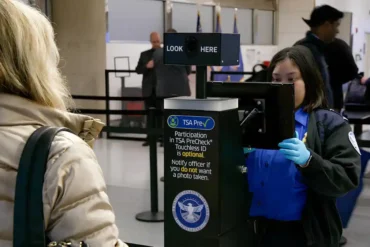
These programs, designed to streamline security and border processing for pre-vetted travelers, collectively serve tens of millions. Reports indicate there are more than 20 million active PreCheck members and over 40 million Global Entry participants. Each of these individuals has undergone background screening, biometric enrollment, and identity verification. Yet under current constraints, their trusted status offers no procedural advantage at airport checkpoints.
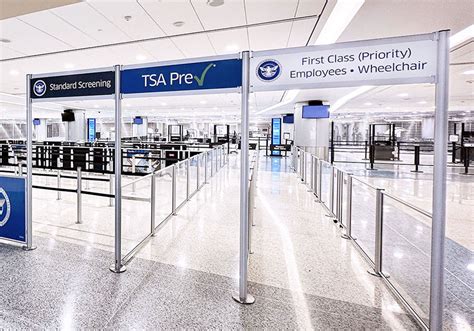
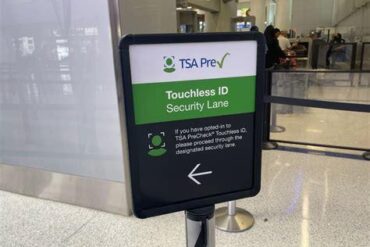
The optics are striking. Blue PreCheck placards hang unused while standard lanes stretch in zigzag lines across terminal floors. The policy shift underscores a larger reality: when federal funding stalls, even high-profile, revenue-generating programs can grind to a halt.
Airlines Warn of Operational Fallout
Airlines have responded with visible concern. Industry representatives argue that suspending expedited screening undermines both passenger experience and operational stability. During previous government shutdowns, aviation stakeholders witnessed firsthand how federal workforce disruptions cascade through the system.
Data from the 43-day government shutdown in the fall of 2025 paints a stark picture. More than 9,000 flights were delayed or canceled, affecting over six million passengers. Industry losses were estimated at approximately $6.1 billion. At that time, staffing challenges impacted both Air Traffic Controllers and Transportation Security Administration (TSA) officers, creating systemic delays.
In the current scenario, roughly 50,000 essential TSA officers continue working without pay during the funding lapse. While security screening itself remains operational, the absence of fast-track lanes compresses throughput capacity. When wait times expand unpredictably, airlines are forced to hold departures, rebook missed connections, and absorb accommodation costs. Efficiency in aviation is a finely tuned ecosystem; remove one gear, and the mechanism shudders.
What the Suspension Means for Travelers
For travelers, the immediate implication is simple but consequential: plan for significantly longer security lines. PreCheck and Global Entry were built around the principle of risk-based screening—allocating resources toward unknown or higher-risk passengers while expediting those already vetted. With that differentiation paused, the entire passenger population is funneled into uniform screening procedures.
This shift does not eliminate security; it redistributes time. Laptops must come out. Liquids must be separated. Shoes may need to be removed. Multiply those small frictions by millions of passengers, and the cumulative effect becomes measurable in hours.
Airports vary widely in layout and passenger volume, so the precise impact differs by location. Major hubs with high business travel density—where PreCheck usage is substantial—are likely to feel the strain most acutely. Secondary airports may experience moderate slowdowns but remain manageable if passenger loads are lighter.
Economic and Border Security Implications
Beyond the terminal walls, the suspension raises broader concerns about border management and federal workforce morale. Global Entry, in particular, plays a dual role: it expedites returning travelers while supporting structured, biometric-based entry processing. When that pathway is suspended, arriving passengers are processed through standard customs lines, increasing congestion at international gateways.
Longer processing times can create secondary effects. Aircraft may remain at gates longer, limiting availability for outbound departures. International carriers must recalibrate turnaround schedules. Even cargo operations can feel indirect pressure when airport infrastructure is stretched.
Financially, the stakes are high. Aviation contributes hundreds of billions of dollars annually to the U.S. economy. A prolonged disruption during peak travel seasons risks dampening consumer confidence and constraining capacity at a time when airlines are balancing fuel costs, labor agreements, and fleet utilization strategies.
Short-Term Mitigation and Policy Pressure
In the absence of immediate congressional resolution, mitigation options remain limited. Travelers are advised to arrive at airports earlier than usual, potentially adding one to two hours to standard recommendations depending on departure time and airport size. Airlines are updating digital notifications and encouraging proactive itinerary management.
During a prior shutdown, Denver International Airport explored an unusual proposal: temporarily covering wages for federal screening staff to maintain operational continuity. Though not implemented, the concept illustrated how local stakeholders may seek creative, legally permissible avenues to prevent systemic disruption. Whether similar proposals reemerge depends on the duration of the current funding lapse.
Ultimately, the restoration of TSA PreCheck and Global Entry hinges on legislative agreement. These programs were designed as efficiency multipliers within a vast security apparatus. Their suspension demonstrates how tightly interwoven federal policy, airport logistics, and passenger experience have become.
The fast lane’s closure is more than an inconvenience. It is a visible reminder that aviation infrastructure rests not only on runways and radar systems, but on political decisions made far from the departure gate.