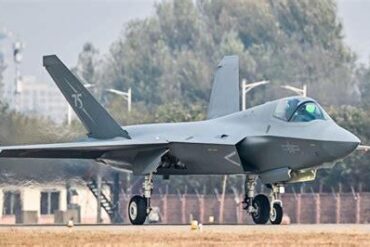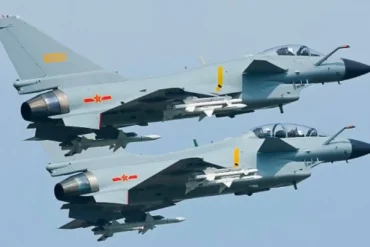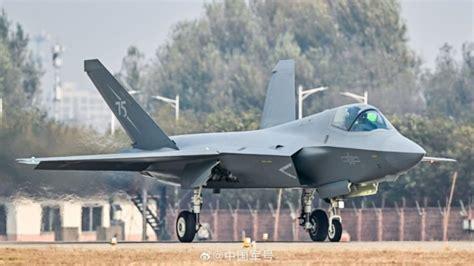
China has reportedly inducted the J-35A stealth fighter into active service with the People’s Liberation Army Air Force (PLAAF), a milestone that makes it the second country in the world, after the United States, to operate two fifth-generation stealth aircraft. Though the Chinese government has not formally confirmed the operational status, military observers and aviation analysts have cited high-resolution images showing the J-35A flying in formation alongside other advanced platforms such as the J-20 stealth fighter and the J-16D electronic warfare aircraft.
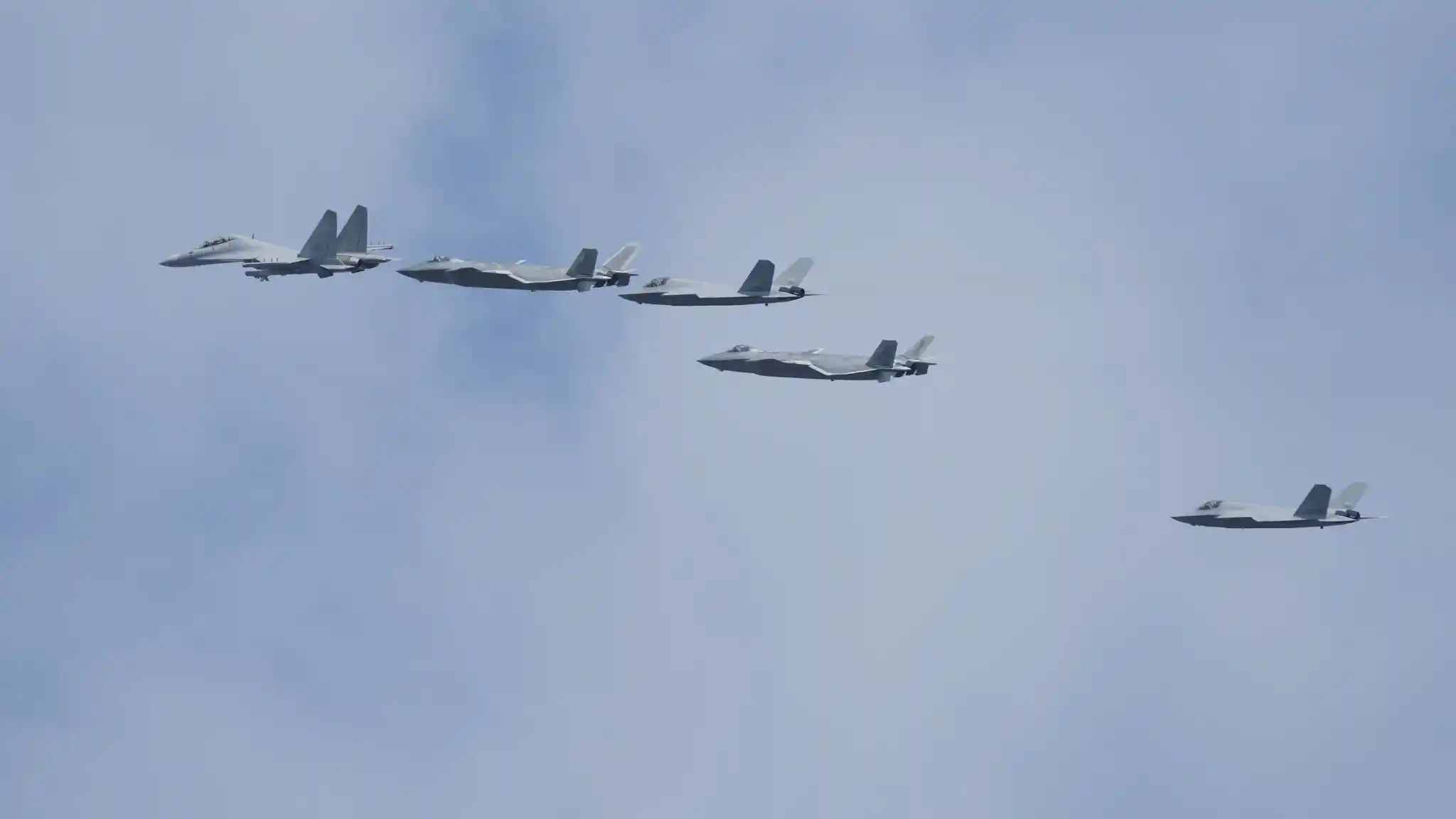
Photographs circulating on Chinese social media platforms and reposted by prominent aviation researchers—most notably Andreas Rupprecht, a well-known expert on Chinese military aviation—reveal J-35As bearing serial numbers 61820 and 61821, suggesting active deployment within the 1st Aviation Brigade under the Northern Theatre Command (NTC). The location of the NTC, which covers the northeastern edge of China and borders the Korean Peninsula, adds strategic weight to the aircraft’s deployment.
The Rise of the J-35A: A Stealth Asset Beyond the Navy
The J-35A, also known by its export designation FC-31 Gyrfalcon, was originally developed for carrier operations. Its induction into the PLAAF in a land-based configuration represents a pivotal shift in China’s military aviation doctrine. Until now, the J-15, a carrier-borne derivative of the Soviet-era Su-33, had been the primary fixed-wing naval aircraft for China’s aircraft carriers. However, the J-15’s dated design and limitations prompted China to expedite the development of the J-35 series, with the carrier version slated for deployment aboard the Fujian-class aircraft carrier, expected to be commissioned later this year.
Two Fifth-Generation Fighters: A New Era for the PLAAF
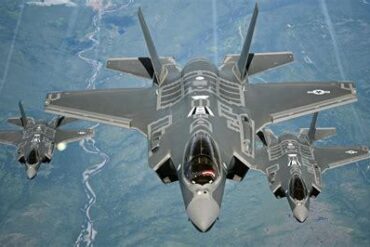
With the J-20 already in active service, the addition of the J-35A provides the PLAAF with unprecedented tactical flexibility. Where the J-20 is a heavyweight stealth interceptor optimized for air superiority, the J-35A is a medium-weight multirole platform, more comparable in concept and configuration to the American F-35 Lightning II.
The J-35A adopts a tailplane wing configuration, contrasting with the canard layout of the J-20. This design suggests its emphasis on maneuverability, reduced radar cross-section (RCS), and potentially shorter takeoff capabilities. While full technical specifications remain classified, visible features include:
- Forward-hinged canopy
- Electro-Optical Targeting System (EOTS) similar to that on the F-35
- Absence of a nose pitot tube, indicating advanced internal avionics
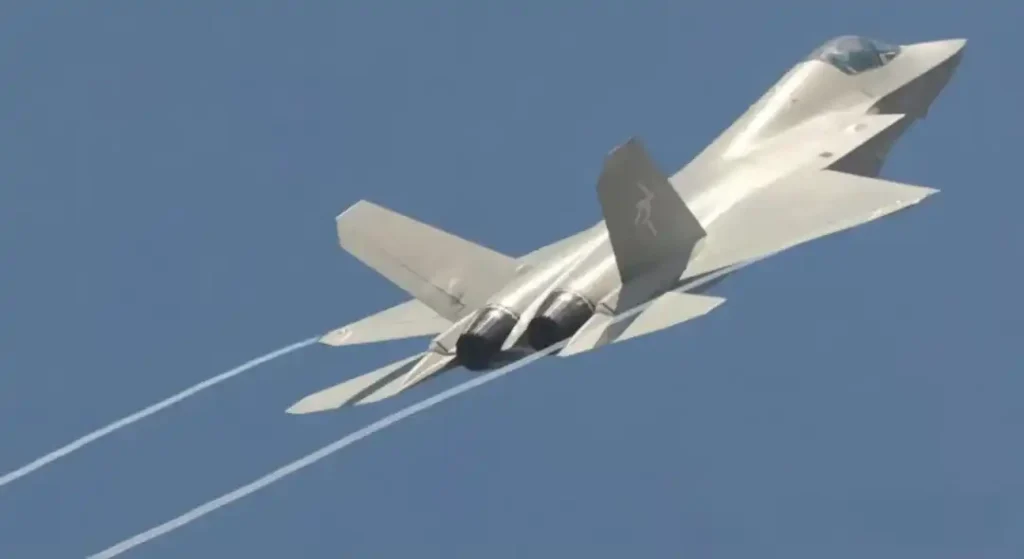
These elements underscore China’s intention to develop a true multirole stealth asset capable of executing precision strikes, electronic warfare support, and air defense suppression missions.
U.S. Military on Alert: F-35 Clone or Combat Equal?
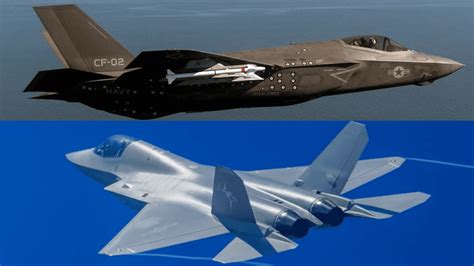
Western defense analysts have repeatedly highlighted the visual and aerodynamic similarities between the J-35A and the F-35, raising concerns about potential reverse-engineering or cyber espionage. U.S. Air Force Chief of Staff Gen. David W. Allvin remarked that the design “clearly resembles” the F-35, though he cautioned against drawing direct parallels in performance and capability.
“It’s still fairly new. But, yes, it’s pretty clear; you could put it side-by-side and see, at least, where we believe they got their blueprints from, if you will,” he said.
Despite its apparent resemblance, the J-35A features twin engines compared to the single-engine layout of the F-35, potentially offering higher thrust-to-weight ratio, greater redundancy, and extended range. However, without publicly available data on its radar systems, infrared sensors, and electronic countermeasures, it remains speculative to equate it with the combat-tested F-35.
Strategic Deployment: What the Induction Means for Indo-Pacific Security
The timing and location of the J-35A’s apparent induction are strategically significant. The Northern Theatre Command not only borders North Korea but also oversees operations in the Yellow Sea and Bohai Gulf, key maritime gateways near Beijing and Tianjin. With increased U.S. reconnaissance flights, growing Japan-U.S. military coordination, and tensions across the Taiwan Strait, the addition of a second stealth platform enables China to project power more effectively across contested airspace.
Moreover, this comes ahead of China’s upcoming military parade on September 3, which will mark the 80th anniversary of its WWII victory. Observers speculate that the flypast featuring J-35As, J-20As, J-20S (twin-seaters), and perhaps even the carrier variant of the J-35 will serve both domestic propaganda and international signaling purposes.
Pakistan’s On-and-Off Relationship with the FC-31
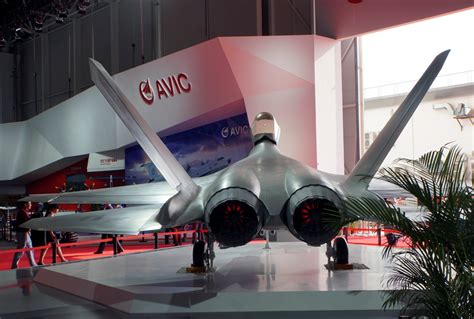
While the export version of the J-35A—the FC-31—was initially linked to a major procurement deal by Pakistan, that narrative now seems to be unraveling. Pakistan’s Defense Minister Khawaja Asif recently refuted claims about the acquisition, describing the reports as “media hype” aimed at boosting Chinese defense exports.
“We are not buying them. I think it’s only the media… It’s good for Chinese Defense sales,” Asif told Arab News.
This statement directly contradicts earlier declarations by anonymous Pakistani officials cited by defense outlet Jane’s, who had confidently stated that the FC-31 deliveries would begin within months, and that Pakistani pilots were already in China for training. The FC-31 was also rumored to be integrated with China’s long-range PL-17 air-to-air missile, boasting a staggering 400-kilometer engagement range.
The abrupt reversal raises questions about Islamabad’s procurement strategy, potentially influenced by domestic political shifts, budgetary limitations, or external pressures, including from the United States. Nevertheless, Pakistan remains one of the most likely foreign customers for the FC-31 platform, should it overcome its current hurdles.
Challenges and Capabilities: Is the J-35A Ready for Prime Time?
Despite the enthusiastic reception from Chinese military enthusiasts, several questions remain unanswered. These include:
- What type of engines power the current J-35A variant? China’s reliance on Russian AL-31 engines in past fighters has been a technological bottleneck.
- What is the actual radar cross-section (RCS) of the J-35A, and how does it compare to the F-35?
- Has the aircraft been integrated into network-centric warfare systems, allowing real-time data fusion with other PLAAF and PLAN assets?
The J-35A’s large internal weapons bay suggests that future variants may accommodate precision-guided munitions, possibly including next-generation air-to-surface missiles or glide bombs. However, until more field data or official specifications emerge, any assumptions about its combat readiness should be approached with caution.
The Bigger Picture: China’s Stealth Jet Ecosystem
With the simultaneous development and deployment of the J-20, J-20S, J-16D, and now the J-35A, China is rapidly building a stealth-enabled force architecture that spans multiple roles—from air dominance to electronic warfare and carrier-based operations.
This ecosystem mirrors the U.S. Air Force and Navy’s combined F-22/F-35 strategy, albeit still trailing in combat maturity, global logistics, and coalition warfare integration. Nevertheless, China’s rapid advances are reshaping the strategic balance in East Asia, forcing neighboring powers such as India, Japan, and South Korea to reassess their aerial capabilities and alliances.
Conclusion: A Shadow Grows Over the Indo-Pacific
The alleged induction of the J-35A into PLAAF service is more than a technological achievement—it is a geopolitical signal. By becoming the only other nation besides the United States to field two fifth-generation stealth aircraft, China is asserting its ambition to achieve air superiority dominance in the Indo-Pacific theater.
While the true extent of the J-35A’s capabilities remains to be validated, its operational presence adds another layer of complexity to the region’s already volatile airpower dynamics. Whether the J-35A emerges as a genuine combat game-changer or merely a technological stepping stone will be revealed in the coming years of deployment, training, and potential confrontation.
Until then, the skies over Asia have grown darker—and stealthier.