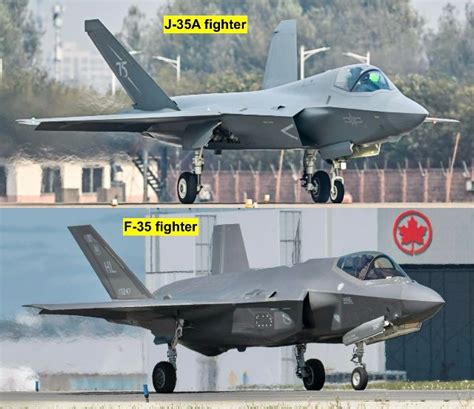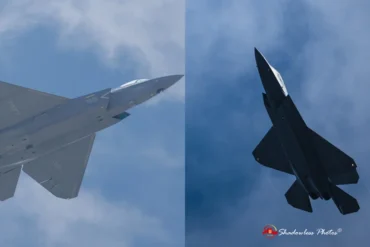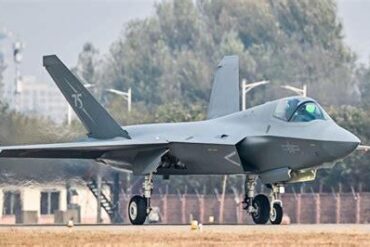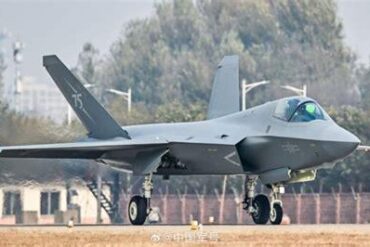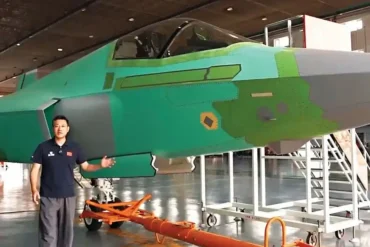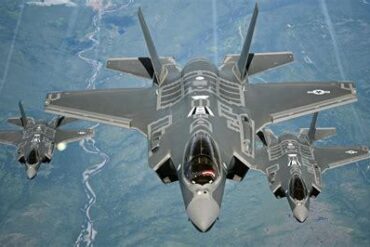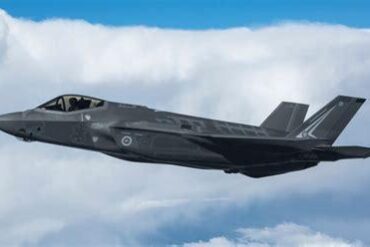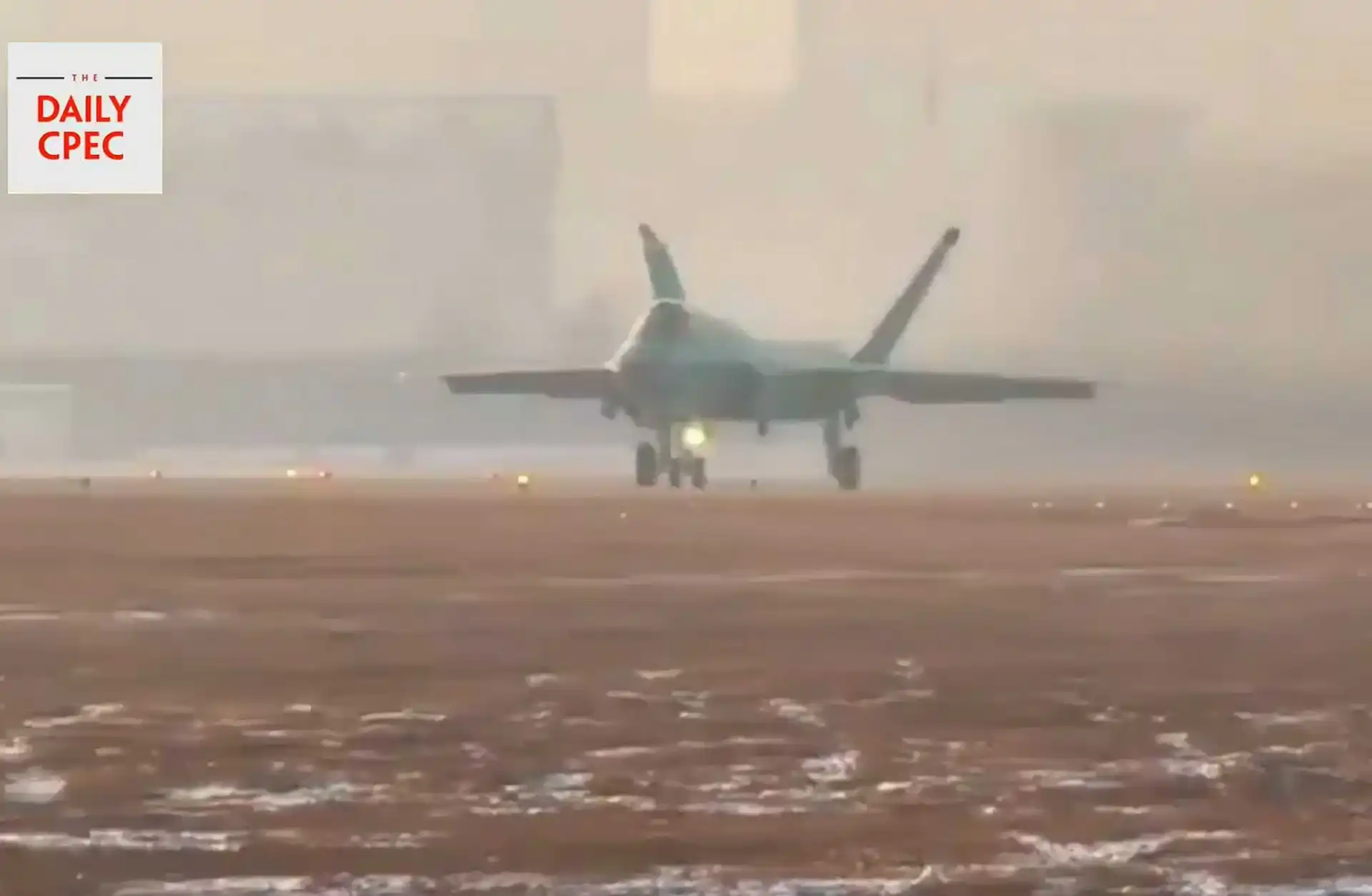
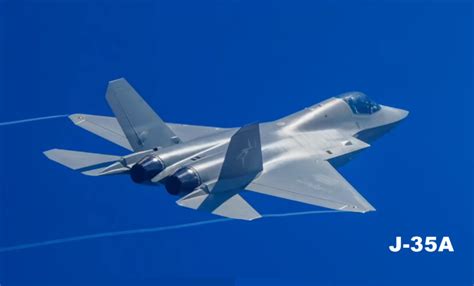
China’s stealth aviation ambitions reached a pivotal milestone as two production-standard Shenyang J-35A fifth-generation stealth fighter jets were filmed conducting a joint test flight near the Shenyang Aircraft Corporation facility in Liaoning Province. This rare visual confirmation, published on January 7, 2026, represents the strongest evidence yet that the J-35A has transitioned from prototype stage to full serial production, a major leap for the People’s Liberation Army Air Force (PLAAF) and China’s broader military aviation capabilities.
The Rise of China’s Fifth-Generation Tactical Power
The J-35A, a land-based evolution of the carrier-focused J-35, emerges as a central component in China’s fifth-generation fighter roadmap. Unlike its naval sibling tailored for aircraft carrier operations under the People’s Liberation Army Navy (PLAN), the J-35A omits reinforced landing gear and catapult compatibility. This design streamlining results in a lighter airframe, increased internal fuel storage, and enhanced maneuverability—ideal for high-frequency sorties from ground bases.
Originating from the FC-31 “Gyrfalcon” stealth demonstrator, the airframe has undergone extensive transformation since its first flight in 2012. The FC-31, once pitched as an export fighter, was folded into state-sponsored development programs. By 2021, the first J-35A prototype flew, and by mid-2023, observers reported sightings of production-standard airframes. The aircraft filmed in early January 2026 represent the most advanced and operationally mature version seen to date.
Engineering Sophistication: The J-35A’s Design and Capabilities
The J-35A is a twin-engine multirole stealth fighter engineered for complex mission profiles in high-threat airspaces. Internally housed weapon bays preserve its low-observable signature, while diverterless supersonic inlets, radar-absorbent coatings, and meticulously sculpted angles reduce radar cross-section. These features collectively enable the aircraft to penetrate defended airspace undetected.
Its sensor suite includes an Active Electronically Scanned Array (AESA) radar, advanced electro-optical targeting systems, and secure multi-band data links. These capabilities allow the aircraft to execute sensor fusion and joint target engagement across networks of air, land, and maritime platforms.
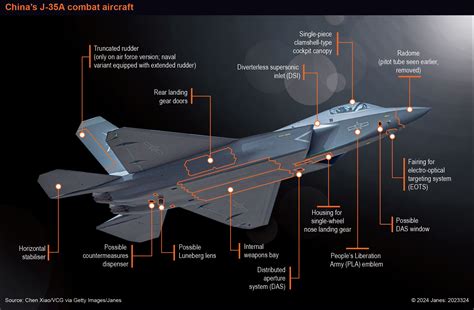
In contrast to the heavier Chengdu J-20, which serves roles in long-range interception and electronic warfare, the J-35A is designed for tactical agility, air superiority, and surgical strike missions. It’s optimized for rapid turnaround and deployment in theater-level operations. The current propulsion is provided by upgraded Russian RD-93 engines, but China’s WS-19 indigenous engine is in advanced testing stages, promising future boosts in thrust and operational independence.
Serial Production Confirmed: Joint Test Flight Signals Readiness
The two-aircraft formation captured on video wasn’t just a show of force—it was a declaration of readiness. Coordinated test flights of this nature are designed to validate aerodynamic harmony, avionics interoperability, and low observability in formation. The synchronized maneuvers indicate that the J-35A is rapidly progressing through final test phases toward Initial Operational Capability (IOC), which analysts expect by late 2026.
This development mirrors a broader pattern: China’s accelerating shift from experimental designs to deployable systems. The PLAAF’s specialized operational test unit, which began limited evaluation of the J-35A in late 2024, has been instrumental in simulating high-threat combat environments. The ultimate goal is seamless integration into combat squadrons by 2027.
Strategic Context: Expanding Influence in the Indo-Pacific
The operationalization of the J-35A carries profound strategic implications. As tensions simmer in the Taiwan Strait, East China Sea, and South China Sea, the PLAAF’s ability to deploy stealth fighters in volume is reshaping regional deterrence dynamics. The J-35A’s combination of survivability, payload flexibility, and electronic sophistication empowers it to execute a variety of missions:
- Deep-penetration strikes on hardened or time-sensitive targets
- Air defense suppression within contested zones
- Tactical support for amphibious or rapid deployment forces
Such versatility extends China’s reach well into the first and second island chains, offering credible deterrence and first-strike capabilities against technologically advanced adversaries.
Parallel Naval Development: Carrier-Based J-35 Takes Shape
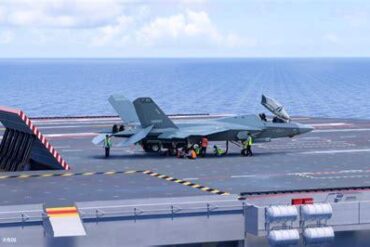
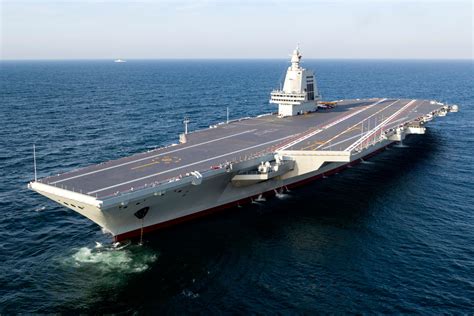
While the J-35A grabs headlines for its land-based progress, its sibling—the J-35 carrier variant—is advancing in tandem. Designed for integration with the Type 003 aircraft carrier Fujian, which boasts a CATOBAR (Catapult Assisted Take-Off But Arrested Recovery) system, the naval J-35 variant has already cleared static launch system compatibility tests. Flight trials are anticipated to ramp up throughout 2025 and 2026 during Fujian’s sea trial phase.
This dual-platform approach mirrors the United States’ strategy of deploying both F-22 Raptors and F-35s across land and sea, enabling operational synergy and strategic flexibility. China’s iteration, however, reflects its specific geographic imperatives—dominating its near seas while extending influence across maritime Asia.
Industrial Maturity: A New Chapter in Chinese Aerospace
Perhaps the most notable takeaway from the January 2026 footage is what it implies about China’s aerospace industrial base. Moving from single prototype flights to dual-aircraft testing signifies a leap in production capacity, logistical coordination, and avionics integration. It confirms that China can now sustain multiple fifth-generation aircraft lines—a distinction previously held solely by the United States.
This industrial evolution is not merely symbolic. It signals China’s readiness to engage in prolonged, high-tempo air campaigns supported by scalable stealth production. Given the pace of J-35A development, additional variants—optimized for electronic warfare, reconnaissance, or loyal wingman roles—may soon follow.
Global Reactions and Outlook
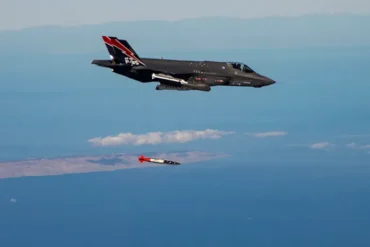
Western defense circles are watching closely. The United States and its Indo-Pacific allies have long dominated fifth-generation capabilities, but the J-35A’s emergence alters the calculus. While China’s fighters have yet to match the full suite of combat-proven features seen in the F-35 Lightning II, the technological gap is narrowing fast.
Military planners must now account for stealth parity in future operational scenarios. More importantly, the dual-track strategy—J-35A for the PLAAF and J-35 for the PLAN—ensures that China’s stealth airpower is not only operational but adaptable across warfare domains.
Conclusion: From Aspiration to Acceleration
The twin-aircraft test flight marks a defining moment in China’s aerospace narrative. What was once speculative has now become tangible. The J-35A’s shift from prototype to production, backed by industrial strength and strategic clarity, reveals a nation that has closed the fifth-generation gap in record time.
With IOC expected before the end of 2026 and deployment on the horizon, the J-35A is no longer just a symbol of ambition—it is a reality poised to transform regional air superiority balances and challenge established aerial dominance.