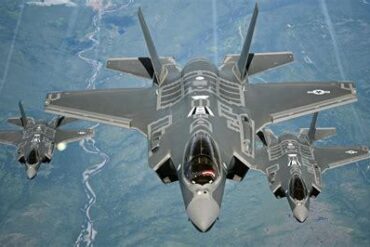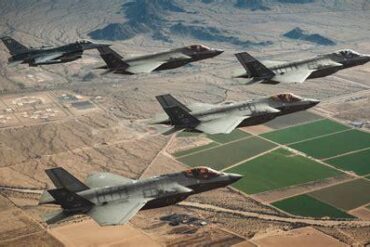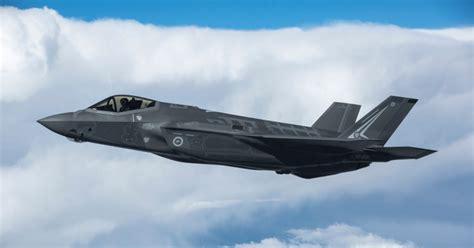
The decision by the U.S. Air Force to cut its planned 2026 procurement of Lockheed Martin F-35A Lightning II fighters nearly in half marks one of the most significant setbacks in the history of the Joint Strike Fighter program. Instead of continuing its traditional acquisition pace of roughly 48 aircraft annually, the Air Force intends to procure only 24 F-35As, a move that has sent shockwaves through the global defense industry.
Far from being a simple budget adjustment, the reduction reflects a deeper crisis involving software failures, delayed modernization, declining mission readiness, escalating costs, and growing concerns about whether the world’s premier stealth fighter can deliver the capabilities long promised to operators.
The procurement reduction represents a dramatic shift in Pentagon thinking. For years, the F-35 program was considered untouchable, a cornerstone of American airpower strategy and the centerpiece of allied air forces worldwide. Today, however, Air Force leaders are openly signaling that purchasing additional aircraft makes little sense if those jets cannot perform their intended combat missions.
The immediate culprit behind this unprecedented decision is the troubled Technical Refresh 3 (TR-3) modernization package and the broader Block Four upgrade program, both of which have suffered severe technical setbacks.
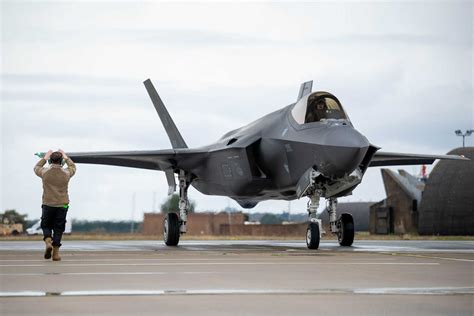
The TR-3 Upgrade Crisis That Forced the Air Force to Hit Pause
At the heart of the controversy lies Technical Refresh 3, commonly known as TR-3. The upgrade was designed to serve as the technological backbone for the F-35’s future evolution.
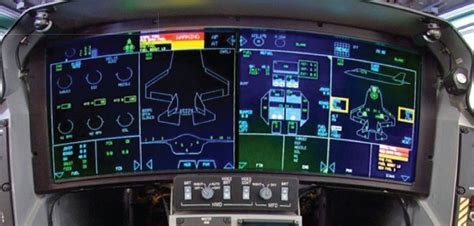
TR-3 introduces a vastly more powerful computing architecture featuring an advanced Integrated Core Processor, expanded memory capacity, enhanced cockpit displays, and the processing power necessary to support the ambitious Block Four modernization roadmap.
In theory, TR-3 would transform the F-35 into an entirely new class of combat aircraft.
In practice, it became a software nightmare.
Pentagon assessments revealed that early TR-3 software iterations were plagued by instability, crashes, memory leaks, and mission-system failures. Pilots experienced cockpit display freezes, sensor malfunctions, and unexpected system reboots during testing. Some aircraft delivered with preliminary TR-3 configurations reportedly provided little or no additional combat capability compared with earlier versions.
Even more troubling, software instability sometimes degraded aircraft performance rather than enhancing it.
The problems became so severe that the Department of Defense temporarily halted acceptance of newly produced aircraft. More than one hundred F-35s accumulated at production facilities awaiting software corrections, creating one of the largest delivery bottlenecks in the program’s history.
For Air Force officials already struggling with readiness issues across the existing fleet, continuing to purchase aircraft lacking full operational capability simply became untenable.
Why the Air Force Refused to Buy More Incomplete Jets
The Air Force’s procurement reduction reflects a straightforward operational reality: buying more aircraft that cannot fully fight does not improve combat power.
Mission-capable rates among Air Force F-35A squadrons have hovered near 51.5%, meaning nearly half the fleet is unavailable for combat operations at any given time.
This readiness shortfall stems from multiple factors, including:
- Persistent maintenance challenges.
- Spare-parts shortages.
- Software instability.
- Logistics system deficiencies.
- Extended depot maintenance timelines.
Adding additional incomplete aircraft to an already strained force structure would only compound existing problems.
Senior Air Force leaders increasingly favor a “pause-and-fix” strategy, prioritizing combat capability over sheer fleet numbers. Rather than accepting partially capable fighters that require extensive retrofits later, the service intends to wait until TR-3 achieves acceptable stability standards.
The Air Force currently projects that full Block Four functionality may not arrive until approximately 2031, years later than originally envisioned.
Such delays fundamentally undermine the service’s long-term force planning assumptions.
A Growing Divide Between the Air Force and the Navy
Interestingly, the Air Force’s cautious approach stands in stark contrast to the U.S. Navy’s strategy.
While the Air Force reduced purchases, the Navy effectively doubled down on sustaining F-35 production.
The difference reflects each service’s unique operational requirements.
Unlike the Air Force, which still operates large fleets of upgraded F-15 Eagles and F-16 Fighting Falcons, the Navy possesses far fewer alternatives for carrier-based stealth operations. The carrier-capable F-35C and the Marine Corps’ short-takeoff-and-vertical-landing F-35B remain essential for maintaining future naval airpower.
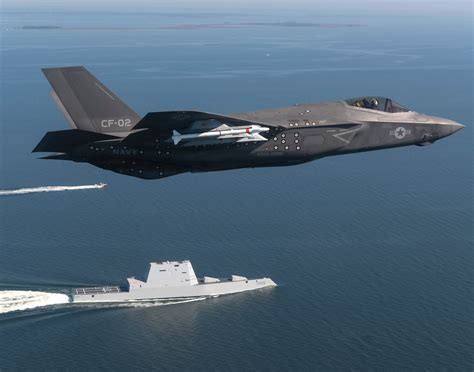
Consequently, the Navy has continued injecting substantial funding into the program.
The service recently awarded Lockheed Martin contracts approaching $1 billion to improve electronic warfare capabilities, sustain logistics architecture, and preserve production capacity. Navy officials recognize that a collapse in production rates could dramatically increase costs while disrupting future carrier air wing modernization.
Maintaining industrial momentum today ensures the production line remains viable once TR-3 stabilization efforts succeed.
The Navy is effectively paying to preserve the broader Joint Strike Fighter ecosystem.
Software Problems Are Affecting the Entire Global F-35 Enterprise
The F-35 was conceived as an international fighter program from its inception. More than twenty nations either operate or intend to operate the aircraft.
As a result, TR-3 difficulties extend far beyond American borders.
Every nation awaiting new aircraft has experienced delays.
Several countries have begun reevaluating their long-term procurement plans amid growing concerns regarding costs, delivery schedules, and future reliability.
Canada, which originally committed to purchasing 88 F-35As, has publicly considered reducing that figure substantially.
The United Kingdom, despite fielding operational F-35Bs aboard its aircraft carriers, appears increasingly hesitant to expand its planned fleet.
Portugal has chosen not to proceed with acquisition plans, while Spain has shown greater interest in alternative modernization paths.
Meanwhile, several European nations are accelerating investments in indigenous sixth-generation initiatives, including:
- Future Combat Air System (FCAS).
- Global Combat Air Programme (GCAP).
- Tempest.
These programs aim not merely to complement the F-35 but potentially reduce long-term dependence on American defense technology.
The Unexpected Impact on Ukraine’s Air War
One of the most significant downstream consequences of F-35 delays has emerged in Europe, particularly regarding military support for Ukraine.
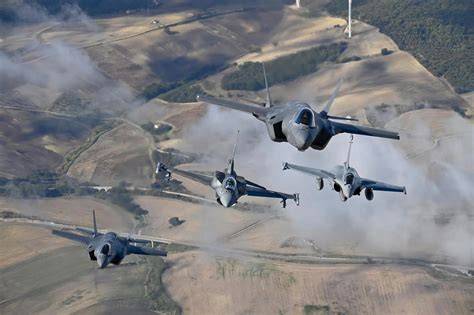
NATO’s strategy for transferring legacy F-16 fighters to Ukraine depended heavily upon allies receiving replacement F-35 aircraft on schedule.
The concept appeared simple.
As allied air forces introduced new F-35s, older F-16s would retire and subsequently transfer to Ukrainian service.
TR-3 disruptions shattered this timeline.
Because replacement F-35 deliveries slowed dramatically, many European operators found themselves unable to relinquish aging F-16 fleets without jeopardizing their own national defense obligations.
Belgium illustrates this challenge perfectly.
Brussels pledged thirty F-16s to Ukraine, yet delivery schedules have repeatedly slipped because delayed F-35 arrivals forced Belgian commanders to retain existing aircraft longer than anticipated.
Denmark faced similar difficulties while balancing NATO air policing commitments and Ukrainian support requirements.
Thus, software issues inside the F-35 program indirectly affected battlefield realities hundreds of miles away.
The Enormous Cost Problem Hanging Over the Program
Even without TR-3 difficulties, the F-35 program faces staggering financial pressures.
Current Pentagon estimates place total lifetime costs for acquiring, operating, and sustaining approximately 2,470 American F-35s at more than $2 trillion over the aircraft’s projected service life.
Development costs continue rising as modernization schedules slip.
Government oversight bodies have reported billions of dollars in additional expenditures associated with Block Four development alone.
Costs associated with software development, testing, integration, retrofits, and sustainment continue expanding.
This reality partly explains why the Pentagon initiated a comprehensive “Rebaseline and Descope” effort.
Rather than pursuing every originally envisioned capability simultaneously, officials are prioritizing only the most critical enhancements.
Initial plans included more than sixty major Block Four improvements.
That number has now been significantly reduced to focus on essential capabilities first.
Why Block Four Remains Vital Despite the Delays
Despite current challenges, the Air Force still considers Block Four indispensable.
The future battlespace envisioned by American planners depends heavily upon an upgraded F-35 serving as a networked command-and-control platform.
Under this concept, the fighter acts as a battlefield coordinator—or aerial quarterback—managing both manned aircraft and autonomous systems.
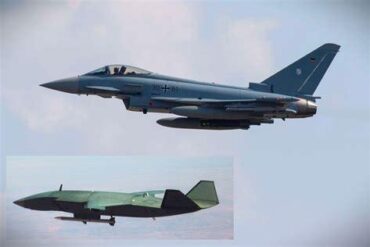
Future F-35s are expected to control fleets of Collaborative Combat Aircraft (CCA), uncrewed drones designed to accompany and support piloted fighters during combat operations.
Achieving that vision demands enormous processing power.
TR-3’s upgraded architecture exists specifically to enable such capabilities.
Unfortunately, those same computational demands created many of today’s software challenges.
Engineers discovered that integrating advanced electronic warfare functions, sensor fusion algorithms, data-sharing capabilities, and autonomous control systems placed unprecedented stress on onboard computing resources.
As software complexity increased, stability suffered.
Hardware Limitations Created Additional Bottlenecks
Software instability is only part of the story.
Several hardware deficiencies have also complicated modernization efforts.
Future Block Four capabilities require dramatically increased electrical power generation and thermal management capacity.
Existing systems struggle to support next-generation sensors and electronic warfare suites.
The upcoming AN/APG-85 Active Electronically Scanned Array radar, enhanced electronic attack systems, and expanded mission processing architecture all generate substantial heat loads.
Without major upgrades, the aircraft simply cannot support its future equipment.
To solve this issue, two critical modernization initiatives are underway:
- Pratt & Whitney’s Engine Core Upgrade.
- Honeywell’s enhanced Power and Thermal Management System.
Together, these improvements are intended to provide the electrical generation and cooling capacity necessary for full Block Four implementation.
However, neither solution is expected to reach complete operational maturity before the latter part of the decade.
Consequently, many advanced capabilities have already slipped beyond 2030.
The Recovery Plan Now Underway
Recognizing the seriousness of the situation, the Pentagon, Lockheed Martin, and international operators have launched an extensive recovery effort.
The strategy centers on stabilizing software, retrofitting existing aircraft, and restoring production flow.
Aircraft equipped with limited TR-3 software are increasingly being delivered primarily for training purposes while awaiting future upgrades.
Meanwhile, depot facilities across the United States are converting earlier TR-2 aircraft to full TR-3 standards.
Financial pressure also plays an important role.
The Pentagon has reportedly withheld millions of dollars per aircraft, releasing payments only after Lockheed Martin achieves specific performance milestones.
This approach seeks to align contractor incentives directly with software stability and combat readiness.
Marine Corps maintenance facilities have emerged as crucial elements of the global recovery effort.
By refining depot-level upgrade procedures, the Marines are effectively creating the blueprint that allied nations will eventually use to modernize their own fleets.
Recent production figures suggest progress is occurring. Lockheed Martin delivered a record number of aircraft during 2025, helping reduce the backlog and restore pilot training pipelines worldwide.
Nevertheless, substantial work remains.
The Bottom Line: Combat Capability Matters More Than Production Numbers
The Air Force’s decision to cut its 2026 F-35A purchase almost in half represents far more than a temporary procurement adjustment.
It is a powerful statement that combat readiness—not production volume—ultimately determines military value.
For decades, the Pentagon prioritized rapidly expanding the F-35 fleet. Today, the Air Force is signaling that quantity alone is insufficient if aircraft cannot reliably execute their missions.
Until TR-3 software stabilizes, Block Four capabilities mature, and critical power and cooling upgrades arrive, the service appears unwilling to resume traditional procurement rates.
The reduction to 24 aircraft should therefore be viewed not as a retreat from the F-35 program, but as an attempt to preserve its long-term viability.
If modernization efforts succeed, the F-35 could still emerge as the digitally connected, software-defined combat system originally envisioned.
If they fail, the consequences will extend far beyond the United States, reshaping allied airpower, global fighter markets, and the future of Western air dominance for decades to come.