The United States Navy is rapidly accelerating its integration of artificial intelligence (AI) into critical operations, reshaping decades-old shipbuilding workflows and catapulting military efficiency into the modern age. On December 9, 2025, Secretary of the Navy John Phelan revealed that the Navy would pour $448 million into expanding the capabilities of Shipbuilding Operating System (Ship OS)—a powerful AI platform developed in partnership with Palantir Technologies.
This announcement is not just another example of military modernization—it’s a signal of a transformational shift in defense logistics, one that promises to drastically cut labor hours, reduce costs, and reshape the very infrastructure of shipbuilding and maintenance across the U.S. Navy.
The AI System That Shattered Expectations
According to the Navy’s official press release, Ship OS is designed to pull together fragmented datasets from a multitude of existing sources to “identify bottlenecks, streamline engineering workflows, and support proactive risk mitigation.” The software platform, powered by Palantir’s AI, is already proving itself a game-changer in operational dry runs.
At Portsmouth Naval Shipyard, Ship OS reduced the material review process from several weeks to under one hour. Even more remarkably, a task handled by General Dynamics’ Electric Boat team—normally requiring 160 hours of manual labor for schedule planning—was completed in under 10 minutes using Ship OS. That staggering 99% reduction in time isn’t just an efficiency boost—it represents a reimagining of how work is done in one of the world’s most complex industrial environments.
The initial $448 million will be directed toward submarine builders and their suppliers, forming the bedrock of AI integration. The Navy aims to extrapolate lessons from these early implementations to guide deployment for surface ships, expanding the system’s reach fleet-wide.
A Strategic Shift: From Reactive to Predictive Maintenance
Traditionally, shipbuilding and maintenance in the Navy have been plagued by legacy systems, paper-based documentation, and siloed communications. Ship OS replaces this outdated model with centralized, AI-enhanced intelligence that anticipates delays, flags inefficiencies, and accelerates execution.
For instance, maintenance crews previously relied on dense technical manuals and multi-layered approval chains to greenlight repairs. Now, Ship OS can consolidate those same manuals, apply natural language processing, and provide real-time, context-aware answers to technicians on the ground.
This shift doesn’t just improve speed. It significantly improves mission readiness, lowers the risk of human error, and ensures critical vessels return to operational status faster.
The Navy’s Growing AI Arsenal
The integration of Ship OS is not the Navy’s first foray into artificial intelligence. Over the past few years, AI has crept into multiple corners of naval operations:
- AI-powered drones have been used for surveillance, threat detection, and battlefield support.
- In 2023, the Navy began using AI algorithms to detect Chinese submarine activity, showcasing the tech’s geopolitical edge.
- During the WEST Conference in San Diego (January 2025), high-ranking Navy officials spoke publicly about AI’s growing influence.
Notably, Vice Adm. Carl Chebi, Commander of Naval Air Systems, made headlines when he mentioned learning how to use ChatGPT from his teenage daughter—highlighting both the generational and cultural shift that AI is bringing to the Armed Forces.
A Cultural Change at the Command Level
This embrace of AI is more than technological—it’s institutional. Senior Navy leaders are actively challenging decades of conventional wisdom to embrace new ways of thinking.
Rear Admiral Elizabeth “Seiko” Okano, Commander of Naval Information Warfare Systems, emphasized the day-to-day operational improvements delivered by AI. Describing the Navy’s digital assistant, she explained:
“Essentially, on the ship, the sailors type in — it sucks in all the tech manuals and everything — and they type in a question, and it just answers it for them.”
This form of contextualized AI support drastically reduces the time sailors spend searching for information, empowering faster and more accurate decision-making even under duress.
Economic and Operational Implications
The $448 million investment is not just an expense—it’s a strategic infusion of capital with the potential for exponential return. By trimming hundreds of hours off key tasks, Ship OS contributes to:
- Decreased labor costs
- Fewer production delays
- Improved ship delivery timelines
- Fewer system errors or duplicative processes
This translates to greater cost-efficiency across the Navy’s multibillion-dollar shipbuilding enterprise. For a military branch often criticized for costly overruns and delays, this marks a reputational as well as operational turnaround.
Palantir’s Role in Military Modernization
Palantir Technologies, the AI firm behind Ship OS, has quietly become a cornerstone of national defense tech transformation. Known for its sophisticated data integration and modeling platforms, Palantir has worked with military and intelligence agencies for years.
With Ship OS, Palantir is pushing the envelope further by giving commanders a live, interactive dashboard of shipbuilding progress, risk factors, resource allocations, and bottlenecks—bringing unprecedented visibility to an otherwise murky and complex industrial landscape.
Challenges and Limitations Ahead
Despite its success, the deployment of AI in military-industrial workflows is not without complications. Concerns over data security, algorithmic bias, and the learning curve for older personnel remain serious challenges.
Moreover, AI’s reliance on historical data makes it susceptible to legacy blind spots. If past inefficiencies or misjudgments are encoded into data systems, AI could unintentionally perpetuate them. Vigilant oversight and regular audits of AI performance will be essential.
There’s also the looming concern of overreliance. As systems become more autonomous, human oversight must remain not only intact but agile enough to step in when AI fails or falters.
From Coders to Commanders: Redefining Military Skillsets
The rise of AI tools like Ship OS also introduces seismic shifts in the kinds of expertise the Navy now values. Instead of pure mechanical or engineering roles, the Navy is leaning more heavily on data literacy, cybersecurity, and AI model interpretation.
Ironically, as Stanford’s study recently found, this same rise in AI tools is shrinking the demand for entry-level coders across the board. As systems become smarter and more user-friendly, the Navy’s workforce is being recalibrated from “builders” to “supervisors of builders.”
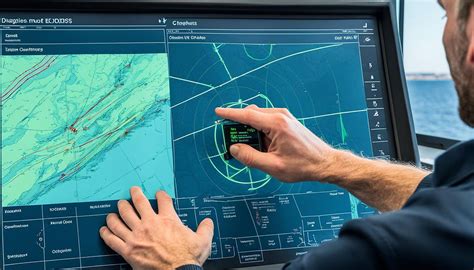
Commanders must now be capable of understanding software performance, verifying algorithmic outputs, and working symbiotically with autonomous systems. This shift demands comprehensive retraining programs and cultural acceptance within the ranks.
A Glimpse Into the Future Fleet
The early success of Ship OS lays the groundwork for a digitally-native Navy, one where AI not only assists in building ships but also maintains them, repairs them at sea, and predicts supply chain failures before they occur.
Future iterations of the system could integrate with:
- Real-time sensor networks on board ships
- Satellite and drone surveillance data
- Global logistics and weather forecasting AI
Such integration would provide Navy leadership with complete end-to-end operational intelligence, from dock to deployment. This vision is no longer speculative—it is rapidly approaching reality.
Conclusion: Navigating by Algorithm
The U.S. Navy’s investment in Ship OS is more than a modernization initiative—it’s an acknowledgment that AI is not optional for future military readiness. By slashing tasks from 160 hours to just 10 minutes, Ship OS demonstrates not just a leap in productivity but a new standard for how defense systems can and should operate.
While challenges lie ahead in ethics, training, and oversight, the trajectory is clear: AI is becoming the new compass for America’s maritime dominance.